
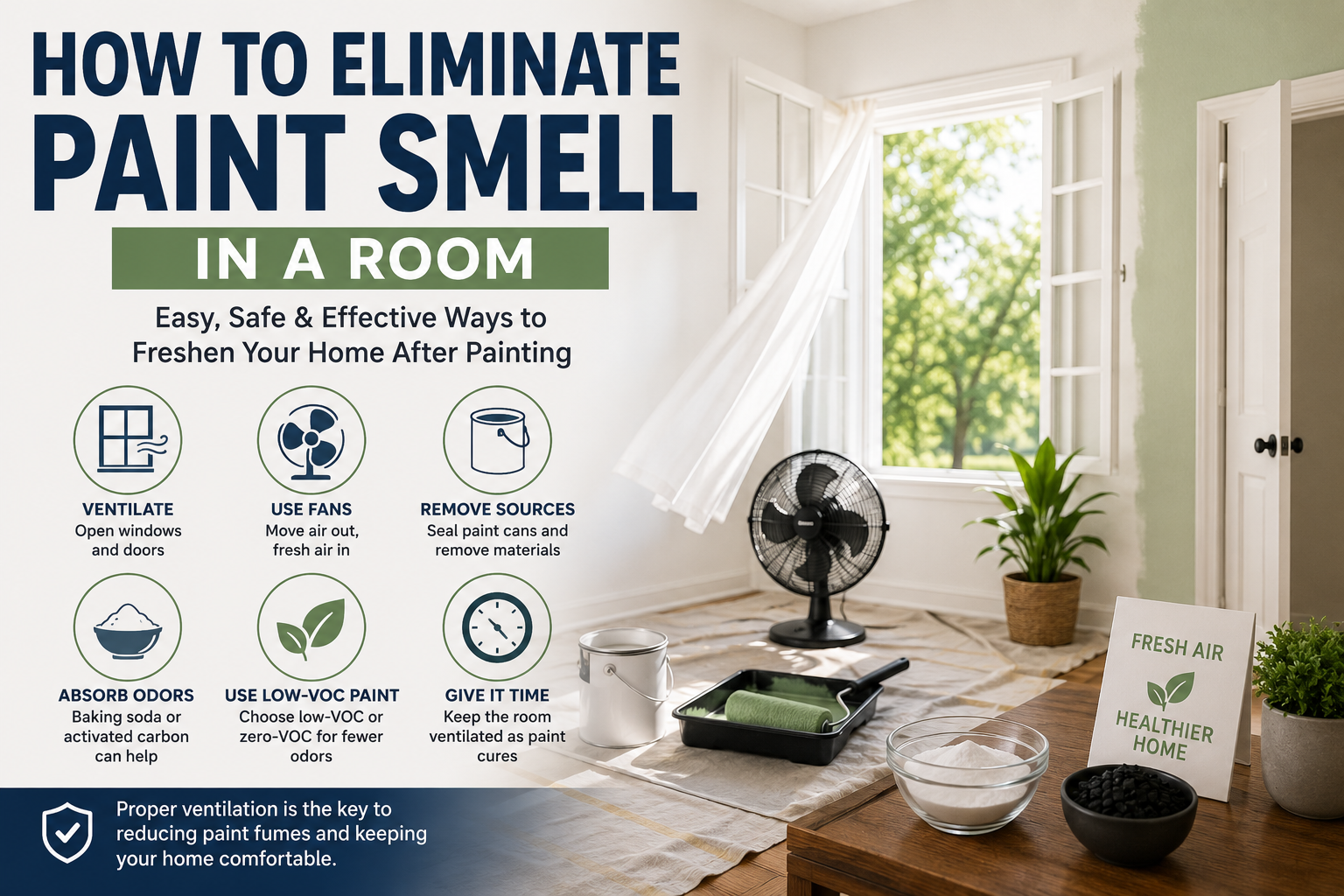
How to eliminate paint smell in a room? The most effective approach is to ventilate the space with fresh outdoor air, create cross-ventilation with open windows and doors, use fans to move indoor air outside, and remove open paint cans and other odor sources from the room. Low-VOC paint and activated-carbon air filtration can also help reduce lingering odors, but ventilation should remain the first priority.
Fresh paint can completely transform a room, but the smell that follows is not always as enjoyable as the new color. Paint and related products can release volatile organic compounds, commonly called VOCs, into indoor air. The U.S. Environmental Protection Agency recommends increasing ventilation when using products that emit VOCs and following all precautions provided on the product label.
Fortunately, most paint odors gradually disappear as the coating dries and the room receives fresh air. Understanding how to eliminate paint smell in a room properly can make the space comfortable sooner without relying on questionable shortcuts.
Start With Good Ventilation
Ventilation is the most important step.
Open windows on opposite sides of the room or home whenever weather permits. Opening the door as well creates a pathway for fresh air to enter while paint fumes move outside.
The U.S. Consumer Product Safety Commission recommends keeping windows wide open, when conditions allow, for roughly two to three days after indoor painting to reduce exposure to paint vapors.
You do not necessarily need every window in the house open. The goal is to create steady airflow through the freshly painted room.
Use Fans to Move Air Outside
Simply circulating the same indoor air around the room is less useful than directing it outdoors.
Place a box or portable fan near an open window facing outward. This helps push indoor air containing paint odors outside while encouraging cleaner air to enter from another opening.
Sherwin-Williams also identifies proper ventilation and airflow as factors that help paint dry effectively.
Avoid pointing a powerful fan directly at freshly applied paint while it is still very wet, since excessively rapid or uneven drying may affect the finish. Once the coating has set according to the manufacturer’s instructions, continued room ventilation is useful.
Remove the Source of the Smell
Sometimes homeowners ventilate the room but leave open paint cans, trays, brushes, rollers, and solvent-containing supplies sitting nearby.
That can keep odors noticeable much longer.
Once painting is finished, properly close paint containers and remove unnecessary painting materials from the occupied area. The EPA specifically recommends following label precautions and avoiding unnecessary storage of opened paint containers in indoor occupied environments.
Cleaning or disposing of used materials according to the product instructions also prevents additional odors from lingering.
Consider Low-VOC or Zero-VOC Paint
The easiest time to reduce paint odor is before painting begins.
Low-VOC and zero-VOC paints are designed to reduce emissions compared with many conventional formulations. The EPA notes that low- or zero-VOC paints may help minimize indoor pollution loads, although VOC content is only one consideration when selecting a coating.
For bedrooms, nurseries, offices, and other frequently occupied rooms, asking your painter about suitable lower-emission products can make the painting experience more comfortable.
Keep in mind that “low VOC” does not automatically mean completely odorless. Proper ventilation is still recommended.
Can Baking Soda Help With Paint Smell?
Baking soda is commonly used around homes to absorb everyday odors. Placing several shallow bowls around the room may help make lingering smells less noticeable.
However, think of baking soda as a secondary odor-control measure, not a replacement for ventilation.
Removing fumes from the room is more important than simply reducing how noticeable the smell is.
Leave the bowls away from children and pets and discard the baking soda after use rather than reusing it for cooking.
Activated Carbon Can Help With Lingering Odors
Activated carbon is another useful option because it can adsorb certain gases and odors.
Some portable air purifiers include activated-carbon filters specifically designed for gaseous pollutants and odors. If using an air purifier after painting, check whether it contains activated carbon rather than relying exclusively on a particle filter.
An ordinary HEPA filter is primarily designed for particles, so it should not be treated as the main solution for paint gases.
Again, filtration works best as an addition to fresh-air ventilation rather than a substitute for it.
Keep the Room Comfortable and Dry
Temperature and humidity influence how quickly paint dries.
Very humid conditions slow evaporation and may allow the smell to remain noticeable longer. Good airflow and normal indoor humidity therefore help both comfort and drying.
Avoid making the room excessively hot in an attempt to force the smell away. Instead, maintain comfortable indoor conditions and follow the paint manufacturer’s recommended drying temperatures.
Avoid Ozone Generators
Some online articles recommend ozone machines for eliminating paint odors. This is one tip homeowners should not follow.
The EPA warns that ozone generators intentionally produce ozone, which is a lung irritant. Ozone can cause coughing, throat irritation, shortness of breath, and other respiratory effects, and the EPA states that ozone generators are not always safe or effective for controlling indoor pollutants.
For a freshly painted room, stick with ventilation, source removal, appropriate filtration, and time.
Be Careful With Candles and Strong Fragrances
Another popular online recommendation is burning scented candles to cover paint smell.
That does not remove paint vapors; it mainly replaces or masks one smell with another. Introducing combustion products or strong fragrances into a room that already needs cleaner air is unnecessary.
Fresh outdoor air is the better solution.
If you want the room to smell pleasant after the paint odor has dissipated, wait until the space has been thoroughly ventilated first.
How Long Does Paint Smell Usually Last?
There is no single timeframe for every project.
The amount of paint used, paint formulation, room size, ventilation, humidity, temperature, and number of coats all affect how long an odor remains noticeable.
Water-based paints generally produce less persistent odor than many traditional solvent-based coatings, but even lower-VOC products should be used with adequate ventilation.
If the room still has a strong chemical smell, continue ventilating rather than relying only on the fact that the wall feels dry.
Don’t Confuse Dry Paint With Clean Indoor Air
Paint can become dry to the touch before all noticeable odors have disappeared.
Drying refers to the coating reaching a surface condition where it is no longer wet. Indoor air quality depends on what is still being released into and remaining in the room.
That is why opening windows and maintaining airflow after the painting work is complete remains important.
Professional Painting Can Reduce the Hassle
Experienced painters do more than apply color to a wall. They select suitable products, protect furniture and flooring, prepare surfaces properly, apply coatings at the correct thickness, and help homeowners understand drying and ventilation requirements.
If you’re planning a home painting project, our residential painters Charlotte NC provide professional interior and exterior painting with careful preparation, quality materials, and a process designed to minimize disruption to your home.
Century Painting & More has served homeowners throughout the Charlotte area since 1999, helping families refresh their homes while maintaining a clean and organized painting environment.
Final Thoughts
Understanding how to eliminate paint smell in a room starts with recognizing that removing fumes is more important than simply covering the odor. Open windows and doors, create cross-ventilation, use fans to direct air outdoors, remove painting supplies from the room, and continue ventilating while the paint dries.
Baking soda, activated carbon, and suitable air filtration can provide additional help, but they should support ventilation rather than replace it. Avoid ozone generators and unnecessary odor-masking techniques that do nothing to improve the actual air in the room. If you’re preparing for an interior painting project, choosing suitable paint and planning ventilation beforehand can make the entire experience much more comfortable. With good preparation and professional application, you can enjoy the fresh appearance of your newly painted room without letting the smell overshadow the transformation.