
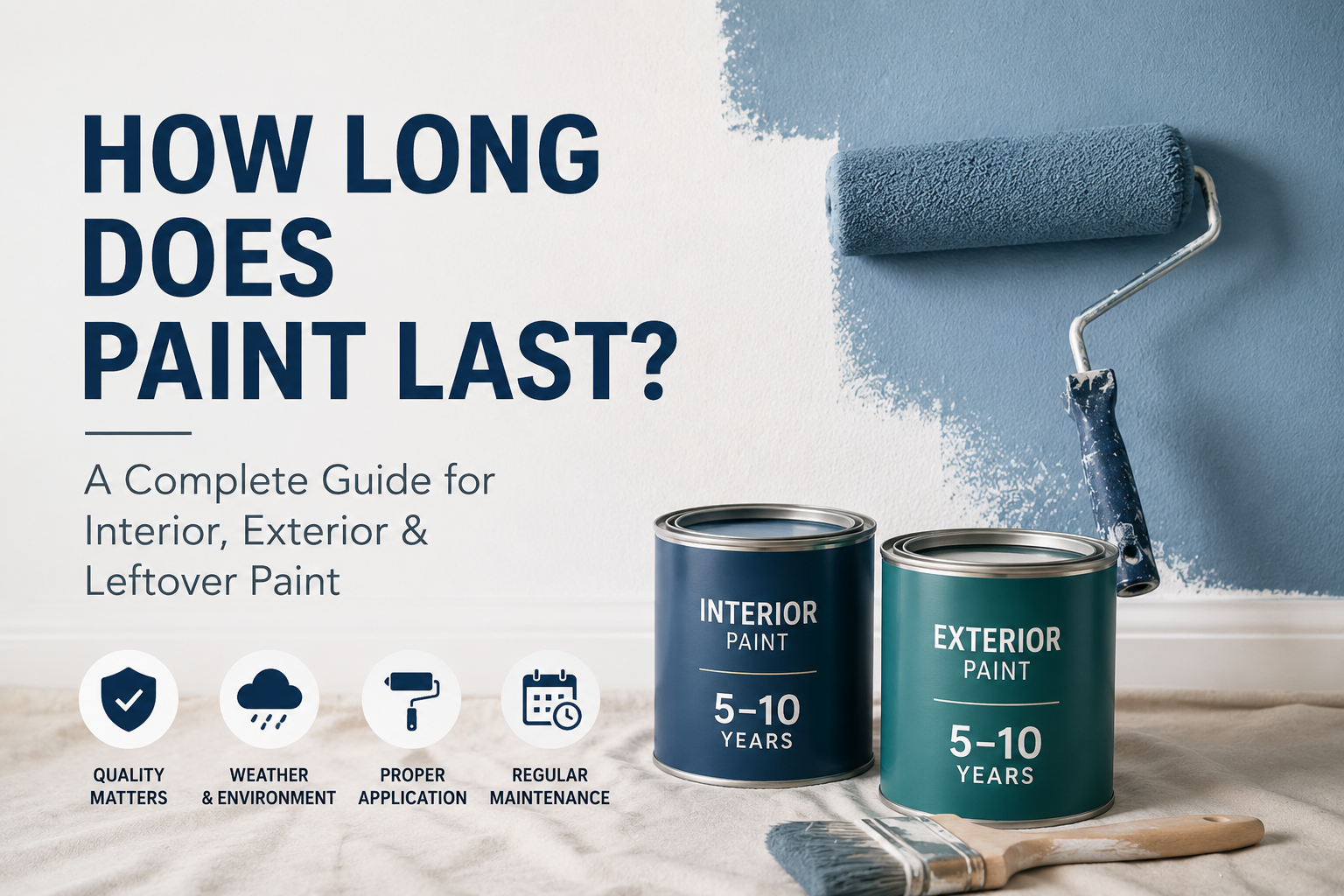
How long does paint last? The answer depends on whether you mean paint sitting in a can or paint already applied to your home. Properly stored leftover paint can remain usable for several years, while a quality interior paint job may look good for roughly 5 to 10 years. Exterior paint often needs attention sooner because it is constantly exposed to sunlight, moisture, temperature changes, and weather.
Those numbers are only starting points. Surface preparation, paint quality, room usage, previous coatings, moisture, and application technique can all shorten or extend the life of paint considerably.
There Are Two Different Paint Lifespans to Consider
When homeowners ask how long does paint last, they are often talking about one of two things:
- How long unused or leftover paint remains usable in the container.
- How long paint lasts after it has been applied to a wall, ceiling, siding, or trim.
These are very different situations.
Paint stored in a sealed container gradually changes because of air exposure, temperature fluctuations, contamination, and age. Paint on a wall deteriorates because of cleaning, sunlight, humidity, movement, stains, moisture, and everyday wear.
Understanding which lifespan matters to your project helps you decide whether you need a new can of paint, a touch-up, or a complete repaint.
How Long Does Paint Last in the Can?
Stored paint can remain usable for years, but the exact lifespan depends heavily on the type of paint and how it has been stored.
As a general guide:
- Latex paint: often remains usable for around 2 to 5 years after opening when stored correctly.
- Acrylic paint: may last approximately 5 to 10 years under good storage conditions.
- Oil-based paint: can sometimes remain usable for 5 to 10 years or longer because it is less vulnerable to some forms of microbial spoilage.
- Chalk-style paint: typically has a shorter usable life and may deteriorate within a few years.
These are estimates rather than expiration dates. Manufacturer recommendations should always take priority.
An unopened can stored properly will usually last longer than a half-empty container that has been opened repeatedly.
How Can You Tell If Old Paint Is Still Good?
Age alone does not always determine whether paint should be thrown away.
Open the container and inspect the paint carefully before using it on a wall.
Check the Smell
Fresh paint has a recognizable odor, but spoiled water-based paint can develop an unusually sour, rancid, or rotten smell.
If the paint smells clearly spoiled, replacing it is safer than trying to save it.
Stir the Paint Thoroughly
Some separation is normal during storage.
After thorough mixing, usable paint should return to a reasonably smooth and consistent texture.
Paint that remains:
- Lumpy
- Chunky
- Stringy
- Rubbery
- Cottage-cheese-like
may no longer be suitable for a quality finish.
Look for a Dried Skin
A thin film can form over paint when air enters the container.
A small surface skin does not automatically mean the entire can is ruined. However, dried particles should not be mixed into the paint because they can create visible defects on the finished wall.
Test the Paint
If the color, smell, and consistency appear normal, apply a small amount to a test board or inconspicuous area.
Check that it:
- Spreads smoothly
- Dries normally
- Produces an even color
- Maintains the expected sheen
- Adheres properly
Old paint that behaves unpredictably is rarely worth using across an entire room.
Storage Conditions Can Make Paint Last Much Longer
Poor storage can destroy paint long before its expected shelf life.
One of the biggest risks to water-based paint is freezing. Repeated freezing and thawing can permanently change the consistency of the product.
Extreme heat can also affect paint quality.
Store Leftover Paint in a Stable Environment
Whenever possible, keep paint in a dry, temperature-controlled location rather than an unconditioned garage or outdoor shed.
A closet, utility room, or climate-controlled storage space is generally a better choice.
Keep Air Out of the Container
Air exposure speeds up deterioration.
Before resealing a paint can:
- Clean paint from the rim.
- Make sure the lid can sit flat.
- Close the lid tightly.
- Transfer a small amount of leftover paint into a smaller airtight container if necessary.
Using a smaller container reduces the amount of air sitting above the remaining paint.
Do Not Pour Used Paint Back Into the Can
Paint from a roller tray may contain dust, dried paint particles, dirt, or other contaminants.
Pouring it back into the original container can shorten the life of the remaining paint.
How Long Does Interior Paint Last on Walls?
Interior wall paint commonly lasts around 5 to 10 years, but not every room follows the same schedule.
A lightly used guest bedroom may stay attractive for many years. A hallway used every day may show scuffs and wear much sooner.
High-Traffic Rooms Wear Faster
Areas exposed to frequent touching, furniture contact, children, pets, or regular cleaning often need repainting sooner.
These can include:
- Hallways
- Staircases
- Entryways
- Children’s bedrooms
- Kitchens
- Family rooms
A durable, washable finish can help these spaces maintain their appearance longer.
Bathrooms and Kitchens Face Additional Stress
Humidity, cooking residue, grease, and frequent cleaning make kitchens and bathrooms harder on paint than bedrooms or formal living spaces.
Proper ventilation is especially important in bathrooms. Persistent moisture can eventually contribute to peeling, blistering, staining, or mildew problems regardless of paint quality.
Ceilings Can Often Go Longer Between Paint Jobs
Ceilings generally receive less direct contact than walls.
If there are no stains, leaks, smoke deposits, or major color changes, ceiling paint can often look acceptable for many years.
Premature ceiling discoloration may indicate something other than normal paint aging, particularly when brown or yellow stains develop around plumbing, roof penetrations, or exterior walls.
The moisture source should be corrected before repainting.
How Long Does Exterior Paint Last?
Exterior paint has a much tougher job.
A well-prepared exterior coating can provide years of service, but longevity varies widely depending on the siding material, coating system, orientation of the house, climate, workmanship, and maintenance.
Many exterior homes fall somewhere around the 5 to 10-year range before substantial repainting becomes appropriate, although some surfaces may need work earlier while others last considerably longer.
In the Charlotte area, exterior coatings must deal with strong summer sun, humidity, rain, seasonal temperature changes, and moisture. These conditions make surface preparation and product selection especially important.
Why Exterior Paint Sometimes Fails Early
Paint should not begin peeling dramatically after only a short period when the surface and coating system are appropriate.
Early failure often points to another problem.
Poor Surface Preparation
Paint bonds best to a clean, dry, stable surface.
Painting over:
- Loose coatings
- Chalky paint
- Dirt
- Mildew
- Moisture
- Rotted wood
can significantly reduce coating life.
Moisture Behind the Paint
Water entering from failed caulk, damaged siding, roof leaks, plumbing, or poor drainage can push coatings away from the surface.
Repainting without solving the moisture source usually means the failure will return.
Insufficient Priming
Bare wood, repaired areas, stains, and certain existing coatings may require an appropriate primer before painting.
Skipping this step can affect adhesion, coverage, and long-term performance.
Painting in Poor Conditions
Temperature, moisture, direct sunlight, and drying conditions all matter.
Paint applied when surfaces are too hot, too cold, or damp may not form the film the manufacturer intended.
Paint Color Can Affect Exterior Longevity
Color choice is not only about appearance.
Dark colors absorb more heat than lighter shades. On highly exposed exterior surfaces, increased heat can place additional stress on certain building materials and coatings.
Sunlight can also gradually fade pigments, especially on walls with strong afternoon sun exposure.
High-quality exterior paints typically use more durable resins and pigments designed to resist fading, chalking, and weathering.
Quality Paint Helps, but Preparation Matters More Than Most People Think
Premium paint can improve coverage, washability, color retention, and durability. However, even excellent paint will struggle on an improperly prepared surface.
For a longer-lasting finish, the process before painting should include:
- Cleaning the surface
- Removing loose or failing paint
- Repairing cracks and damaged areas
- Addressing wood rot or moisture issues
- Sanding where needed
- Caulking appropriate gaps
- Priming bare or repaired surfaces
- Applying the recommended number of finish coats
The finished coat is only as reliable as the surface underneath it.
Signs Your Home May Be Ready for Repainting
You do not necessarily need to repaint because a certain number of years has passed.
Look at the actual condition of the coating.
Common signs include:
Fading
Strong sunlight can make exterior colors look noticeably lighter or uneven over time.
Peeling or Flaking
Peeling usually indicates lost adhesion and should be investigated rather than simply covered.
Cracking
Small cracks in the coating may eventually allow moisture to reach the surface underneath.
Chalking
Exterior paint can develop a powdery residue as the coating ages.
Persistent Scuffs and Stains
Interior walls may technically remain protected while still looking worn enough to justify repainting.
You Are Making Repairs
Siding replacement, drywall repairs, wood rot repair, remodeling, and water-damage restoration can all create natural opportunities to repaint.
Touch-Up or Complete Repaint?
Not every damaged area requires repainting the whole room.
Touch-ups can work well when the existing coating is relatively recent and you still have the exact paint.
A complete repaint may provide a better result when:
- The existing paint has faded.
- Several areas are damaged.
- The original paint is no longer available.
- The sheen has changed with age.
- Repairs cover a large portion of the wall.
- Touch-ups remain visibly different after drying.
Even when the original color formula is available, aging, sunlight, washing, and batch differences can make new paint appear slightly different from the existing wall.
How to Make a New Paint Job Last Longer
The best way to extend paint life is to think about durability before the first coat is applied.
Choose products suitable for the actual environment and make sure existing problems are repaired first.
For interiors, clean walls carefully and use durable finishes in high-traffic areas.
For exteriors, regularly inspect:
- Caulk joints
- Siding
- Fascia and trim
- Gutters
- Wood surfaces
- Areas around windows and doors
Small maintenance repairs can prevent moisture from reaching behind the coating and becoming a much larger painting problem.
So, How Long Does Paint Last in the Real World?
There is no single expiration date that applies to every home. How long does paint last depends on whether you are evaluating paint in storage, an interior room, or a weather-exposed exterior. A well-sealed can may remain usable for years, interior walls commonly provide around 5 to 10 years of service, and exterior coatings can also last for many years when the surface is properly prepared and maintained. The most reliable approach is to evaluate the condition of the paint rather than repaint solely because of its age. If your walls or exterior are showing fading, peeling, cracking, or other signs that it is time for professional attention, Century Painting & More provides experienced house painting services charlotte nc with careful preparation designed to help your next paint job look better and last longer.