
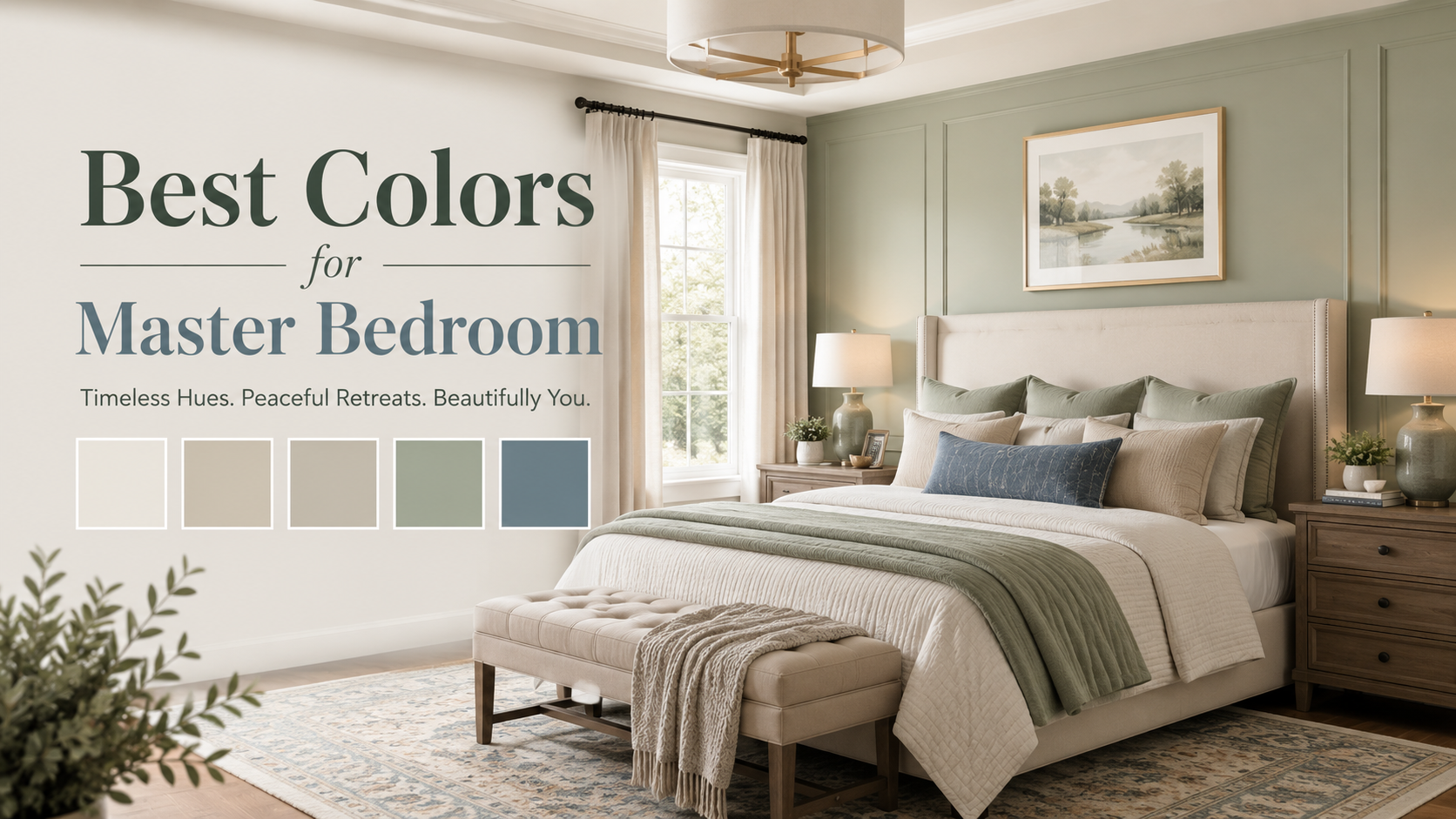
The best colors for master bedroom walls are usually shades that feel restful without making the room dull. Warm whites, soft greiges, muted blues, sage greens, earthy neutrals, and deeper accent colors can all work beautifully when they complement the room’s natural light, flooring, furniture, and overall style.
There is no single perfect bedroom color for every home. A pale blue that looks airy in a sunny bedroom can feel cold in a darker room, while a warm beige that feels inviting under soft lighting may appear overly yellow in strong afternoon sun. Choosing well means looking beyond the paint chip and considering how the entire room works together.
What Makes a Good Master Bedroom Paint Color?
A master bedroom should feel comfortable at the beginning and end of the day. That generally makes softer, less saturated colors easier to live with than extremely bright shades.
When comparing the best colors for master bedroom walls, consider four things first:
- How much natural light enters the room
- Whether the light feels warm or cool
- The color of the flooring and major furniture
- Whether you want the room to feel airy, cozy, dramatic, or neutral
Paint undertones are particularly important. Two colors that both appear beige on a sample card can look completely different once one reveals a yellow undertone and the other leans gray or green.
1. Warm White for a Bright, Relaxed Bedroom
Warm white remains one of the most versatile choices for a master bedroom.
Unlike very crisp whites, warmer off-whites contain subtle beige, cream, gray, or greige undertones that keep the space from feeling sterile.
Warm white works especially well when you have:
- Dark wood bedroom furniture
- Neutral bedding
- Natural textures
- Traditional or transitional decor
- Limited wall space
- A smaller bedroom you want to brighten
It also gives you flexibility to change bedding, curtains, artwork, and furniture without repainting the entire room.
The key is avoiding a white that becomes too yellow under your bedroom lighting. Always test the color beside your flooring and trim.
2. Soft Greige for a Balanced Neutral
Greige combines gray and beige, making it one of the easiest bedroom colors to coordinate with existing finishes.
A lighter greige can provide the calm appearance of gray while adding enough warmth to prevent the bedroom from feeling cold.
It pairs particularly well with:
- Medium and dark wood
- Black furniture
- White trim
- Cream bedding
- Brass or matte-black fixtures
Greige is also useful when the rest of the home uses a neutral palette because it helps the bedroom feel connected without looking identical to adjoining rooms.
3. Sage Green for an Earthy, Restful Look
Muted green has become a favorite for bedrooms because it introduces color without overwhelming the space.
Sage works best when it contains enough gray to soften the green. The result is an earthy shade that can feel calm during the evening while still looking fresh in daylight.
Pair sage walls with:
- Warm white trim
- Natural wood
- Linen fabrics
- Cream and beige bedding
- Terracotta accents
- Soft black details
Sage can be particularly attractive in bedrooms overlooking gardens or mature trees because the interior color visually connects with the outdoors.
Avoid choosing green from a small digital image alone. Some sage colors reveal much stronger yellow or blue undertones after being painted across a large wall.
4. Muted Blue for a Calm Bedroom Palette
Soft blue remains one of the most dependable bedroom color families.
Instead of bright sky blue, look for shades with a small amount of gray. A muted blue-gray can create a restful background without making the bedroom feel overly themed.
It works beautifully with:
- White bedding
- Medium-toned wood
- Navy accents
- Warm tan leather
- Cream upholstery
- Brushed metal fixtures
Bedrooms with warm natural light can often handle cooler blues especially well.
In north-facing or naturally darker bedrooms, however, very cool blues may become grayer than expected. A slightly warmer blue may produce a more balanced result.
5. Taupe and Mushroom for a Warmer Alternative to Gray
If conventional gray feels too cool but beige feels too traditional, taupe or mushroom can provide a sophisticated middle ground.
These shades usually combine brown, gray, and sometimes subtle violet undertones.
They can make a large bedroom feel comfortable without dramatically darkening it.
Taupe looks especially polished with upholstered headboards, natural textiles, darker wood furniture, and warm metallic accents.
It is also a good option when the flooring already contains several neutral tones because taupe can visually tie them together.
6. Soft Dusty Pink for Subtle Warmth
Pink does not need to make a master bedroom look overly feminine.
Dusty rose, muted blush, and extremely pale clay-pink shades can function almost like warm neutrals when their saturation is low.
They work especially well with:
- Beige
- Cream
- Walnut furniture
- Warm white
- Muted green
- Soft gray
The key is choosing a restrained pink rather than a bright pastel.
In the right room, a dusty pink wall can add warmth while remaining sophisticated enough for an adult bedroom.
7. Deep Blue for a Cozy, Dramatic Bedroom
Not every bedroom needs light walls.
A larger room with good natural light can handle deeper colors beautifully. Navy, smoky blue, and blue-charcoal shades can create a more intimate and enveloping atmosphere.
Dark colors are particularly effective behind a bed because the headboard, pillows, lamps, and artwork naturally break up the large area of color.
If you are uncertain about painting all four walls dark, use the deeper shade on the headboard wall and keep the remaining walls lighter.
This can provide contrast without making the entire bedroom feel heavy.
8. Muted Clay and Earth Tones for Warmth
Earth-inspired colors can make a bedroom feel comfortable without relying on conventional beige.
Consider softened versions of:
- Clay
- Terracotta
- Sand
- Caramel
- Muted ochre
- Warm taupe
These colors work particularly well with wood flooring, woven fabrics, natural linens, and organic decor.
For a bedroom, choose desaturated versions rather than intense orange or red-based tones. Softer colors are generally easier to live with across a large wall area.
How Bedroom Lighting Changes Paint Color
Lighting can completely change how paint appears.
North-Facing Bedrooms
North-facing rooms often receive cooler, softer light.
Cool grays and blues may appear even cooler, so consider:
- Warm whites
- Greige
- Soft taupe
- Warm sage
- Creamy neutrals
South-Facing Bedrooms
South-facing rooms usually receive warmer, stronger natural light.
These rooms can often handle:
- Muted blue
- Blue-gray
- Sage
- Cooler greige
- Deeper neutrals
Bedrooms With Limited Natural Light
Very dark rooms do not automatically need pure white walls.
Pure white may actually look flat when there is insufficient light to reflect.
A warm off-white, light greige, soft mushroom, or muted green may give the room more depth while still keeping it bright.
Match Wall Color With Bedroom Furniture
Paint should complement the pieces you intend to keep.
Dark Wood Furniture
Dark brown or espresso furniture often looks best against lighter walls.
Try warm white, greige, sage, muted blue, or light taupe.
Cherry or Red-Toned Wood
Red undertones can become stronger beside very warm walls.
Muted green, soft gray, greige, and restrained blue-gray shades can provide balance.
Light Oak Furniture
Light oak naturally brings warmth into a bedroom.
Soft greens, warm whites, muted blues, greige, and subtle taupes generally pair well.
Black Furniture
Black furniture creates strong contrast and works with almost any neutral palette.
Warm white, mushroom, sage, dusty blue, and greige can all keep the bedroom from feeling too stark.
Should a Small Master Bedroom Be Light?
Light colors are useful in smaller bedrooms because they reflect more available light, but you do not have to limit yourself to white.
Good choices include:
- Pale greige
- Light sage
- Soft blue-gray
- Warm off-white
- Light taupe
If you love darker colors, consider using one behind the headboard while keeping the other walls lighter.
Large bedrooms offer more freedom. Deeper blues, greens, taupes, and muted earth tones can help make an oversized room feel warmer and more intimate.
Should You Use an Accent Wall?
Accent walls still work when they have a clear reason for being there.
In a master bedroom, the wall behind the bed is usually the most natural choice because the bed is already the visual focal point.
A successful combination might use:
- Warm white with muted sage
- Light greige with navy
- Soft beige with earthy green
- Pale gray-blue with charcoal blue
Avoid introducing a strong accent color simply because one wall is empty. The accent should connect to bedding, artwork, furniture, or another feature in the room.
Choose the Right Paint Finish
Color gets most of the attention, but sheen affects how the bedroom looks and how easily the walls can be maintained.
For most master bedrooms, eggshell or a low-sheen finish provides a useful balance. It offers slightly more durability and cleanability than completely flat paint while avoiding excessive reflection.
Matte finishes can also look excellent on walls that are in good condition.
Keep in mind that the higher the sheen, the more likely surface imperfections are to become noticeable under side lighting.
Always Test Paint on the Actual Walls
Never make the final decision from a phone screen or small paint chip.
Paint a sample area or use a large removable paint sample and observe it:
- In morning light
- In afternoon sunlight
- At night
- With bedside lamps on
- Beside the flooring
- Behind the headboard
- Next to trim and curtains
Give yourself at least a full day to evaluate the color.
A shade that initially looks perfect may reveal unwanted undertones once the lighting changes.
Choose a Bedroom Color You Will Enjoy Beyond Current Trends
The best colors for master bedroom design are not necessarily the colors receiving the most attention on social media this year. They are the shades that work with your room’s light, furniture, flooring, scale, and the atmosphere you want to create. Warm whites and greiges provide flexibility, muted blues and greens introduce calm color, while deeper navy, taupe, and earth tones can create a more intimate bedroom. Sample your favorites in the actual space before committing. If you want help turning the final color choice into a smooth, carefully finished room, Century Painting & More provides professional house painting services charlotte nc for homeowners throughout Charlotte and surrounding communities.