
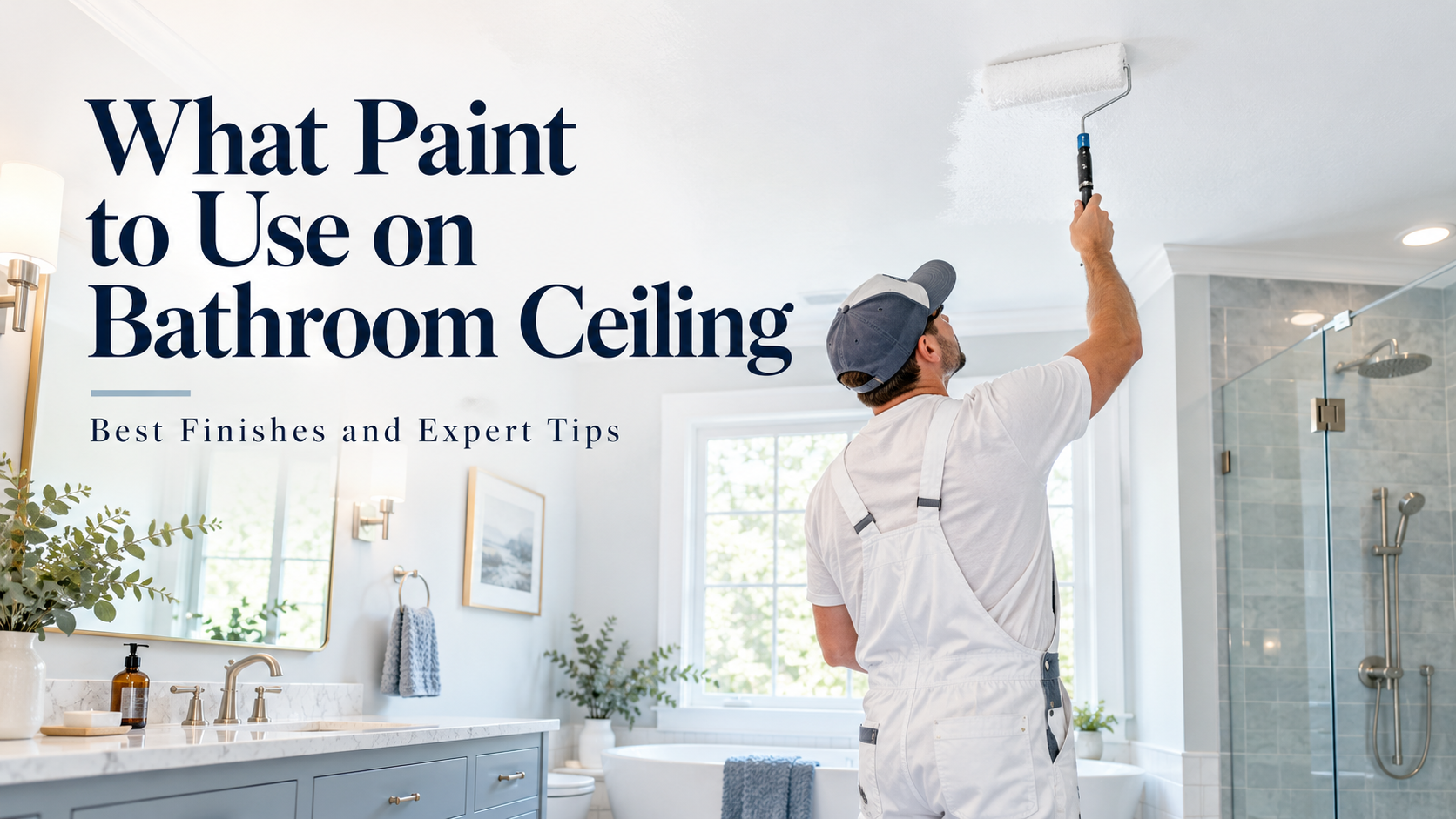
Bathroom ceilings face conditions that ordinary living room ceilings rarely experience. Hot showers release moisture into the air, and condensation can settle on overhead surfaces. Over time, this may contribute to peeling paint, bubbling, discoloration, and mildew growth.
If you’re wondering what paint to use on bathroom ceiling surfaces, the best choice is generally a high-quality, moisture-resistant acrylic latex paint specifically formulated for bathrooms. Satin finishes are a practical option, while specialized matte bathroom paints offer a smoother appearance without sacrificing humidity resistance.
However, choosing the right paint is only part of the solution. Proper ventilation, surface preparation, and priming are equally important for achieving a durable finish.
Why Bathroom Ceilings Need Special Paint
Bathroom ceilings experience repeated changes in humidity and temperature. During a hot shower, warm, moisture-filled air rises and may condense when it meets cooler ceiling surfaces.
If the existing paint has poor adhesion or the drywall remains damp, the coating may begin to deteriorate.
Common warning signs include:
- Peeling paint: The coating separates from the underlying ceiling surface.
- Paint bubbles: Moisture or adhesion problems cause raised areas in the finish.
- Dark mildew spots: Persistent dampness encourages biological growth.
- Yellow or brown stains: Water leaks or accumulated contaminants may discolor the ceiling.
- Flaking around corners: Moisture exposure and inadequate preparation can weaken older coatings.
A suitable bathroom paint helps protect the finish, but it cannot repair water leaks or compensate for inadequate ventilation.
What Paint to Use on Bathroom Ceiling Surfaces?
For most residential bathrooms, moisture-resistant water-based acrylic latex paint offers an excellent combination of durability, convenient application, and easy maintenance.
1. Moisture-Resistant Acrylic Latex Paint
Acrylic latex paint forms a durable coating as it dries and cures. Products specifically designed for kitchens and bathrooms can withstand humid conditions better than ordinary ceiling paints not intended for such environments.
Look for the following characteristics:
- Suitable for bathroom ceilings and high-humidity environments
- Mildew-resistant paint film
- Good adhesion to properly prepared drywall or plaster
- Washable finish
- Low-VOC or low-odor formulation, where preferred
A mildew-resistant coating helps inhibit growth on the paint film, but it does not remove existing mold or eliminate moisture problems.
2. Specialized Bathroom Ceiling Paint
Bathroom-specific products offer another option, particularly in rooms where condensation is frequent.
For example, Benjamin Moore Aura Bath & Spa is formulated for high-humidity environments and provides a mildew-resistant matte finish. It demonstrates that a bathroom ceiling does not necessarily need a glossy appearance to withstand moisture.
Choose the product based on its actual technical specifications rather than assuming every paint labeled bathroom-safe performs identically.
3. Paint for Previously Damaged Ceilings
A ceiling with old water stains, peeling paint, or repeated mildew growth requires additional attention.
Before selecting the finish coat, identify the underlying cause. Water stains may require a compatible stain-blocking primer, while peeling areas need loose paint removed and the surface repaired.
Never apply fresh paint directly over active mold or damp drywall.
Satin vs. Semi-Gloss vs. Matte: Which Finish Is Best?
The finish affects how bathroom ceiling paint looks and how easily it can be cleaned.
| Paint finish | Main advantage | Best application |
|---|---|---|
| Satin | Good cleanability with moderate sheen | Most regularly used bathrooms |
| Semi-gloss | Highly washable, reflective surface | Suitable bathrooms where frequent cleaning is important |
| Bathroom-rated matte | Smooth appearance that hides imperfections | Bathrooms where a specialty humidity-resistant product is desired |
| Standard flat | Minimizes visible surface imperfections | Dry powder rooms, when the product is suitable |
Satin for Everyday Bathrooms
Satin offers a balance between appearance and practical maintenance.
It reflects more light than matte paint and can generally tolerate cleaning better than conventional flat ceiling paint.
Semi-Gloss for a More Reflective Finish
Semi-gloss can provide excellent washability, but its reflectivity may highlight drywall seams, patching marks, and uneven ceiling textures.
It is an option rather than a requirement for humid bathrooms.
Matte for a Smooth, Modern Ceiling
Modern bathroom-rated matte paints can offer reliable humidity resistance.
The important distinction is between a specialized moisture-resistant matte coating and ordinary flat ceiling paint.
Homeowners seeking a seamless, understated appearance should consider products specifically approved for bathrooms.
How to Prepare a Bathroom Ceiling Before Painting
Even premium bathroom paint may fail if the underlying surface is damaged or contaminated.
Step 1: Check for Moisture Problems
Inspect the ceiling for water stains, softened drywall, and peeling coatings. Investigate leaks or persistent condensation before beginning the project.
If mold is present, address the moisture source and clean or remediate the affected material appropriately. Extensive contamination or damaged porous materials may require professional attention.
Step 2: Clean and Repair the Surface
Remove accumulated dust and residue using a suitable cleaner. Allow the surface to dry thoroughly.
Scrape away loose paint, repair damaged areas, and sand appropriate surfaces to create a smooth finish.
For older homes, check lead-safe renovation requirements before disturbing existing paint.
Step 3: Apply the Correct Primer
Primer is particularly helpful for bare drywall, repaired areas, stains, and surfaces with inconsistent porosity.
Use a compatible drywall primer or stain-blocking primer according to the surface condition. A mildew-resistant primer may be appropriate in certain situations, but it is not a replacement for mold removal.
Step 4: Apply the Bathroom Paint
Cut in around corners and fixtures using an angled brush. Apply the paint evenly with a quality roller, maintaining a wet edge to minimize visible marks.
Follow the manufacturer’s instructions for coat thickness and drying intervals. Two coats are commonly recommended for consistent coverage, although product requirements vary.
Allow adequate drying and curing time before exposing the newly painted ceiling to heavy shower steam.
How to Prevent Bathroom Ceiling Paint From Peeling Again
When considering what paint to use on bathroom ceiling surfaces, remember that moisture management is essential for long-term performance.
The following practices can help:
- Run the bathroom exhaust fan during showers and afterward to remove humid air.
- Ensure the exhaust fan vents outdoors rather than into the attic.
- Repair plumbing leaks and other sources of water intrusion promptly.
- Keep bathroom surfaces clean and address mildew as soon as it appears.
- Maintain indoor humidity at appropriate levels.
The U.S. Environmental Protection Agency recommends controlling moisture as the primary way to prevent indoor mold growth.
Frequently Asked Questions
Can You Use Regular Ceiling Paint in a Bathroom?
Some interior ceiling paints are suitable for lightly used bathrooms, but a dedicated moisture-resistant product is preferable for bathrooms with frequent showers.
Do Bathroom Ceilings Need Waterproof Paint?
Bathroom ceilings typically need a moisture-resistant coating, not a fully waterproof system. Proper ventilation and leak prevention remain essential.
What Is the Best Color for a Bathroom Ceiling?
White, warm white, and light neutral shades are popular because they brighten the space and coordinate with various wall colors.
Should You Prime a Bathroom Ceiling Before Painting?
Priming is recommended for bare drywall, repaired surfaces, staining, or areas where the existing coating requires better adhesion. Previously painted ceilings in sound condition may not always need a separate primer.
Protect Your Bathroom Ceiling With the Right Paint
Knowing what paint to use on bathroom ceiling surfaces helps homeowners avoid premature peeling, staining, and unnecessary repainting. A quality moisture-resistant acrylic latex paint, the appropriate finish, proper surface preparation, and effective ventilation work together to produce lasting results. If your bathroom ceiling needs professional attention, Century Painting’s experienced interior painters Cornelius can help assess its condition, recommend suitable coatings, and deliver a clean, attractive finish.