
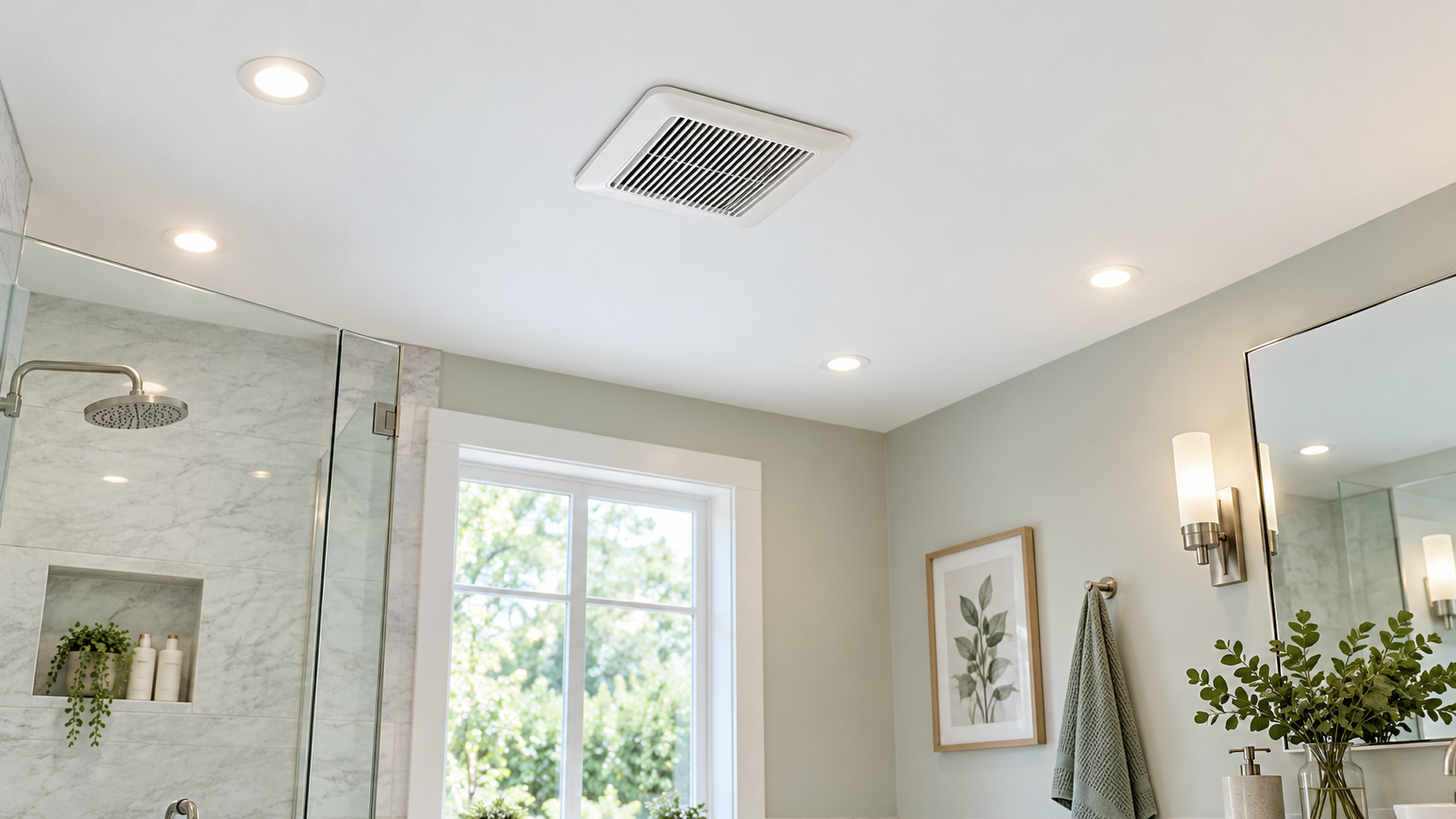
A bathroom ceiling needs a coating that can tolerate humidity while still looking smooth overhead. For most homes, the right choice is a high-quality interior acrylic latex paint with mildew resistance, applied over a sound, dry surface. The ideal sheen depends on how much steam the room produces and how well the ventilation works.
The Best Paint Type For A Bathroom Ceiling
When deciding what type of paint to use on bathroom ceiling surfaces, look for a product specifically labeled for bathrooms, kitchens, or high-humidity interiors. These coatings are formulated to resist moisture and routine cleaning better than basic ceiling paint.
Acrylic Latex For Most Bathrooms
Acrylic latex is the practical default because it has low odor, dries quickly, cleans up with water, and remains flexible as the ceiling expands and contracts. A premium product also provides better coverage and adhesion than a budget flat paint.
Mildew-Resistant Formula For Humid Rooms
Choose a mildew-resistant formula when the bathroom has limited airflow, frequent showers, or a history of surface mildew. Remember that paint is only one part of the solution; leaks and recurring condensation need to be corrected first.
Selecting The Finish
Matte Finish
Matte is often the best visual choice for a ceiling because it minimizes glare and disguises minor drywall variations. Use it when the product is rated for humid areas and the bathroom has reliable ventilation.
Eggshell Or Satin Finish
Eggshell and satin provide greater washability and moisture resistance. They are useful in a busy family bathroom, although the added reflection can reveal uneven patching or texture.
Surface Preparation Checklist
- Repair plumbing leaks and allow the ceiling to dry completely.
- Remove loose paint and sand peeling edges smooth.
- Clean residue according to the cleaner and paint manufacturer’s directions.
- Prime stains, repairs, or porous drywall for even absorption.
- Apply two even coats and respect the recoat and cure times on the label.
Ventilation Protects The New Finish
Use the exhaust fan during showers and leave it running afterward so moisture leaves the room. If the ceiling repeatedly feels damp, consider improving the fan, cleaning its grille, or adding make-up air. A durable coating lasts longer when the room dries between uses.
A Clear Recommendation
For a final product check, confirm that the label addresses humidity or mildew resistance and that the finish is approved for interior ceilings. This makes it easier to choose what type of paint to use on bathroom ceiling areas with confidence. The most dependable answer to what type of paint to use on bathroom ceiling surfaces is a premium, mildew-resistant acrylic latex made for high-humidity interiors, usually in matte, eggshell, or satin depending on the room’s needs. For careful prep and a clean interior finish, contact interior painters Cornelius.