
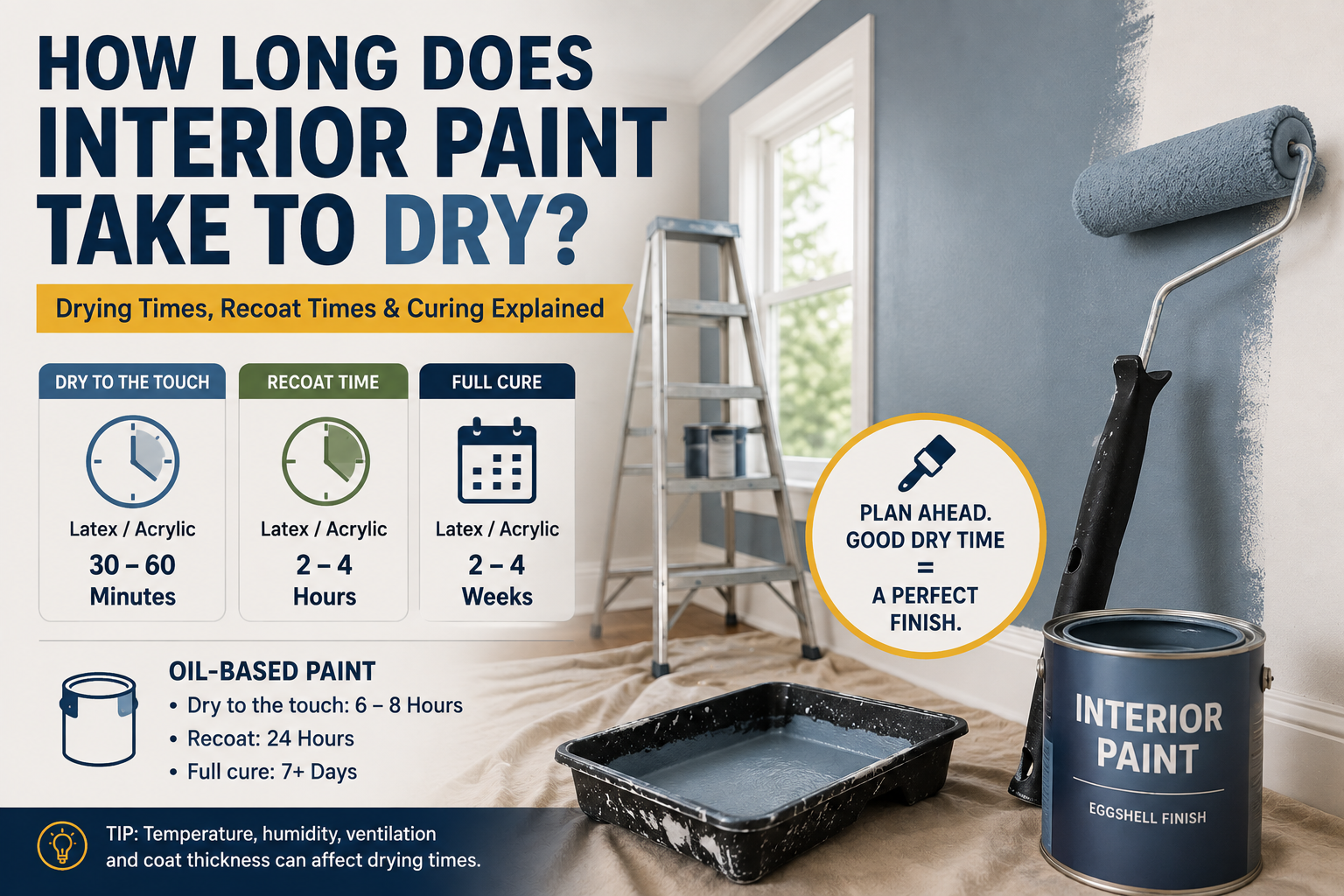
How long does interior paint take to dry? Most interior latex or acrylic paints are dry to the touch in about 1 hour and can usually be recoated after 2 to 4 hours under normal indoor conditions. Oil-based paints take longer, often 6 to 8 hours to become touch-dry and around 24 hours before recoating. However, drying and curing are not the same thing, and full curing can take several days or even weeks.
Knowing the difference matters because paint that feels dry may still be soft underneath. Recoating too early, moving furniture against the wall, cleaning the surface, or applying tape before the paint has hardened can damage an otherwise good paint job.
Drying and Curing Are Two Different Things
One of the biggest sources of confusion with interior painting is assuming that dry paint is fully hardened.
Drying happens first. This is when the water or solvents in the paint evaporate enough for the surface to stop feeling wet or tacky.
Curing happens later. During curing, the paint film continues to harden and develops its full durability, adhesion, and resistance to cleaning or scuffing.
A wall may feel dry within an hour or two, but that does not mean it is ready for heavy contact.
How Long Does Interior Paint Take to Dry by Paint Type?
Different paint types have very different drying schedules.
Latex and Acrylic Paint
Latex and acrylic paints are the most common choices for interior walls because they dry quickly, have lower odor than traditional oil-based coatings, and are easy to clean up.
Under good conditions, they are often:
- Dry to the touch in about 30 minutes to 1 hour
- Ready for a second coat after 2 to 4 hours
- Fully cured in roughly 2 to 4 weeks
Always check the paint manufacturer’s label because some products require longer recoat times.
Oil-Based Paint
Oil-based paint dries much more slowly.
It is commonly used on trim, doors, cabinets, and other surfaces where a harder finish may be desired.
Typical timing is:
- Dry to the touch in about 6 to 8 hours
- Ready for another coat in approximately 24 hours
- Fully cured in about 7 days or longer
Because oil-based paint stays soft for longer, newly painted doors, trim, and cabinets should be handled carefully during the curing period.
Temperature Affects Drying Time
Interior paint dries best in moderate, stable temperatures.
Cold rooms slow evaporation and can leave paint soft for much longer than expected. Very hot conditions may cause the surface to dry too quickly while the paint underneath remains soft.
Most interior painting projects perform best in a comfortably heated or cooled home rather than extreme temperatures.
Avoid directing strong heaters directly at a freshly painted wall. Gentle, consistent room temperature is better than trying to force the paint to dry.
Humidity Can Slow Paint Drying
Humidity has a major effect on water-based paints.
When the air already contains a lot of moisture, water in the paint evaporates more slowly. This means paint may remain tacky longer and the recoat time may increase.
Bathrooms, kitchens, basements, and laundry rooms often have higher humidity than bedrooms and living rooms.
If indoor humidity is high, using air conditioning or a dehumidifier can help create better drying conditions.
Good Ventilation Helps
Steady airflow helps moisture and paint vapors leave the room.
If weather conditions allow, crack open a window and keep interior doors open. A fan can also help circulate air through the space.
The goal is gentle airflow, not blasting the wall directly with a powerful fan.
Strong airflow aimed directly at wet paint can sometimes lead to uneven drying.
Paint Thickness Matters
More paint does not necessarily mean better coverage.
One thick coat takes longer to dry and may remain soft underneath even when the surface appears ready.
Heavy application can also cause:
- Sagging
- Drips
- Uneven texture
- Wrinkling
- Extended curing time
Two controlled, even coats generally produce a smoother and more durable finish than one overly heavy coat.
How Long Should You Wait Between Coats?
For many modern latex and acrylic interior paints, 2 to 4 hours is a common recoat window.
Oil-based products often require closer to 24 hours.
However, these are general guidelines rather than universal rules.
Temperature, humidity, airflow, paint thickness, surface condition, and the specific product all influence how quickly the first coat becomes ready.
The manufacturer’s instructions should always take priority over a general estimate.
What Happens If You Recoat Too Soon?
Applying a second coat before the first has dried sufficiently can create several problems.
The fresh roller may pull or soften the first layer, leaving visible streaks or texture.
Other issues may include:
- Patchy sheen
- Roller marks
- Wrinkling
- Uneven color
- Longer overall curing time
- Poor adhesion
Waiting an extra hour is often much easier than repairing an entire wall later.
Surface Preparation Can Affect Drying
Fresh drywall patches, joint compound, primer, and repaired areas can all absorb paint differently.
If filler or patching compound has not dried fully before painting, trapped moisture can slow the drying process.
Porous repaired areas may also create flashing, where parts of the wall appear shinier or duller than others.
Proper surface preparation and priming help the final coat dry more consistently.
When Can You Move Furniture Back?
Furniture should not be pushed tightly against freshly painted walls immediately.
Even when the paint feels dry, the surface may still be soft enough to mark.
If possible, wait at least 24 to 48 hours before moving furniture close to the wall and leave a small gap initially.
For heavier items or anything that may rub directly against the painted surface, additional curing time is better.
When Can You Clean Freshly Painted Walls?
Avoid scrubbing freshly painted walls too soon.
Latex and acrylic paints may require several weeks to reach their full washable durability.
Even premium washable paints can be damaged if they are cleaned aggressively before curing.
If a mark appears shortly after painting, use the gentlest possible cleaning method and avoid heavy pressure.
How Can You Help Interior Paint Dry Properly?
You do not need complicated equipment.
Focus on creating stable conditions:
- Maintain a comfortable room temperature.
- Keep humidity moderate.
- Provide gentle ventilation.
- Apply thin, even coats.
- Follow the manufacturer’s recoat time.
- Allow repaired or primed surfaces to dry before painting.
- Avoid touching or cleaning fresh paint unnecessarily.
Professional painters manage these details because drying time directly affects the quality of the finished result.
Why Professional Interior Painting Makes a Difference
A quality interior paint job depends on much more than rolling color onto a wall.
Experienced painters understand how preparation, product selection, coat thickness, temperature, humidity, and drying time work together.
If you’re planning to refresh your home, our residential painters Charlotte NC provide professional interior and exterior painting with careful preparation, premium materials, and attention to detail from start to finish.
Century Painting & More has been serving homeowners throughout the Charlotte area since 1999, helping families achieve clean, durable finishes while minimizing disruption during the painting process.
Final Thoughts
If you’re wondering how long does interior paint take to dry, most latex and acrylic paints become touch-dry within about an hour and are ready for another coat after roughly 2 to 4 hours. Oil-based paint usually takes much longer, often requiring 6 to 8 hours to feel dry and about 24 hours before recoating.
The more important lesson is not to confuse drying with curing. Fresh paint continues hardening long after it feels dry, so furniture, cleaning, tape, and heavy contact should be handled carefully. Understanding how long does interior paint take to dry helps prevent roller marks, uneven sheen, soft paint, and unnecessary repairs. Give each coat the time it needs, maintain good room conditions, and follow the manufacturer’s instructions for the best-looking, longest-lasting finish.