
If you are preparing to repaint an older wall, door, cabinet, baseboard, or piece of trim, one question should come before choosing a new color: how to determine if paint is oil or latex? The answer matters because the existing coating affects the preparation needed for the next one.
Modern water-based paints can perform extremely well, but applying them directly over a hard, glossy oil-based coating without suitable preparation can create adhesion problems. Fortunately, you do not need to guess based on appearance. A simple solvent test can usually identify the existing coating in a few minutes.
Why Knowing the Existing Paint Type Matters
Oil-based, or alkyd, coatings traditionally produced a hard, smooth finish and were widely used on doors, cabinets, trim, and other high-contact surfaces.
Water-based latex and acrylic coatings behave differently.
The problem appears when a new coating does not properly bond with the existing finish. Correct identification helps you decide whether the surface needs cleaning, sanding, a bonding primer, or another preparation method before repainting.
Glidden recommends identifying an existing oil coating before applying latex and specifically recommends a bonding primer when painting latex over oil-based paint.
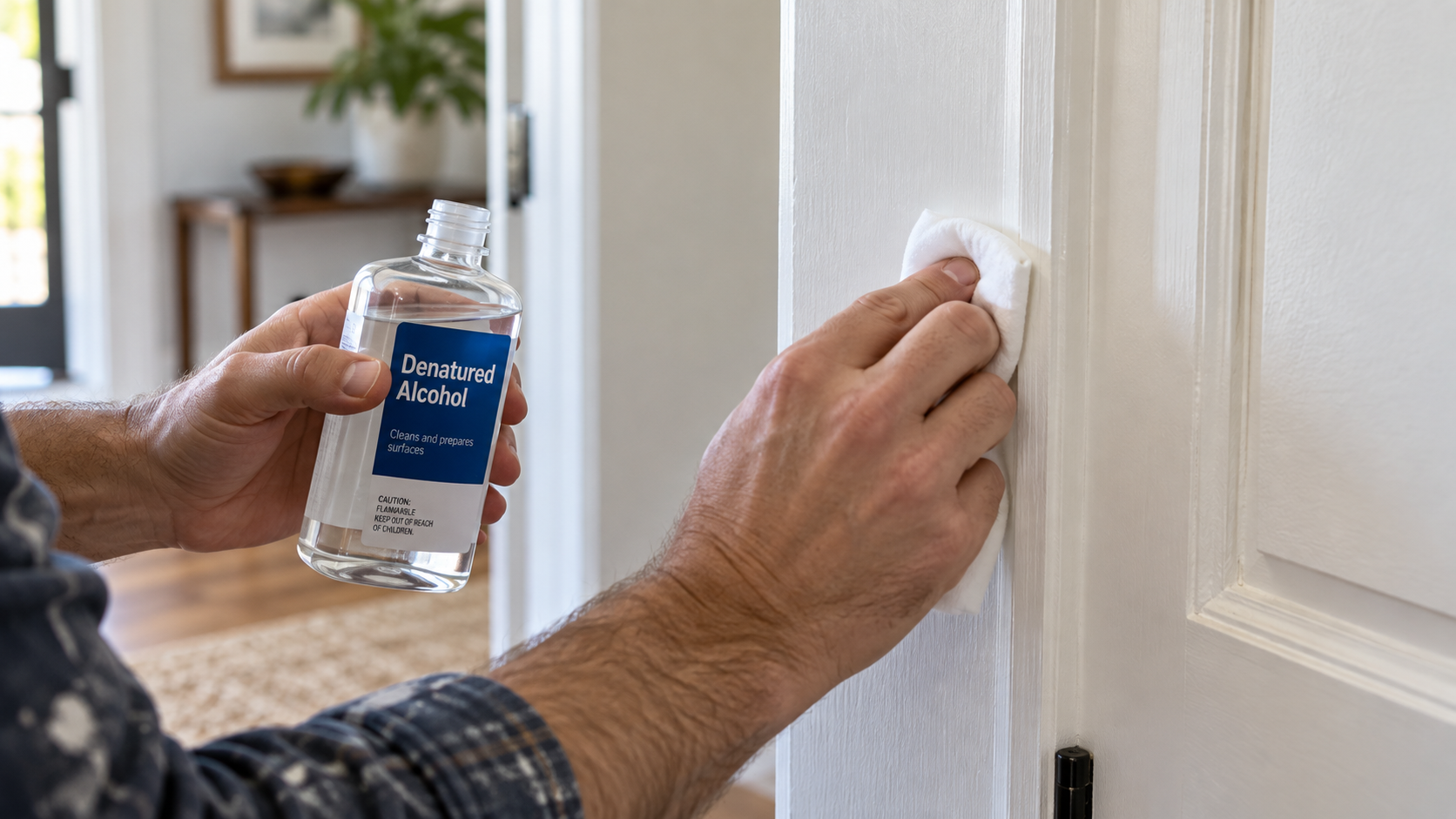
The Alcohol Test Is the Most Useful DIY Check
When homeowners ask how to determine if paint is oil or latex, the solvent test is more reliable than simply looking at sheen.
You will need:
- A clean white cloth or cotton ball
- Denatured alcohol or rubbing alcohol
- Gloves
- A small inconspicuous test area
Step 1: Clean the Test Spot
Choose an area behind a door, near the bottom of trim, or somewhere that will not be noticeable.
Remove dirt and grease first and let the surface dry.
Step 2: Apply Alcohol to the Cloth
Dampen the cotton ball or cloth rather than pouring alcohol directly onto the surface.
Step 3: Rub the Paint
Rub the selected area firmly.
If pigment begins transferring to the cloth or the coating noticeably softens, the existing paint is most likely water-based latex or acrylic.
If the finish remains hard and little or no paint transfers, it is likely an oil-based or alkyd coating. This is the same basic diagnostic method recommended by Glidden and commonly used by professional painters.
Why You Should Not Judge by Gloss Alone
Older oil enamel frequently has a hard, shiny appearance, which leads homeowners to assume that every glossy coating is oil-based.
That is no longer reliable.
Modern water-based enamels are available in satin, semi-gloss, and gloss finishes. Conversely, decades of wear can make an old oil coating look relatively dull.
Visual clues can suggest what you have, but they should not replace testing.
Where Oil Paint Is Most Likely to Be Found
In older houses, pay special attention to:
- Baseboards
- Crown molding
- Interior doors
- Window trim
- Built-in cabinetry
- Bathroom trim
- Kitchen woodwork
These surfaces were historically more likely to receive durable enamel coatings.
If your home predates 1978, be careful before sanding or aggressively scraping old coatings. EPA guidance warns that disturbing lead-based paint in pre-1978 homes can create hazardous lead dust and recommends lead-safe practices.
What to Do If the Paint Is Latex
If your test confirms a sound water-based coating, preparation is usually straightforward.
Clean the surface, repair damage, lightly sand rough or glossy areas when required, remove dust, and follow the new coating manufacturer’s preparation instructions.
Primer may still be appropriate when:
- Bare drywall is exposed
- Repairs have been made
- Stains need blocking
- The color change is dramatic
- The existing surface has adhesion concerns
For a deeper explanation, read Century Painting’s guide to when primer is needed.
What to Do If the Paint Is Oil-Based
Do not simply roll water-based wall paint over a slick oil finish.
The surface usually needs to be thoroughly cleaned and dulled to create better mechanical adhesion. A suitable bonding primer can then create the transition between the existing coating and the new finish. Always confirm product compatibility using the manufacturer’s instructions.
This extra preparation is particularly important on doors and trim because these surfaces receive frequent contact.
Test More Than One Location
A room may contain several generations of paint.
For example, walls could be latex while original baseboards remain oil-painted. One door may have been replaced years later and contain a completely different coating system.
Test individual surface types rather than assuming the whole room is identical.
A Small Test Can Prevent a Large Paint Failure
The safest answer to how to determine if paint is oil or latex is to test rather than guess. Clean a hidden section, rub it with alcohol, and watch what happens. Paint that softens or transfers is generally water-based, while a coating that remains hard is more likely oil or alkyd. Once you know what is underneath, you can choose the correct cleaning, sanding, priming, and repainting process. If several rooms, doors, or trim surfaces contain uncertain coatings, professional interior painters charlotte nc can evaluate the existing finish and prepare each surface appropriately before repainting.