
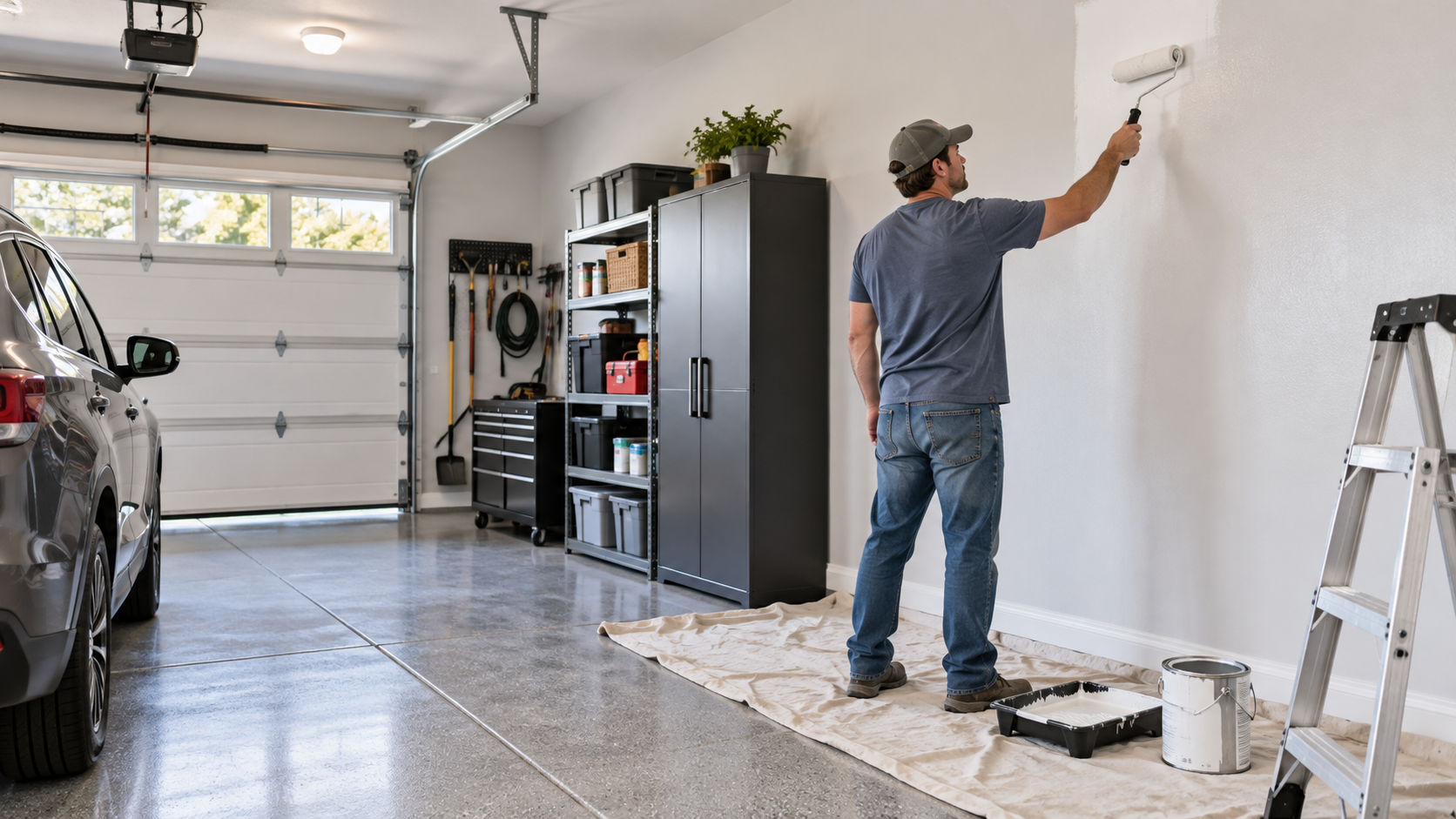
Most homeowners spend considerable time choosing paint colors for their living rooms, bedrooms, and kitchens. However, one space often gets overlooked: the garage. Whether you use it for parking, storage, DIY projects, or a home workshop, its walls experience daily exposure to dust, dirt, scuffs, and occasional moisture.
This raises an important question: Should I paint my garage walls, or is leaving them unfinished perfectly fine?
In most cases, painting your garage walls is a worthwhile improvement. A quality paint finish can brighten the space, make routine cleaning easier, improve its appearance, and provide a more practical surface for everyday use.
However, the decision depends on your garage’s condition, wall material, ventilation, and how you use the space. Choosing the correct coating and preparing the walls properly are essential for achieving lasting results.
Is Painting Garage Walls Really Necessary?
Garage walls do not always need to be painted. If your garage is primarily used for parking and the existing walls are in good condition, leaving them unfinished may be acceptable.
However, unfinished drywall and exposed concrete tend to collect dust and can be difficult to clean.
Paint provides a finished surface that makes the garage feel more like a functional extension of your home.
Five Benefits of Painting Your Garage Walls
- A brighter environment: Light-colored paint reflects more available light, helping improve visibility.
- Easier cleaning: Appropriate washable finishes make fingerprints, dust, and light marks easier to remove.
- A more finished appearance: Painted walls create a cleaner, more organized visual impression.
- Improved usability: A finished garage can feel more inviting as a workshop, storage area, or hobby space.
- Surface protection: Properly selected coatings help reduce surface dusting and protect against ordinary wear.
Painting can improve a garage’s appeal, although it does not guarantee an increase in property value.
What Is the Best Paint for Garage Walls?
One of the most common mistakes homeowners make is choosing exterior paint simply because garages are exposed to outdoor temperatures.
However, an enclosed garage should not automatically be treated like an exterior wall.
Interior Acrylic Latex Paint
For most enclosed residential garages with drywall, a quality interior acrylic latex paint is a practical choice.
These products offer several advantages:
- Relatively fast drying times
- Easy application with brushes or rollers
- Soap-and-water cleanup
- Low-VOC options
- Washable finishes suitable for everyday use
Choose a product designed for durability, especially if your garage doubles as a workspace.
Should You Use Exterior Paint Inside a Garage?
Exterior paints contain formulations designed for sunlight, rainfall, weathering, and outdoor biological growth.
Those properties do not automatically make them appropriate for indoor use.
Some exterior coatings contain additives or generate emissions that are unsuitable for enclosed spaces.
For garage interiors, follow the manufacturer’s approved application guidance and select interior-rated coatings wherever appropriate.
What About Epoxy Paint?
Epoxy coatings are popular for garage floors because certain formulations provide strong chemical and abrasion resistance.
However, floor epoxy is not necessarily appropriate for drywall or ordinary garage walls.
Specialized wall coatings are available for particular industrial or commercial applications, but a conventional residential garage generally does not require them.
Satin vs. Semi-Gloss: Which Finish Works Best?
Paint sheen affects appearance, cleanability, and how noticeable surface imperfections become.
For garages, satin and semi-gloss finishes are often worth considering.
| Paint finish | Best use | Main consideration |
|---|---|---|
| Matte | Low-contact walls | Hides imperfections but may be harder to clean |
| Eggshell | General-purpose garage walls | Balanced appearance and cleanability |
| Satin | Busy garages and workshops | Good washability with moderate reflection |
| Semi-gloss | Trim, doors, and selected walls | Easier cleaning but highlights imperfections |
Satin is often the best all-around option for homeowners who want a durable, attractive finish without excessive shine.
Premium washable matte and eggshell paints can also perform well, depending on the product.
Should I Paint My Garage Walls If They Are Unfinished Drywall?
Yes, painting unfinished drywall is one of the simplest ways to improve a garage’s appearance.
However, applying paint directly to bare drywall without appropriate preparation can produce disappointing results.
Drywall paper and joint compound absorb paint differently. Without primer, this uneven absorption may create patchy areas and inconsistent sheen.
Why Drywall Primer Matters
A quality drywall primer helps seal porous surfaces and promotes a uniform finish.
Sherwin-Williams offers a dedicated interior latex drywall primer intended to seal new drywall and support consistent topcoat application.
For unfinished garage walls, the usual process involves inspecting the drywall, repairing imperfections, applying a suitable primer, and finishing with the selected wall paint.
Check the Fire-Resistance Requirements
Attached garages may have specific requirements for the walls and ceilings separating them from living areas.
Painting does not replace required drywall, protective assemblies, or approved fire-resistant construction.
Avoid removing or modifying existing garage separation materials without verifying local building requirements.
The U.S. EPA also emphasizes maintaining proper air sealing between attached garages and occupied living spaces to help limit pollutant transfer.
How to Paint Concrete or Cinder Block Garage Walls
Not all garages have drywall. Some contain exposed concrete or concrete masonry unit walls.
These surfaces require a different preparation process.
Concrete and masonry are porous and may contain moisture or alkaline deposits.
Prepare Masonry Before Painting
Start by checking for water intrusion, white powdery deposits known as efflorescence, and deteriorating mortar.
These problems must be addressed before applying paint.
Once the surface is dry and sound, clean away dirt and loose materials.
Apply a masonry-compatible primer or sealer where the chosen system requires one, followed by a suitable wall coating.
Do not use ordinary drywall primer on masonry unless the manufacturer explicitly approves that application.
Avoid painting over persistently damp concrete because trapped moisture can cause blistering and peeling.
The Best Garage Wall Colors for a Clean, Modern Appearance
The right paint color depends on available light, the garage’s size, and its intended purpose.
Light neutral shades are often the most practical because they improve visibility and provide a versatile background for storage systems.
Soft White

Reflects light and provides a bright background for shelves, cabinets, and workbenches.
Light Gray

Offers a modern, practical appearance that complements concrete floors and metal storage systems.
Warm Beige

Creates a welcoming look and works well in garages connected to traditionally decorated homes.
Muted Blue-Gray

Introduces subtle color while keeping the garage calm and visually organized.
If you prefer darker colors such as navy or charcoal, consider using them on one accent wall or storage cabinets.
For garages with limited natural light, lighter colors combined with adequate LED lighting usually provide better visibility.
How to Prepare Garage Walls Before Painting
Preparation often determines whether a paint job looks professional and lasts.
Garage walls are frequently exposed to contaminants that do not occur as often in bedrooms or living spaces.
Step 1: Empty and Organize the Work Area
Move vehicles, equipment, and storage items away from the walls.
Cover remaining possessions and protect the floor using suitable drop cloths.
Step 2: Clean Away Dirt and Grease
Use a vacuum or soft brush to remove loose dust.
Clean fingerprints, greasy marks, and other contaminants using an appropriate wall cleaner.
Allow the surfaces to dry before proceeding.
Step 3: Repair Damage
Inspect walls for dents, cracks, loose joint compound, and other imperfections.
Repair minor drywall damage using suitable materials.
If cracks suggest structural movement or moisture damage, investigate the underlying cause rather than simply covering them.
Step 4: Apply Primer Where Necessary
Prime unfinished drywall, repaired sections, or other surfaces that require sealing.
Choose the primer according to the substrate and finish coating.
Step 5: Apply the Finish Coats
Use a suitable roller nap for the wall texture and maintain a consistent application pattern.
Apply additional coats according to the paint manufacturer’s instructions.
Do not rush recoating, particularly in cool or humid conditions.
Painting an Unheated Garage: What Homeowners Should Know
Many residential garages are not connected to the home’s heating and cooling system.
This means air and surface temperatures can change considerably throughout the year.
Temperature fluctuations affect paint application, drying, and film formation.
Check the Temperature Before Painting
Most conventional interior latex paints require application above a specified minimum temperature.
Some specialized coatings tolerate cooler conditions, but others may not form a durable film if applied to cold surfaces.
Always check the manufacturer’s product data sheet.
Remember that concrete and exterior-facing garage walls can be colder than the surrounding air.
Watch for Condensation
In humid conditions, moisture may collect on cool garage walls.
Painting over condensation can interfere with adhesion and cause premature coating failure.
Wait until the surface is completely dry and within the paint’s recommended application conditions.
For homeowners in Charlotte, North Carolina, summer humidity and seasonal temperature changes make these considerations especially important.
Should You Hire a Professional to Paint Your Garage?
Painting a small, empty garage with finished drywall can be a manageable DIY project.
However, larger garages or surfaces requiring extensive repairs may benefit from professional preparation and application.
Consider professional assistance when:
- Drywall joints or repairs are extensive.
- Concrete walls show persistent moisture or staining.
- The garage contains tall ceilings or difficult-to-reach surfaces.
- Existing coatings are peeling or poorly adhered.
- You need a durable, consistent finish across multiple surfaces.
Professional assessment can also help determine the correct primers, coatings, and surface treatments for different garage materials.
Frequently Asked Questions About Painting Garage Walls
Should I paint my garage walls white or gray?
Both are practical choices. White maximizes the perception of brightness, while light gray provides a modern appearance and can make some marks less noticeable.
Should I paint my garage walls before installing storage cabinets?
Yes, painting before installing permanent storage generally provides easier access and cleaner results. Allow the coating to cure sufficiently before mounting cabinets and hardware.
Can I paint garage walls without primer?
Previously painted walls in sound condition may not require a separate primer. However, unfinished drywall, bare masonry, and repaired areas commonly benefit from appropriate priming.
Will painting garage walls prevent mold?
No. Although some coatings resist mildew growth on the paint film, painting does not resolve moisture intrusion, condensation, or underlying mold problems.
How long does garage wall paint last?
A quality coating can remain serviceable for many years, but lifespan depends on surface preparation, moisture exposure, wear, and maintenance.
Should I use interior or exterior paint in my garage?
For most enclosed garage walls, interior-rated acrylic latex paint is the preferred starting point. Choose a coating approved for the specific surface and environmental conditions.
Give Your Garage a Cleaner, More Functional Finish
So, should I paint my garage walls? For most homeowners, the answer is yes. Painting can transform an unfinished garage into a brighter, cleaner, and more useful space. Whether you park vehicles, store household equipment, or maintain a workshop, the right paint finish can improve the appearance and everyday practicality of the area.
The most successful results come from selecting suitable coatings, addressing moisture problems, and preparing the surface correctly. Century Painting & More helps property owners in Charlotte and surrounding communities maintain and restore painted surfaces through professional painting and specialty services. If your garage or other property surfaces have unwanted spray paint or vandalism, their graffiti removal charlotte nc service can help address those markings using methods appropriate for the affected material.