
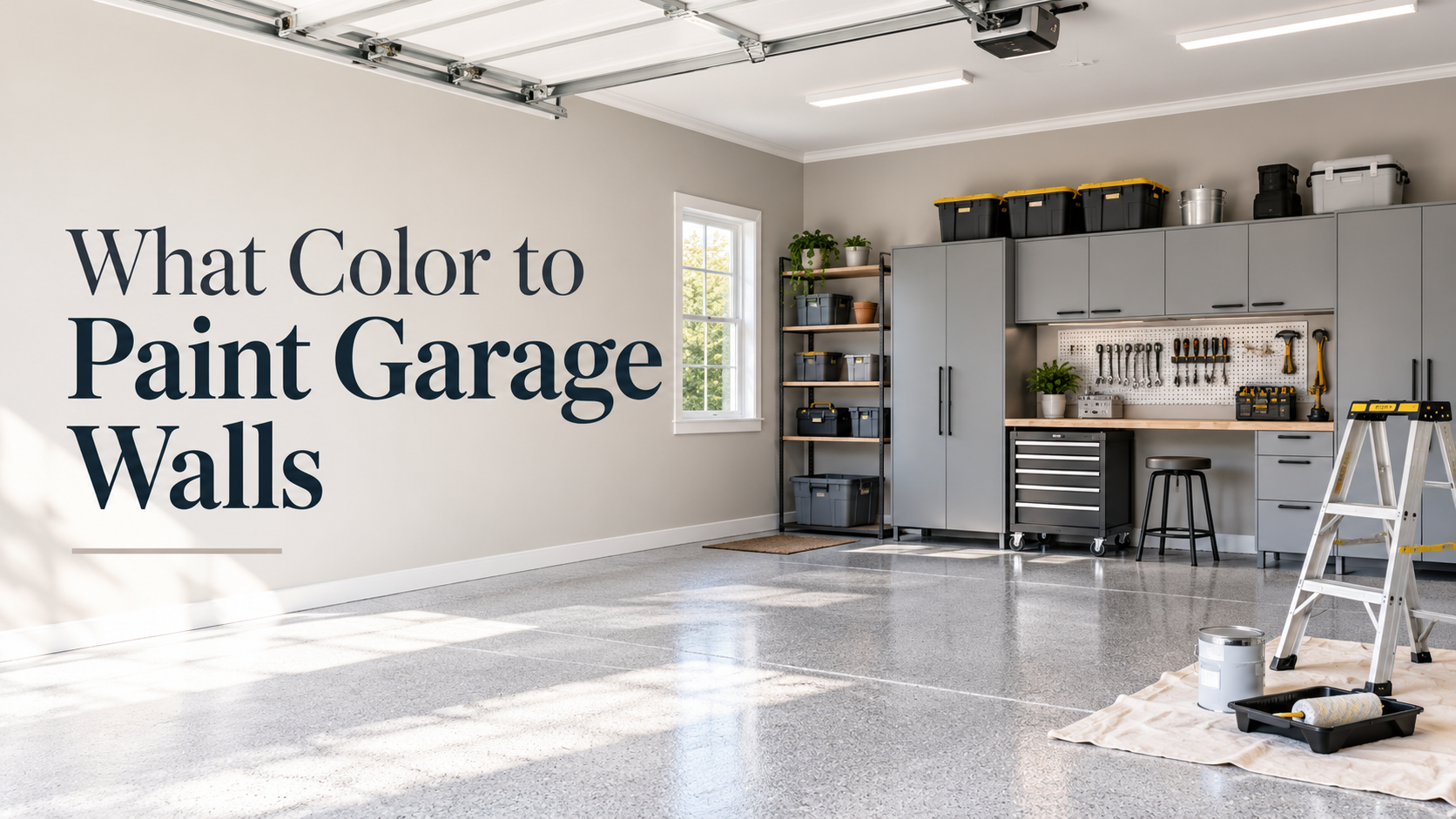
Your garage does not have to look like an unfinished storage room. With the right wall colors, it can become a brighter, cleaner, and more organized extension of your home. Whether you park your car, store equipment, or use the space as a workshop, choosing the right paint color makes a noticeable difference.
If you are wondering what color to paint garage walls, the answer depends on lighting, garage size, flooring, and how you use the space. Light gray, warm white, greige, and soft beige are excellent starting points, but there are plenty of creative options.
Let’s explore practical garage color ideas and how to select a combination that works for your home.
What Color to Paint Garage Walls for the Best Results?
For most residential garages, light neutral colors offer the best balance between brightness and maintenance. However, different shades have different advantages.
1. Light Gray for a Clean, Modern Garage
Light gray is one of the most versatile garage wall colors. It creates a contemporary appearance without showing every fingerprint or minor scuff as readily as bright white.
It also complements concrete flooring, metal shelving, and black storage cabinets.
Light gray works particularly well for garages used for parking, storage, or occasional household projects.
2. Warm White for Maximum Brightness
Garages often have limited windows, making adequate lighting particularly important.
Warm white reflects light and creates a more welcoming appearance than unfinished drywall or dark wall colors.
Unlike stark white, softer shades with cream or beige undertones can make the space feel less industrial.
Consider warm white when your garage is small, has limited natural light, or contains dark flooring.
3. Greige for a Sophisticated Appearance
Greige combines gray and beige undertones, giving homeowners a neutral color that feels warmer than traditional gray.
It pairs beautifully with wooden shelves, black cabinets, and natural-colored flooring.
For attached garages, greige can also create visual continuity with nearby interior rooms.
4. Soft Blue or Sage Green for Something Different
Not every garage needs gray walls.
Muted blue and sage green introduce personality while maintaining a relatively calm atmosphere. These shades work especially well in garages converted into hobby areas, exercise spaces, or creative workshops.
Choose lighter versions when natural lighting is limited.
Choose Garage Wall Colors Based on How You Use the Space
A practical way to answer what color to paint garage walls is to consider what happens inside the garage every day.
For Parking and Vehicle Storage
Choose light gray, taupe, or greige. These colors provide a tidy appearance while making everyday dust and minor marks less noticeable.
A medium-tone lower wall can provide additional visual camouflage in areas exposed to shoes, tires, and stored equipment.
For a Home Workshop
Visibility matters when handling tools, measuring materials, and completing detailed projects.
Light-colored upper walls help distribute available light. Pair them with darker lower walls or cabinets for contrast.
For additional functionality, consider:
- White ceilings to maintain brightness.
- Light gray walls behind workbenches.
- Dark blue or charcoal storage cabinets.
- Bright task lighting above work surfaces.
For a Home Gym
A garage gym can benefit from more personality.
Soft blue, muted green, or warm gray can create a pleasant workout environment without making the space feel visually overwhelming.
A darker accent wall behind exercise equipment can create depth, particularly when the garage has adequate lighting.
Garage Wall Color Combinations That Work Together
Instead of choosing one color for every surface, consider a coordinated scheme.
| Garage Style | Main Walls | Accents |
|---|---|---|
| Bright and minimal | Warm white | Light gray |
| Modern workshop | Pale gray | Charcoal |
| Premium car garage | Soft greige | Navy blue |
| Natural and relaxing | Sage green | Warm white |
| Practical family garage | Light beige | Medium taupe |
For most homes, using a light wall color with darker accents provides a good balance of brightness and character.
How Lighting Changes the Appearance of Garage Paint
The same paint sample can look completely different in two garages.
Natural Lighting vs. Artificial Lighting
A garage with large windows may accommodate deeper wall colors. A windowless garage typically benefits from lighter surfaces and well-positioned artificial lighting.
LED lighting also affects color perception. Warm lighting can emphasize yellow and beige undertones, while cooler lighting can change how gray and blue appear.
Test Colors Before Painting
Before committing to a color:
- Select two or three possible shades.
- Apply samples to different wall sections.
- Observe them with the garage door open and closed.
- Check their appearance under your normal garage lighting.
- Compare them against your floor and storage cabinets.
This simple process helps prevent expensive color mistakes.
What Type of Paint Finish Is Best for Garage Walls?
Color is only half the decision. Garage walls also experience dust, accidental contact, and occasional moisture.
For many finished garage walls, satin paint provides a useful balance of appearance and cleanability.
Eggshell is another option when a softer appearance is preferred. Semi-gloss may suit specific high-contact surfaces, although it can emphasize drywall imperfections.
Choose a durable, washable coating appropriate for your wall material.
Unfinished concrete blocks may require masonry-specific products, while bare drywall needs suitable priming.
Also, avoid using ordinary wall paint on garage floors. Those surfaces require coatings specifically designed for foot traffic and vehicle use.
Common Garage Painting Mistakes to Avoid
Even an attractive color can deliver disappointing results when basic preparation is overlooked.
Watch out for these mistakes:
- Choosing dark colors throughout: Dark walls may reduce the feeling of brightness in a garage without sufficient lighting.
- Skipping surface preparation: Dust, grease, and peeling coatings interfere with paint adhesion.
- Ignoring moisture problems: Water intrusion must be corrected before repainting.
- Using incompatible paint: Different wall materials require suitable primers and coatings.
- Selecting colors without testing: Artificial lighting can significantly change how colors appear.
Address damaged drywall, inspect existing coatings, and follow the manufacturer’s temperature and drying recommendations before painting.
Frequently Asked Questions
Should Garage Walls Be White or Gray?
Both work well. White maximizes brightness, while light gray creates a modern appearance and may disguise minor marks more effectively.
Should Garage Walls Match the House?
They do not need to match exactly. Coordinating undertones with adjacent rooms or exterior details can create a more consistent appearance.
Is It Better to Paint Garage Walls Dark or Light?
Light colors are generally more practical for garages with limited lighting. Dark colors work best as accents or in well-lit spaces.
What Color Hides Dirt Best on Garage Walls?
Medium-tone greige, taupe, and warm gray can help conceal everyday dust and minor scuffs better than very bright white.
Give Your Garage a Fresh, Functional Look
Deciding what color to paint garage walls becomes easier when you balance style with lighting, maintenance, and everyday use. Whether you prefer light gray, warm white, or a modern two-tone design, proper surface preparation and quality paint make the difference. If you want professional guidance on selecting colors and creating a lasting finish, Century Painting’s experienced Painters in Davidson nc can help transform your garage into a cleaner, more attractive, and functional space.