
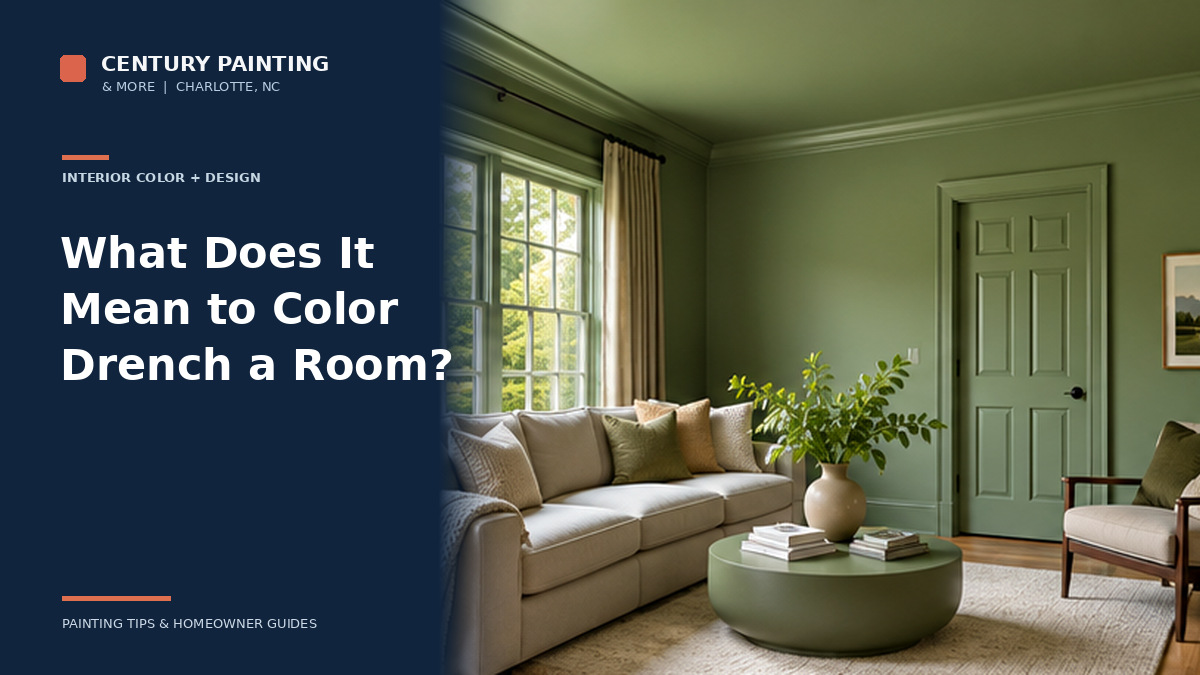
What does it mean to color drench a room? Color drenching means painting the walls, ceiling, trim, and often doors or built-ins in one coordinated color so the room feels like a continuous space. Instead of placing color on a single accent wall, the technique allows it to wrap around the entire room. The result can feel intimate and dramatic with a deep shade or light and calm with a muted one.
The idea sounds simple, but successful color drenching depends on lighting, finish selection, room proportions, and the surfaces being painted. The same pigment can look different overhead, beside a window, and on glossy trim. Understanding those differences makes the effect feel intentional rather than accidental.
What Makes Color Drenching Different From Ordinary Painting?
A conventional scheme might pair white ceilings and baseboards with four colored walls. Your eye notices each boundary. In a color-drenched room, the repeated color reduces those interruptions. A doorway, fireplace surround, or crown molding can still have depth because shadows and different paint sheens reveal its shape.
A full drench uses essentially the same hue on all major painted surfaces. A softer, tonal version uses several closely related shades. Both create cohesion, but the single-color approach produces the strongest seamless effect. Furniture, floors, art, and textiles provide contrast so the space does not become visually flat.
The ceiling matters more than homeowners expect
A white ceiling creates a clear endpoint above colored walls. Extending the selected shade overhead removes that high-contrast line. In a compact study or bedroom, this can make the corners less visually prominent. In a large space, it can create a deliberate, enveloping atmosphere.
However, ceiling lighting changes how the color reads. A rich green on a wall may look nearly charcoal in an unlit ceiling corner. Test before committing, particularly where windows are small or directional.
Choose a Color for the Mood, Not Just the Trend
Color drenching does not require black, navy, or another dramatic shade. The choice should begin with how the room is used and when it receives natural light.
- Dusty sage or muted blue: a restful direction for bedrooms, reading rooms, and relaxed sitting areas.
- Warm clay or ochre: adds warmth to a study or room with wood furniture and textured fabrics.
- Deep green or ink blue: can turn a dining room or library into a cozy, focused space.
- Soft stone or warm beige: gives the continuous look without making color the loudest element.
Light reflectance value, or LRV, describes how much visible light a color reflects on a scale from dark to light. It can help compare options, but it does not predict the finished room by itself. Window direction, bulbs, sheen, furniture, and neighboring rooms all influence perception. Two colors with similar LRVs can create very different moods because of their undertones.
Use One Color With the Right Finishes
Color consistency does not require using exactly the same paint formulation on every surface. Ceilings, walls, and trim face different conditions. Select compatible coatings designed for each location and specify the same color wherever possible.
Walls and ceilings
Matte or low-sheen finishes often support a softer, less reflective look. A wall finish should also suit the room’s traffic and cleaning needs. Ceilings are commonly finished in a low-luster product, which helps reduce visible glare and roller marks. Never assume a wall product is automatically the right ceiling product without checking the label.
Doors, baseboards, and built-ins
Trim gets touched, bumped, and wiped more often. A more durable finish with a modest sheen may be practical, even when its color matches the walls. The sheen contrast can outline decorative profiles subtly, without returning to stark white trim.
Painted cabinetry and built-ins deserve special attention: their existing coating, hardware, and use may call for a different preparation and coating system. Matching the wall color is an aesthetic choice, not permission to skip material-specific preparation.
A homeowner who asks what does it mean to color drench a room should also consider that repeating a hue is not the same as repeating one sheen or one paint product; continuity and surface durability have to work together.
Test the Effect Around the Entire Room
A tiny color chip cannot show what happens when six surfaces share one hue. Before committing, place large samples where natural and artificial light will change their appearance. Move the samples between wall positions and view them in the morning, afternoon, and evening.
It helps to assess the samples next to permanent elements: flooring, countertops, tile, stone, and major upholstered pieces. A blue-green can look refined beside warm oak yet unexpectedly cold against gray flooring. Also check the sightline from adjoining rooms. A dramatic study may look wonderful with its door open, but the transition should still feel deliberate.
For a bolder room, consider painting a trial section on a wall and a matching panel positioned near the ceiling. Use the actual products and finishes under consideration when practical. This reveals whether slight sheen differences add dimension or make the finish appear inconsistent.
Plan the Work So the Color Looks Seamless
The visual simplicity of a color-drenched room makes small flaws easier to notice. Wavy caulk lines, damaged trim, uneven repairs, and mismatched coverage can interrupt the effect even when every surface uses the same color.
A sensible sequence is to repair and clean all surfaces first, protect flooring and fixtures, address any primer needs, then paint the ceiling, walls, and trim in a controlled order. The exact sequence may be adjusted for the materials, but ceiling-first, walls-next, trim-last is a useful starting point. Allow the recommended recoat time; moving too quickly can produce uneven sheen or poor durability.
What about wallpaper, exposed brick, or natural wood?
You do not have to coat every material to create a successful drench. Exposed brick, timber beams, and wallpaper may provide valuable texture. Decide which features should remain visible rather than painting them merely to follow a design rule. Leaving a natural-wood floor or a patterned rug in place often makes the same-color walls more interesting.
Common Mistakes That Make a Drenched Room Feel Wrong
The first mistake is choosing from a social-media photo without testing the color at home. The second is ignoring the room’s intended use: a moody lounge may be wonderful at night but uncomfortable in a workroom used mainly during the day. The third is treating all surfaces as interchangeable, which can result in scuffed trim or a ceiling with unwanted shine.
Other problems include poor edge preparation, inconsistent paint batches, and selecting lamps that distort the color. Use a consistent lighting temperature where practical and make sure the color works with furniture already in the room. A successful design should feel comfortable after the novelty wears off.
Is Color Drenching a Good Idea for Small Rooms?
Often, yes. The continuous color can visually quiet corners and reduce the number of competing edges. It is not a guarantee that a room will look larger, though. Deep colors absorb more light, while lighter ones can feel more open. Think of the technique as a way to control the room’s atmosphere, not as a universal space-enlarging trick. So, what does it mean to color drench a room? It means treating the room as one coordinated color environment while making informed decisions about light, finish, and durability. Homeowners considering this look can benefit from help coordinating walls, ceilings, trim, and built-ins. For a carefully planned interior update, talk to Century Painting & More’s interior painters Cornelius team about the surfaces and finish combinations that will make your chosen color work.