
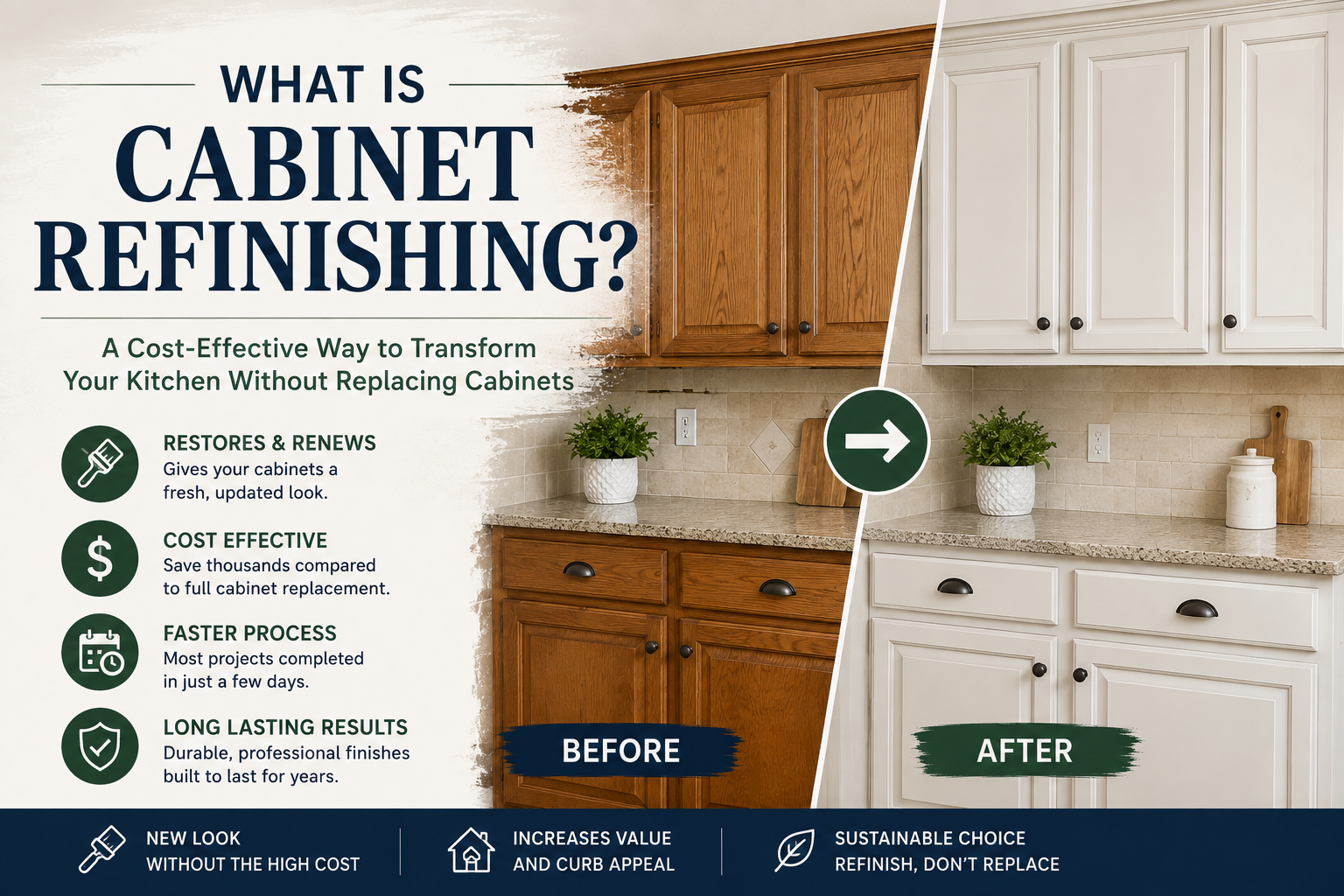
Kitchen cabinets are one of the most noticeable features in any home. Over time, however, they can become scratched, faded, stained, or simply look outdated. While many homeowners assume replacing cabinets is the only solution, cabinet refinishing offers a more affordable way to transform the look of a kitchen or bathroom without the expense of a full renovation.
If you’ve been wondering what is cabinet refinishing, this guide explains how the process works, its benefits, and whether it’s the right option for your home.
What Is Cabinet Refinishing?
Cabinet refinishing is the process of restoring the appearance of existing cabinets by sanding, repairing, priming, and applying a new stain or paint finish. Instead of removing and replacing the cabinet boxes, the existing cabinets remain in place while their surfaces are professionally renewed.
The goal is to give cabinets a fresh, updated appearance while preserving their existing structure.
Cabinet refinishing is commonly used on:
- Kitchen cabinets
- Bathroom vanities
- Laundry room cabinets
- Built-in shelving
- Office cabinets
- Entertainment centers
When completed properly, refinished cabinets can look almost identical to brand-new ones.
How Does Cabinet Refinishing Work?
Although every project is slightly different, cabinet refinishing generally follows a detailed process designed to produce a smooth, factory-like finish.
The first step involves removing cabinet doors, drawers, handles, hinges, and other hardware. This allows every surface to be prepared and coated evenly.
Next, the cabinets are thoroughly cleaned to remove years of grease, cooking residue, dust, and household contaminants. Proper cleaning is essential because paint and stain cannot adhere well to dirty surfaces.
Once clean, minor dents, scratches, or imperfections are repaired before sanding begins. Sanding removes the existing finish, smooths rough areas, and creates a surface that allows the new coating to bond properly.
After sanding, a high-quality primer is applied when necessary. Primer improves adhesion, blocks stains, and creates an even foundation for the final finish.
Finally, professional-grade paint or stain is carefully applied using brushes, rollers, or spray equipment, depending on the desired appearance.
Once everything has cured, the hardware is reinstalled and the cabinets are ready to use.
Cabinet Refinishing vs. Cabinet Replacement
Many homeowners confuse refinishing with replacement, but the two are very different.
Cabinet replacement involves removing the existing cabinets and installing entirely new ones. While this allows for layout changes, it is significantly more expensive and often requires additional work involving countertops, plumbing, flooring, and electrical systems.
Cabinet refinishing keeps the existing cabinets while updating only the exterior appearance. As long as the cabinet boxes remain structurally sound, refinishing can dramatically improve their appearance at a fraction of the cost of replacement.
Cabinet Refinishing vs. Cabinet Refacing
Another common point of confusion is the difference between refinishing and refacing.
Cabinet refinishing restores the existing cabinet surfaces by sanding and applying new paint or stain.
Cabinet refacing involves replacing cabinet doors and drawer fronts while covering the cabinet boxes with new veneer or laminate.
Both options improve appearance, but refinishing is typically the more economical choice when the existing doors are still in good condition.
Benefits of Cabinet Refinishing
One of the biggest reasons homeowners choose cabinet refinishing is the amount of money it can save compared to installing entirely new cabinetry.
Because the existing cabinets remain in place, labor costs are significantly lower and the project is completed much faster.
Cabinet refinishing also allows homeowners to completely change the style of their kitchen by selecting new colors or finishes.
Popular cabinet colors include:
- White
- Soft gray
- Navy blue
- Black
- Sage green
- Natural wood finishes
Modern paints and stains offer excellent durability while providing a clean, updated appearance.
When Is Cabinet Refinishing a Good Option?
Cabinet refinishing works best when the cabinets are structurally sound but simply look worn or outdated.
It is an excellent choice if your cabinets have:
- Faded finishes
- Minor scratches
- Surface stains
- Outdated colors
- Light wear from daily use
However, if the cabinets have severe water damage, broken frames, warped wood, or structural problems, replacement may be the better long-term investment.
Can Any Cabinets Be Refinished?
Most solid wood cabinets can be successfully refinished.
Cabinets made from hardwoods such as oak, maple, cherry, and birch respond especially well to the refinishing process.
Some engineered wood products can also be refinished depending on their surface material and overall condition.
A professional inspection helps determine whether refinishing is the right solution.
How Long Does Cabinet Refinishing Take?
The timeline depends on the size of the kitchen and the amount of preparation required.
Most residential cabinet refinishing projects are completed within three to seven days.
Larger kitchens or projects involving extensive repairs may require additional time to ensure proper curing and a flawless finish.
Although homeowners temporarily lose access to their cabinets during the project, refinishing is still much faster than a complete cabinet replacement.
How Long Does Cabinet Refinishing Last?
Professionally refinished cabinets can remain beautiful for ten years or longer with proper care.
Longevity depends on:
- Surface preparation
- Paint quality
- Application technique
- Daily use
- Cleaning methods
Using gentle cleaning products and avoiding harsh abrasives helps preserve the finish for many years.
Caring for Refinished Cabinets
Once your cabinets have been refinished, regular maintenance keeps them looking their best.
Clean surfaces with a soft cloth and mild soap instead of abrasive cleaners. Wipe away spills promptly to prevent moisture from sitting on the finish.
Avoid slamming cabinet doors or using excessive force on drawers, as this can gradually damage even high-quality finishes.
Routine care helps maximize the life of the refinishing work.
Why Hire a Professional?
Although DIY cabinet refinishing kits are widely available, achieving a smooth, durable, factory-quality finish requires specialized preparation, premium materials, and professional equipment. Uneven sanding, poor primer application, or low-quality paint can leave visible brush marks, peeling, or premature wear.
Professional painters understand the proper preparation techniques, drying times, and finishing methods needed to produce cabinets that look brand new.
If you’re looking for a trusted painting company Charlotte NC, Century Painting & More provides expert cabinet refinishing services that transform kitchens, bathrooms, and built-in cabinetry with beautiful, long-lasting finishes.
Final Thoughts
If you’ve been asking what is cabinet refinishing, it’s a cost-effective way to restore existing cabinets without the expense and disruption of a complete replacement. By cleaning, repairing, sanding, priming, and applying a new finish, professional refinishing can dramatically improve the appearance of your kitchen or bathroom while extending the life of your cabinets.
Whether you’re preparing your home for sale or simply updating your living space, cabinet refinishing offers an affordable solution that delivers impressive results. With quality materials and professional workmanship, refinished cabinets can provide years of beauty, durability, and value.