
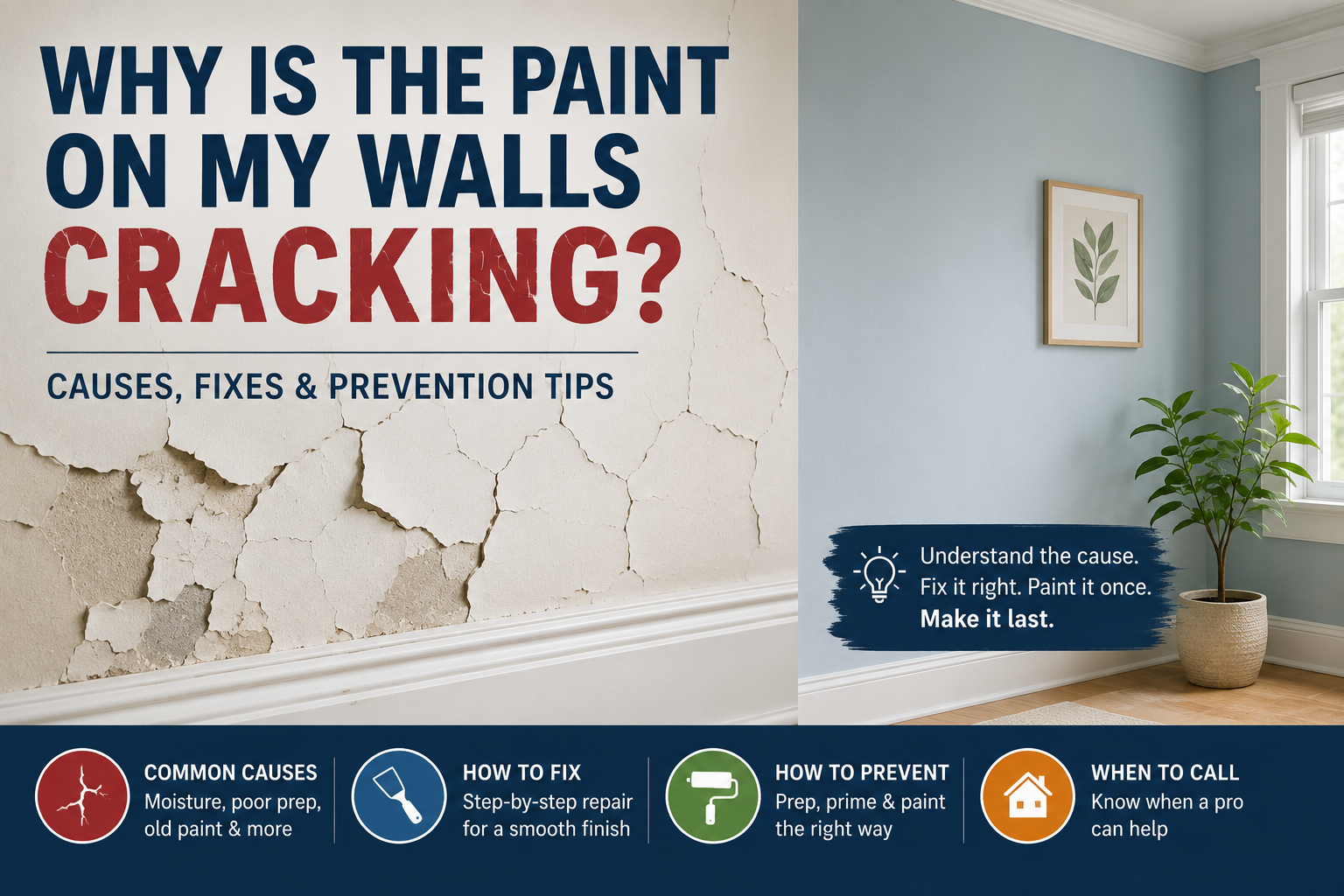
Why is the paint on my walls cracking? Cracked wall paint is usually caused by poor surface preparation, moisture, applying paint too thickly, painting over unstable old coatings, using low-quality paint, or movement in the wall itself. The correct repair depends on the cause, so simply painting over the cracks usually does not solve the problem for long.
Paint cracking can start as fine hairline lines and gradually develop into larger splits, peeling sections, or an alligator-like pattern. Understanding why is the paint on my walls cracking is the first step toward repairing the surface properly and preventing the same issue from coming back.
Poor Surface Preparation
One of the most common causes of cracking paint is inadequate preparation before the paint was applied.
Paint needs a clean, dry, stable surface to bond properly. If the wall contains dust, grease, old loose paint, sanding residue, or other contaminants, the new coating may not adhere evenly.
Over time, that weak bond can lead to cracking and peeling.
Good preparation usually includes cleaning, repairing, sanding, removing loose coatings, and priming where necessary.
Moisture Behind the Paint
Moisture is another major cause of wall paint failure.
Water can enter walls from:
- Plumbing leaks
- Roof leaks
- Condensation
- High indoor humidity
- Bathroom moisture
- Exterior water intrusion
When moisture gets behind the paint film, it can weaken adhesion and cause bubbling, peeling, or cracking.
If you notice discoloration, damp patches, bubbling, or recurring cracks in the same location, the moisture source should be fixed before repainting.
Painting over a moisture problem only hides it temporarily.
Paint Was Applied Too Thickly
Applying a heavy coat may seem like a way to improve coverage, but it can create the opposite result.
The surface of a thick paint layer may dry faster than the paint underneath. As the lower layer continues drying and shrinking, tension develops in the coating.
This can produce deep cracks sometimes referred to as mud cracking.
Multiple thin, even coats generally perform better than one heavy coat.
Each coat should also be allowed to dry according to the manufacturer’s instructions before another layer is applied.
The Previous Paint Was Already Failing
New paint is only as stable as the coating underneath it.
If the existing paint is cracked, peeling, chalky, or poorly bonded, applying a fresh coat directly over it does not repair the weak foundation.
As the old coating continues to fail, the new paint often cracks with it.
Loose or damaged paint should be scraped and sanded away before repainting. Severely deteriorated surfaces may require more extensive removal before primer and new paint are applied.
Skipping Primer
Primer is not necessary for every repainting project, but there are situations where it plays an important role.
Primer can help:
- Seal porous drywall
- Cover repaired areas
- Improve adhesion
- Create a uniform surface
- Block stains
- Reduce uneven paint absorption
Fresh drywall compound, bare drywall paper, repaired holes, and certain old finishes often benefit from priming.
Without a suitable primer, the finish coat may absorb unevenly or bond poorly, eventually contributing to cracking or peeling.
Fresh Plaster or Joint Compound Was Not Fully Dry
Painting too soon over fresh plaster, joint compound, or repaired drywall can create problems.
These materials contain moisture and need time to dry completely before painting.
If paint traps moisture beneath the surface, adhesion may suffer. You may later see bubbling, cracking, or uneven areas around repairs.
Always allow repair materials to dry fully before sanding, priming, and repainting.
Low-Quality or Incompatible Paint
Paint quality can also affect durability.
Lower-quality coatings may contain less flexible binders and can become brittle sooner than premium products.
Compatibility matters too.
For example, applying a new coating over a glossy or incompatible older finish without proper preparation can reduce adhesion.
Using quality paint helps, but even premium paint can fail when it is applied over a poorly prepared surface.
Temperature and Humidity During Painting
Paint needs suitable environmental conditions while drying.
If the room is extremely cold, paint may dry very slowly and struggle to develop proper adhesion.
If conditions are excessively hot, the surface may dry too rapidly.
High humidity also slows evaporation, especially with water-based paints.
Stable indoor temperatures, moderate humidity, and gentle airflow generally create better drying conditions.
Structural Movement Can Cause Cracks
Not every crack is actually a paint problem.
Homes naturally settle and building materials expand and contract over time.
Small movements in drywall or plaster can create cracks around:
- Doors
- Windows
- Ceiling joints
- Drywall seams
- Corners
If the crack runs through the drywall or plaster beneath the paint, repainting alone will not fix it.
The underlying crack needs to be repaired first.
Large, widening, diagonal, or repeatedly returning cracks can sometimes indicate more significant movement and may deserve professional evaluation.
Why Does Paint Crack Around Windows and Doors?
Windows and doors are common places for cracks because these areas experience more movement than large flat sections of wall.
Changes in temperature, framing movement, settling, and repeated opening and closing can stress nearby drywall joints.
If cracks repeatedly develop around these areas, inspect the wall itself rather than assuming the paint is the only problem.
What Does Alligator Cracking Mean?
Older paint sometimes develops a pattern resembling reptile skin.
This is often called alligator cracking.
It can happen when:
- Very hard paint is applied over a softer coating
- Multiple old paint layers become brittle
- A second coat is applied before the first has dried properly
- The coating loses flexibility with age
Repairing severe alligator cracking usually requires removing the unstable paint rather than covering it with another coat.
Can You Just Paint Over Cracked Paint?
Usually, no.
Painting directly over cracks may make the wall look better temporarily, but the cracks commonly return because the underlying cause remains.
The proper repair usually involves:
- Identifying why the cracking happened.
- Correcting any moisture or structural problems.
- Removing loose or unstable paint.
- Sanding the area smooth.
- Repairing damaged drywall or plaster.
- Priming where required.
- Applying new paint in controlled coats.
Taking time to fix the foundation produces much better results than simply covering the visible damage.
How to Fix Cracking Paint on Walls
Start by gently scraping away loose and flaking paint.
Do not stop at the visible crack if surrounding paint is also poorly bonded.
Next, feather the edges with fine sandpaper so the repaired area transitions smoothly into the surrounding surface.
If the wall itself has a crack or damaged drywall, repair it with the appropriate patching compound. Allow the repair to dry completely, sand it smooth, and remove all dust.
Apply primer where necessary, particularly over bare drywall, repairs, stains, or porous areas.
Finish with two thin, even coats of quality interior paint, allowing the proper drying time between coats.
Don’t Ignore the Cause
This is the most important part of the repair.
If water is entering the wall, fix the leak.
If the drywall is moving, repair the joint.
If the old paint is unstable, remove it.
If the surface is contaminated, clean it.
A successful paint repair begins below the finish coat.
How to Prevent Wall Paint From Cracking
Most paint cracking can be reduced dramatically through good preparation and application.
Before painting:
- Make sure the wall is clean and dry.
- Repair cracks and holes.
- Remove peeling or loose paint.
- Sand glossy or uneven areas.
- Prime when necessary.
- Use quality interior paint.
- Apply thin, even coats.
- Allow adequate drying time.
- Maintain reasonable indoor temperature and humidity.
These steps take more time upfront but usually result in a much longer-lasting finish.
When Should You Call a Professional Painter?
Minor isolated cracks can often be repaired by homeowners.
Professional help becomes more useful when:
- Cracking covers multiple walls
- Paint keeps failing after repairs
- Moisture damage is present
- Large sections are peeling
- The underlying drywall or plaster is damaged
- You’re unsure what coating is already on the wall
Experienced painters can determine whether the issue is primarily paint failure, moisture, surface damage, or poor preparation.
If you need help restoring damaged walls, our residential painters Charlotte NC provide professional interior painting with careful surface preparation, drywall repairs, priming, and durable finish coats.
Century Painting & More has served homeowners throughout the Charlotte area since 1999, helping correct painting problems properly rather than simply covering them up.
Final Thoughts
If you’re asking why is the paint on my walls cracking, the cause is usually related to adhesion, moisture, application, aging paint, or movement beneath the surface.
The most important thing is not to rush into repainting.
Find the source of the problem first, repair the underlying surface, remove unstable paint, prime where needed, and apply quality paint in thin, properly dried coats. Understanding why is the paint on my walls cracking helps you avoid temporary fixes and gives you a much better chance of achieving a smooth, durable finish that stays attractive for years.