
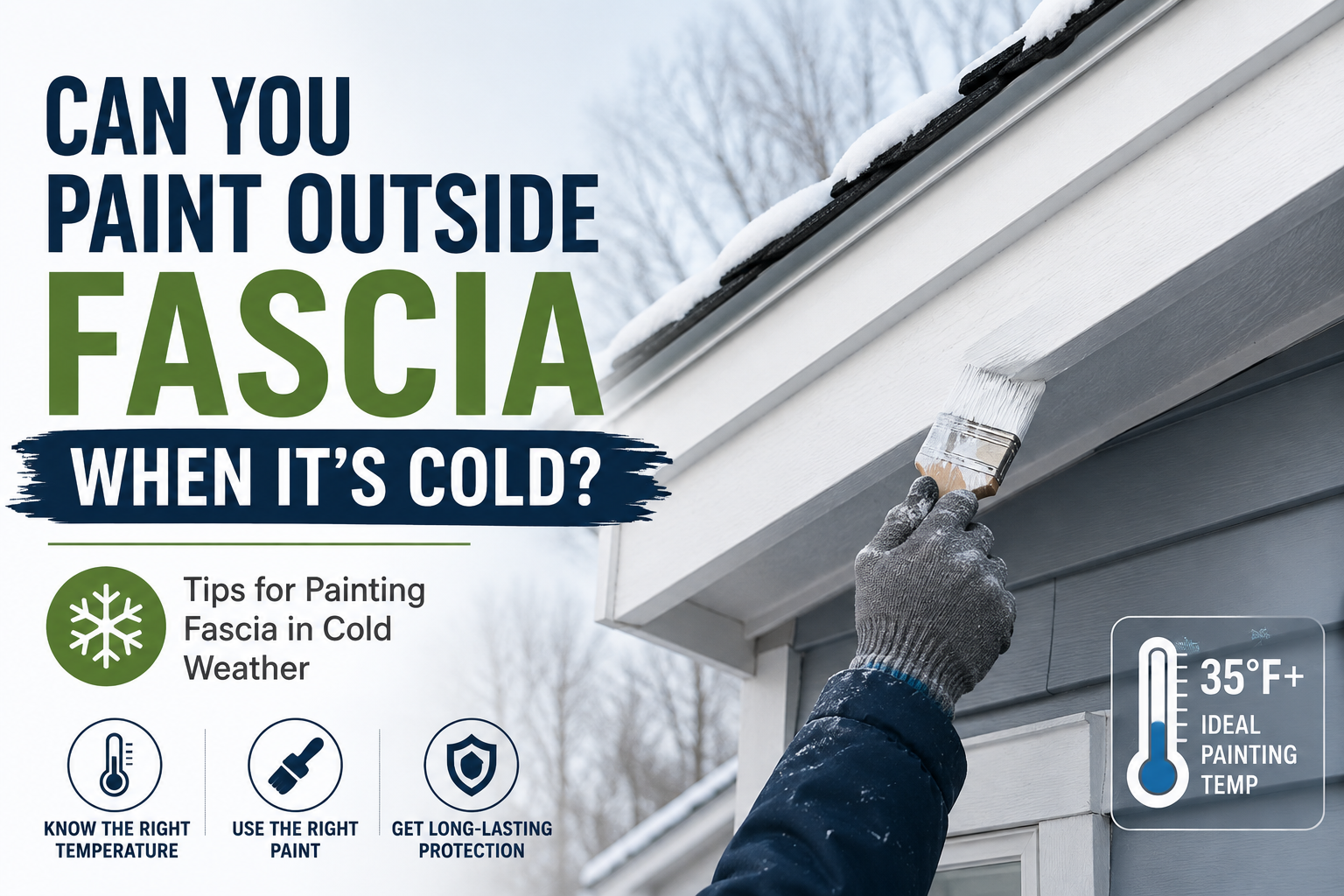
Your home’s fascia boards play an important role in protecting the roofline while giving your exterior a clean, finished appearance. Because fascia is constantly exposed to sun, rain, wind, and changing temperatures, keeping it properly painted helps prevent moisture damage, wood rot, and costly repairs. But what happens if you need to repaint your fascia during colder months? Many homeowners ask, can you paint outside fascia when it’s cold?
The short answer is yes, but only under the right conditions. Modern exterior paints are more advanced than ever, yet temperature still has a major impact on how paint dries, cures, and performs over time. This guide explains when it’s safe to paint fascia in cold weather, the risks of painting in low temperatures, and how to achieve long-lasting results.
Why Temperature Matters When Painting Fascia
Exterior paint doesn’t simply dry after it’s applied. It also goes through a curing process that allows it to bond securely with the surface and develop its full durability.
Cold weather slows this curing process considerably. If temperatures fall below the paint manufacturer’s recommended minimum, the paint may struggle to adhere properly, increasing the risk of peeling, blistering, or premature failure.
Since fascia boards are directly exposed to outdoor weather, applying paint under the proper conditions is especially important.
Can You Paint Outside Fascia When It’s Cold?
Yes, you can paint fascia during cooler weather, provided the temperature remains within the range recommended by the paint manufacturer.
Most standard exterior paints should only be applied when temperatures remain above 50°F (10°C) during application and for at least the next 24 hours.
Some premium exterior acrylic paints are formulated for lower temperatures and can be applied in conditions as cool as 35°F (2°C). However, these products still require stable temperatures while the paint cures.
Before beginning any project, always check both the daytime and overnight forecast.
Surface Temperature Is Just as Important
Many homeowners focus only on the air temperature, but the fascia itself may be significantly colder.
Wood fascia located in shaded areas often remains cooler than the surrounding air, particularly during the morning hours.
Professional painters often use infrared thermometers to verify that the actual surface temperature meets the paint manufacturer’s recommendations before applying paint.
What Happens If You Paint Fascia When It’s Too Cold?
Applying paint below the recommended temperature can create several problems.
The paint may dry unevenly, resulting in visible brush marks or inconsistent sheen. It may also take much longer to dry, allowing dust, insects, and debris to stick to the surface.
More serious problems may appear later, including peeling, blistering, cracking, fading, or poor adhesion that shortens the lifespan of the paint job.
These issues often require sanding and repainting much sooner than expected.
Moisture Can Cause Additional Problems
Cold weather is often accompanied by increased moisture.
Morning dew, frost, fog, or recent rainfall can leave fascia boards damp even when they appear dry.
Painting over damp wood traps moisture beneath the paint film, increasing the likelihood of peeling and blistering later.
Always ensure the fascia is completely dry before applying primer or paint.
Choosing the Right Exterior Paint
If you expect to paint during cooler months, selecting the right product is essential.
Many premium exterior acrylic paints are specifically designed for low-temperature application. These products provide better adhesion and improved curing performance during mild winter conditions.
Even when using cold-weather paint, always follow the manufacturer’s recommended temperature range.
Proper Preparation Is Essential
Good preparation becomes even more important during cold-weather painting.
Before painting fascia boards, clean away dirt, mildew, loose paint, and debris. Inspect the wood for signs of rot or damage, replacing deteriorated sections if necessary.
Scrape peeling paint, sand rough areas, and apply primer to bare wood before painting.
Taking the time to prepare the surface properly greatly improves the durability of the finished paint job.
Should You Paint in Direct Sunlight?
Painting fascia during bright afternoon sunlight may seem like a good way to compensate for cold temperatures, but extremely warm surfaces can also create problems.
Rapid drying may prevent the paint from leveling properly, leaving visible brush marks.
Ideally, paint when temperatures are moderate and stable throughout the day.
Watch the Weather Forecast Carefully
Weather conditions can change quickly during cooler months.
Before starting your project, check for:
- Overnight freezing temperatures
- Rain within the next 24 hours
- High humidity
- Strong winds
- Frost warnings
Even if daytime temperatures appear suitable, freezing conditions overnight can interfere with proper curing.
Planning around favorable weather greatly improves the quality of the finished result.
Can You Paint Fascia in Winter?
In many areas, winter painting is entirely possible.
Professional painters often complete exterior work during mild winter days when temperatures remain above the recommended minimum and no rain or frost is expected.
Success depends more on actual weather conditions than the season itself.
If the forecast provides a full day of dry, stable temperatures, winter fascia painting can be completed successfully using the proper products.
How Long Should Paint Dry Before Nightfall?
Ideally, fascia paint should have several hours of warm, dry weather before evening temperatures begin to fall.
Starting early in the morning allows the paint to dry during the warmest part of the day.
This reduces the chance of moisture interfering with the curing process overnight.
Should You Hire a Professional?
Painting fascia boards requires more than simply choosing the right paint. Professionals understand how temperature, humidity, surface moisture, and weather forecasts affect exterior coatings. They also have the equipment needed to safely reach rooflines and apply smooth, even finishes that last for years.
If you’re looking for a trusted painting company Charlotte NC, Century Painting & More provides expert exterior painting services, including fascia, soffits, trim, siding, and complete home exteriors using premium materials and proven application techniques.
Final Thoughts
If you’ve been wondering can you paint outside fascia when it’s cold, the answer is yes—but only when temperatures remain within the paint manufacturer’s recommended range and the fascia is completely dry. Using high-quality exterior paint, preparing the surface properly, and choosing the right weather conditions are all essential for achieving a durable finish.
Rather than rushing a project during unsuitable conditions, it’s often worth waiting for a mild, dry day. Proper timing helps ensure your fascia remains protected against the elements while keeping your home’s exterior looking fresh, clean, and well maintained for many years.