
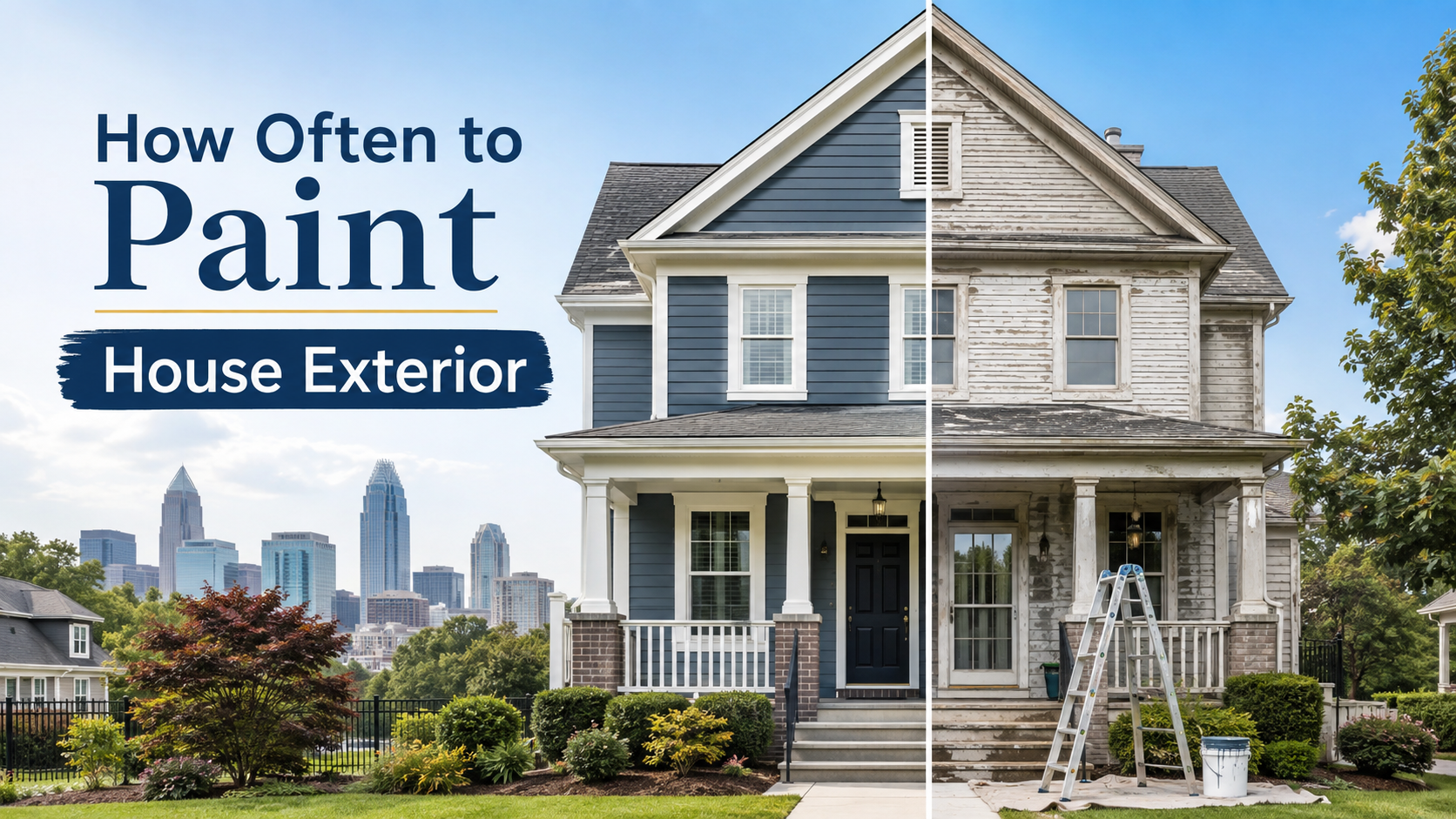
How often to paint house exterior surfaces? Most homes should be repainted about every 5 to 10 years, but the right schedule depends on the siding material, paint quality, surface preparation, sun exposure, moisture, and local weather. Wood siding may need attention sooner, while well-prepared stucco, fiber cement, or painted masonry can sometimes hold a quality finish longer.
Exterior paint does more than improve curb appeal. It helps shield siding, trim, fascia, and doors from sunlight, rain, humidity, and everyday weather exposure. Repainting before the coating fails completely is usually easier and less expensive than waiting until peeling paint and damaged materials require major repairs.
There Is No Fixed Schedule for Every Home
A five-to-ten-year interval is a useful starting point, not a strict rule. Two nearby homes painted at the same time can age differently because of shade, orientation, maintenance, material, and the products used.
A home with strong afternoon sun on its south- and west-facing walls may fade faster than a shaded property. A house surrounded by trees may receive less UV exposure but hold more moisture and develop mildew sooner. The best approach combines the age of the paint job with a yearly inspection.
Exterior Materials Age Differently
Wood siding usually needs more frequent attention because it expands, contracts, and absorbs moisture. Cracked caulk, exposed grain, and peeling edges should be repaired before water reaches the wood.
Stucco can hold paint well, but hairline cracks, chalking, and moisture stains may shorten the repainting cycle. Fiber cement, aluminum, and painted masonry are generally durable, yet their coatings still fade and wear over time.
Rather than relying only on an average lifespan, inspect how the paint is performing on your actual home.
Charlotte Weather Affects Paint Life
Charlotte’s hot summers, humidity, heavy rain, and seasonal storms place steady stress on exterior coatings. UV exposure breaks down color, while moisture can enter through failed caulk, cracks, or poorly protected wood.
Temperature changes also cause building materials to move. A flexible, high-quality exterior coating handles this better than brittle paint, but no finish lasts forever. Homes with limited shade, frequent moisture exposure, or aging wood trim may need repainting closer to the shorter end of the range.
Preparation and Paint Quality Matter
A long-lasting paint job begins before the first finish coat.
Proper preparation may include cleaning the exterior, removing loose paint, sanding rough edges, repairing rot or damaged siding, sealing gaps, and priming bare or problem areas. Painting over dirt, moisture, chalky residue, or unstable old paint creates a weak foundation.
Premium exterior paint generally provides better adhesion, flexibility, color retention, and weather resistance. However, even excellent paint can fail early when preparation is rushed or the wrong coating is used. Two controlled coats also tend to provide more even coverage and protection than one inconsistent coat.
Signs Your House Needs Repainting
The calendar is helpful, but visible warning signs matter more. Inspect every side of your home in daylight at least once a year.
Peeling, Flaking, or Blistering
These problems mean the coating is losing adhesion. Blisters may also point to trapped moisture, heat, or an application issue.
Cracking Paint or Failed Caulk
Cracks allow moisture to reach the material underneath. Check carefully around windows, doors, trim joints, fascia, and siding seams.
Fading, Chalking, or Uneven Color
Fading is normal as paint ages, especially on sun-facing walls. A powdery residue, known as chalking, shows that the coating is gradually breaking down.
Bare Wood or Exposed Substrate
Exposed materials should be repaired and coated promptly. Bare wood can absorb moisture and begin cracking, swelling, or rotting.
Mildew or Water Stains
Recurring mildew or staining may point to a gutter, roof, drainage, ventilation, or siding problem. Correct the moisture source before repainting.
Do Not Wait for Widespread Peeling
Once paint fails across large areas, preparation becomes more extensive. Painters may need to scrape, sand, repair damaged wood, replace failed caulk, and prime exposed surfaces before applying new paint.
Repainting while the existing finish is still mostly sound can reduce labor and help preserve the siding beneath it. Exterior painting works best as preventive maintenance rather than a last-minute cosmetic fix.
Color and Sun Exposure Can Change the Schedule
Dark and highly saturated colors often show fading sooner because they absorb more heat and make UV-related color loss easier to see. Lighter colors also fade, but the change may be less noticeable.
This does not mean dark colors are a poor choice. It simply makes product quality, surface compatibility, sun exposure, and maintenance more important.
Choose the Right Painting Conditions
Schedule exterior painting during a stable stretch of dry weather within the manufacturer’s recommended temperature range. The surface must be dry, and each coat needs enough time to set before rain, heavy dew, or a significant temperature drop.
Very hot surfaces can cause paint to dry too quickly, while cold or humid conditions may slow drying and affect adhesion. Professional painters consider air temperature, surface temperature, shade, humidity, and the forecast before beginning.
How to Extend the Life of Exterior Paint
Keep gutters and downspouts working so water does not repeatedly run over siding or trim. Clean dirt and mildew before buildup becomes severe, replace failed caulk, and touch up small damaged areas promptly.
Repair wood rot or siding damage early, and avoid aggressive pressure washing that can harm the coating or force water behind siding. A simple annual inspection is especially useful after severe storms or periods of heavy rain.
When to Call a Professional
Professional help is valuable when paint is peeling across several areas, wood appears soft, cracks keep returning, or moisture stains are present. An experienced painter can determine whether the home needs localized maintenance or a complete repaint.
If your exterior is approaching the end of its paint cycle, our residential painters Charlotte NC can inspect the surface, identify repairs, recommend suitable products, and provide a clear plan for long-lasting protection.
Century Painting & More has served Charlotte-area homeowners since 1999, with careful preparation, clear communication, and quality workmanship at the center of every project.
Final Thoughts
Understanding how often to paint house exterior surfaces helps you protect your property before normal wear becomes material damage. Most homes fall within a general 5-to-10-year cycle, but surface type, preparation, paint quality, sun, humidity, storms, and maintenance can move that schedule forward or backward.
Do not wait for every wall to peel. Watch for fading, cracking, chalking, failed caulk, moisture stains, and exposed materials. Addressing these signs early can reduce repairs, preserve curb appeal, and extend the life of your siding and trim.
When deciding how often to paint house exterior areas, trust the condition of the coating more than the calendar. A professional inspection can confirm whether your home needs minor repairs, targeted touch-ups, or a full repaint.