
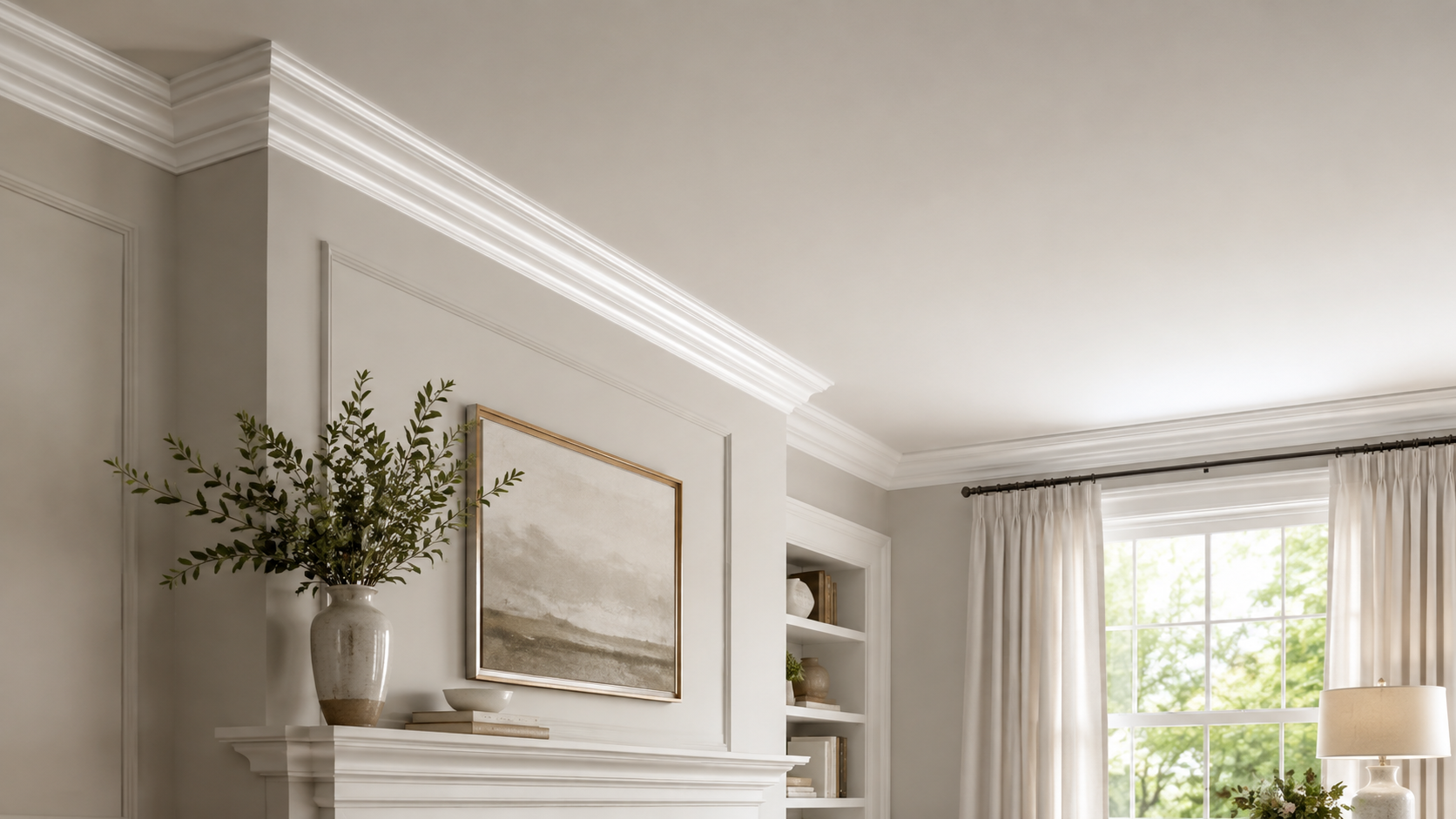
What is crown molding, and why does such a relatively small architectural detail make such a noticeable difference in a room? Crown molding is decorative trim installed where the top of a wall meets the ceiling. It creates a more finished transition between the two surfaces and can add anything from subtle definition to traditional architectural character.
Although crown molding is often associated with formal homes, it is not limited to ornate interiors. Today’s profiles range from detailed traditional designs to clean, simple shapes that work well in modern bedrooms, kitchens, living rooms, and open-plan spaces.
What Is Crown Molding Used For?
The most common location for crown molding is along the wall-to-ceiling joint.
Without trim, the wall simply stops where the ceiling begins. Crown molding adds another architectural layer that visually frames the room.
Its main purposes include:
- Creating a finished transition between walls and ceilings
- Adding architectural detail to otherwise plain rooms
- Helping conceal minor irregularities along ceiling lines
- Bringing wall, ceiling, baseboard, and window trim together visually
- Adding definition to cabinets and built-in units
- Helping establish the traditional, transitional, or contemporary character of a room
Crown molding is therefore primarily decorative, but it can also conceal small gaps or uneven joints between building surfaces. This Old House describes it as decorative trim installed at the top of walls where they meet the ceiling.
Crown Molding Is Not the Same as All Interior Trim
Crown molding is one member of a much larger trim family.
Understanding the difference can make planning an interior renovation easier.
Crown Molding
Installed primarily where walls meet ceilings. It directs attention toward the upper part of the room.
Baseboards
Installed where walls meet floors. Baseboards protect the lower wall while creating a finished transition to flooring.
Door and Window Casing
Frames doorways and windows while concealing the gap between the wall surface and frame.
Chair Rail
Runs horizontally around part of a wall. It can be decorative or combined with panel molding and wainscoting.
The best interiors usually treat these elements as a coordinated trim package rather than choosing each one independently. Molding scale, profile and detailing should complement existing casings and baseboards to create a balanced result.
What Materials Are Used for Crown Molding?
One reason crown molding works in so many homes is the variety of available materials.
Each has different advantages.
Wood Crown Molding
Wood is the traditional option and remains an excellent choice when authentic millwork is important.
Wood molding can be painted or stained, making it especially useful when other natural wood details are already present.
It works particularly well in:
- Traditional homes
- Craftsman interiors
- Historic renovations
- Rooms with stained wood trim
- High-end custom interiors
Different wood species provide different grain patterns and levels of detail.
One consideration is natural movement. Wood responds to changes in moisture and humidity, so installation and finishing need to account for seasonal expansion and contraction.
MDF Crown Molding
Medium-density fiberboard is popular for painted interiors because its smooth surface creates a clean finish.
It is generally more affordable than premium hardwood and works well where the molding will be painted rather than stained.
MDF is less suitable for high-moisture environments unless a product is specifically rated for those conditions.
Polyurethane Crown Molding
Polyurethane is lightweight and available in both simple and highly decorative designs.
Its moisture resistance makes it useful in locations where conventional wood products may be less desirable.
Because detailed patterns can be molded into polyurethane, it is also an alternative to much heavier traditional plaster ornamentation.
PVC Crown Molding
PVC can be useful in bathrooms, kitchens, and other moisture-prone areas because it does not respond to water in the same way that conventional MDF does.
Plaster Crown Molding
Plaster is frequently associated with historic and highly decorative interiors.
It can create elaborate shapes and custom details, but its weight and installation requirements generally make it a more specialized option. This Old House identifies wood, MDF, polyurethane and plaster among common crown molding choices and notes the different moisture and installation considerations of each.
Crown Molding Styles Can Completely Change the Look
When homeowners first ask what is crown molding, they sometimes picture elaborate curved trim from traditional homes.
That is only one option.
Traditional Crown Molding
Traditional profiles use curves, ogees, steps, beads, and layered details.
They complement rooms with:
- Detailed door casing
- Wainscoting
- Decorative fireplaces
- Traditional cabinetry
- Substantial baseboards
They are particularly effective in formal dining rooms, living rooms, and entryways.
Craftsman Crown Molding
Craftsman trim is usually more structured.
Flat surfaces, simple steps, and stronger horizontal lines coordinate well with square window casing, substantial baseboards, wood details, and built-ins.
Contemporary Crown Molding
Modern crown molding usually removes much of the ornamentation.
A simple cove, flat profile, or clean stepped design can give a room architectural definition without making it feel traditional.
Simple profiles are particularly useful in newer homes where elaborate trim would conflict with minimalist doors, cabinetry, and furnishings.
How Large Should Crown Molding Be?
Size is one of the most important choices.
Bigger is not automatically better.
A large, highly detailed profile installed beneath a low ceiling can make the upper portion of the room feel visually heavy. A tiny molding beneath a very high ceiling may disappear completely.
As a general design principle:
- 8-foot ceilings: typically suit relatively restrained crown profiles
- 9-foot ceilings: allow somewhat wider or more detailed molding
- 10-foot and higher ceilings: can support larger profiles or built-up combinations
Exact dimensions are not universal because room width, baseboard height, door casing, furniture scale, and molding complexity also influence what looks proportional.
This Old House recommends keeping crown size proportional to room dimensions, while Mouldings One similarly emphasizes that ceiling height is only one factor and that the entire trim package should remain visually balanced.
Can Crown Molding Make a Room Look Bigger?
Sometimes, but the effect depends on proportion and color.
Crown molding naturally draws the eye upward. A properly scaled profile can emphasize the height of a room and give the wall-to-ceiling transition more definition.
However, oversized or heavily detailed crown molding can have the opposite effect in a small room. Too much visual weight near a low ceiling may make the space feel more compressed.
If the goal is to maintain an open feeling in a smaller room, consider:
- A simpler molding profile
- Moderate projection
- A lighter finish
- Crown painted to coordinate closely with the ceiling
- Minimal ornamentation
Larger rooms and higher ceilings can usually support deeper and more elaborate profiles.
Where Does Crown Molding Look Best?
Crown molding can work throughout a home, but it does not need to appear in every room.
Living Rooms and Dining Rooms
These spaces often benefit most because crown molding gives larger walls architectural structure and complements other decorative features.
Bedrooms
A simple profile can make a bedroom feel polished without making it overly formal.
Kitchens
Crown molding is commonly used both at ceiling level and above cabinetry.
Adding molding above cabinets can make standard cabinetry appear more integrated with the architecture of the room.
Hallways and Entryways
Consistent crown molding can help visually connect adjoining rooms.
Bathrooms
Crown molding can work beautifully in bathrooms, but material selection matters. Moisture-resistant products are generally more suitable in humid environments.
How Should Crown Molding Be Painted?
Painting can change the character of crown molding almost as much as its profile.
White Crown With Colored Walls
This is the classic approach.
A white or off-white crown creates clear contrast and visually connects with door casing, window trim, and baseboards.
Crown Molding the Same Color as the Walls
Painting the crown and walls the same color creates a quieter, more contemporary result.
Instead of outlining the room strongly, the molding becomes architectural texture.
Monochromatic crown treatments can also produce a more enveloping appearance, particularly with richer wall colors.
Crown Molding the Same Color as the Ceiling
This approach visually extends the ceiling downward and can create a smooth transition.
It often works well with white ceilings and neutral interiors.
Stained Wood Crown
When doors, cabinetry, or other trim already feature natural wood, stained crown molding can tie those materials together.
Because wood grain remains visible, preparation and stain consistency become especially important.
Preparation Matters When Painting Crown Molding
Good trim painting depends heavily on preparation.
Nail holes should be filled, appropriate joints caulked, rough areas sanded, and dust removed before the finish paint is applied.
Bare wood or MDF may also require a suitable primer. Primer can improve the smoothness and consistency of decorative trim finishes, and Sherwin-Williams specifically identifies crown molding and other decorative woodwork among surfaces that benefit from its wall-and-wood primer system.
For painted crown molding, satin or semi-gloss finishes are commonly used because they provide some contrast against flatter wall and ceiling finishes while remaining relatively easy to clean.
Is Crown Molding Outdated?
Crown molding itself is not inherently outdated.
What can look dated is choosing a profile that does not suit the architecture around it.
For example, highly ornate crown installed in a minimalist room with flat-panel doors and extremely simple baseboards may feel disconnected.
A clean contemporary profile in the same room can look completely intentional.
The better question is not whether crown molding is currently fashionable, but whether its:
- Profile
- Size
- Material
- Paint color
- Level of detail
fit the rest of the home.
Well-proportioned architectural details tend to age better than features chosen solely because they are trending.
Installation Is More Difficult Than It First Appears
Straight lengths of crown molding appear simple, but corners make installation more challenging.
Crown sits at an angle between two planes, so inside corners, outside corners, uneven walls, and ceilings all require accurate measurements and cuts.
Installation becomes particularly demanding when a room contains:
- Numerous corners
- Out-of-square walls
- Vaulted ceilings
- Cabinet transitions
- Fireplace surrounds
- Curved walls
- Large built-up molding assemblies
Small gaps can often be corrected during finishing, but poor alignment or inaccurate profile joints are much harder to disguise after painting.
Crown Molding Works Best as Part of the Whole Room
So, what is crown molding? It is decorative architectural trim that creates a finished transition between walls and ceilings while adding proportion, depth, and character to an interior. The best results come from choosing a profile that suits the home’s architecture, sizing it correctly for the room, coordinating it with existing trim, and finishing it carefully. Whether the goal is crisp white traditional molding or a subtle contemporary profile painted to blend with the walls, good preparation and painting make the detail feel intentional. If your renovation also includes updating the surrounding walls, ceilings, and trim, Century Painting & More provides professional house painting services charlotte nc to help create a clean, cohesive finish throughout the room.