
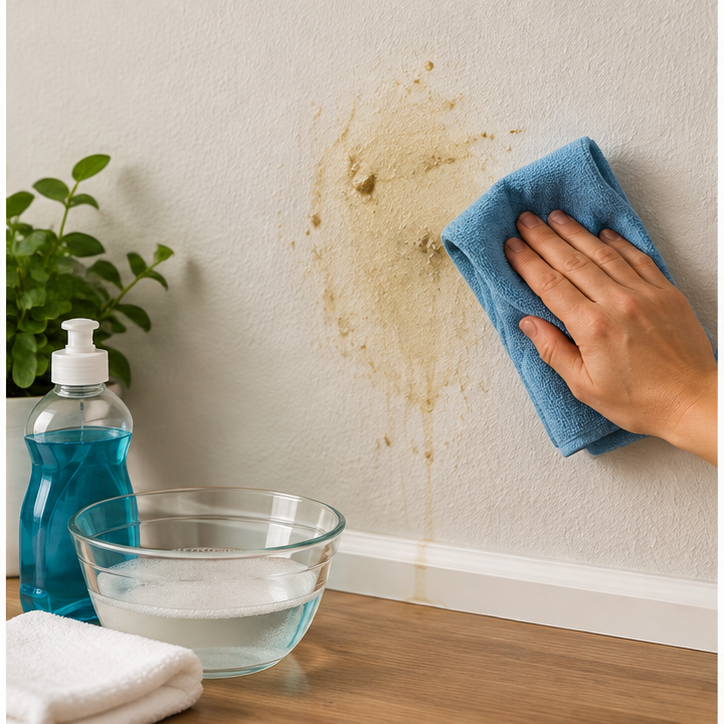
Knowing how to get oil stain off wall surfaces without damaging the paint starts with using the gentlest effective cleaning method. Cooking oil, greasy fingerprints, furniture products, food splatter, and other oily substances can darken painted walls and sometimes soak into lower-sheen coatings.
The safest approach is usually to blot fresh oil, test a mild cleaning solution in an inconspicuous area, and gradually increase cleaning strength only if needed. Aggressive scrubbing and strong solvents may remove the stain, but they can also remove or polish the paint itself.
Identify the Source of the Oil Stain
Before cleaning, determine what caused the mark if possible.
Common sources include:
- Cooking oil
- Greasy food splashes
- Handprints around switches
- Hair or skin oils
- Furniture products
- Mechanical lubricants
- Oil-based household products
Fresh oil sitting on the surface is generally easier to address than a stain that has soaked into flat or matte paint.
Blot Fresh Oil Instead of Rubbing It
If the stain is recent, start with a clean paper towel or absorbent cloth.
Press gently against the area to lift excess oil.
Avoid wiping aggressively from side to side because this can spread the grease into a larger patch.
Continue blotting with clean sections of the towel until little additional oil transfers.
Test the Wall Finish Before Cleaning
Paint sheen matters.
Flat and matte finishes are more susceptible to burnishing, water marks, and color changes from scrubbing than satin or semi-gloss coatings.
Sherwin-Williams recommends testing cleaning solutions in an inconspicuous area first and using gentle pressure when cleaning painted walls.
Good test areas include:
- Behind furniture
- Inside a closet
- Near the bottom of the wall
- Behind an open door
Let the test area dry before judging whether the cleaner altered the paint.
How to Get Oil Stain Off Wall With Dish Soap
A grease-cutting dishwashing liquid is an excellent first cleaning method because it is designed to break down oils.
Sherwin-Williams specifically recommends grease-cutting dish soap mixed with warm water for difficult grease splatters on painted kitchen walls.
Step 1: Prepare a Mild Solution
Add a small amount of grease-cutting dish soap to warm water.
You do not need a highly concentrated mixture.
Step 2: Dampen a Soft Cloth
Use a soft microfiber cloth or non-abrasive sponge.
Wring it thoroughly so the wall is not saturated.
Step 3: Dab and Gently Wipe
Work from the outer edge of the stain toward the center.
Use light pressure rather than hard scrubbing.
Step 4: Rinse
Wipe the area with another clean cloth dampened with plain water.
This removes detergent residue.
Step 5: Dry and Inspect
Pat the wall dry and allow it to air dry completely before deciding whether the stain remains.
Wet paint often looks darker, so judging it too early can lead to unnecessary additional cleaning.
What If Dish Soap Does Not Remove the Mark?
For stubborn discoloration, a small amount of baking soda mixed with water may help.
Sherwin-Williams lists a baking-soda-and-water paste as an option for spot cleaning tougher wall stains.
Use it carefully because even a mild abrasive can change the sheen of delicate wall paint.
Do not begin with aggressive household degreasers, solvent cleaners, or rough scrub pads.
A clean wall with a shiny scrubbed patch can look worse than the original stain.
Why Flat Paint Is More Difficult to Clean
Flat finishes hide wall imperfections well because they reflect little light, but they generally tolerate aggressive cleaning less effectively than higher-sheen paints.
Repeated rubbing can leave a polished-looking patch.
If the oily mark has penetrated the paint film, cleaning may not restore a perfectly uniform appearance.
In that situation, repainting may be the better solution.
When Should You Stop Cleaning and Repaint?
Sometimes the answer to how to get oil stain off wall is not stronger cleaning.
Consider repainting when:
- The oil shadow remains after gentle cleaning
- Paint begins transferring to the cloth
- The cleaned area develops a different sheen
- The wall has already been damaged
- The oil has soaked through several paint layers
- Repeated cleaning creates a visible patch
If paint itself needs to be removed because it is damaged or failing, our guide on how to remove paint from walls safely explains the process in more detail.
Stubborn Oil Stains May Need Stain-Blocking Primer
Do not immediately paint over a deep oily stain.
Residual contamination can affect adhesion, and some discoloration may migrate through a new finish.
First clean the surface as thoroughly as possible and allow it to dry.
If staining remains, a suitable stain-blocking or bonding primer may be required before repainting. Choose the primer according to the wall surface and manufacturer’s recommendations.
Then apply the matching finish paint.
Match the Existing Paint for Touch-Ups
If only a small area needs repainting, try to use the same:
- Paint manufacturer
- Product line
- Color
- Sheen
- Application method
Even an identical color can look different if the sheen or roller texture changes.
For larger or older walls, repainting from corner to corner may create a more consistent appearance than spot touching.
Prevent Oil Stains From Returning
Kitchen walls near cooktops and preparation areas naturally collect airborne grease.
Periodic gentle cleaning can prevent buildup from becoming difficult to remove.
Also consider using more washable coatings in areas that receive frequent splashes and hand contact.
Start Gentle Before Reaching for Strong Cleaners
The safest answer to how to get oil stain off wall surfaces is to start with blotting and a mild grease-cutting dish soap solution. Test first, avoid saturating the wall, and use minimal pressure, especially on flat or matte paint. If the stain has penetrated the coating or cleaning changes the finish, proper priming and repainting may produce a better result than increasingly aggressive scrubbing. For walls that require repair, stain blocking, color matching, or complete repainting, professional interior painting services charlotte nc can restore a clean, uniform finish without leaving obvious repair patches.