
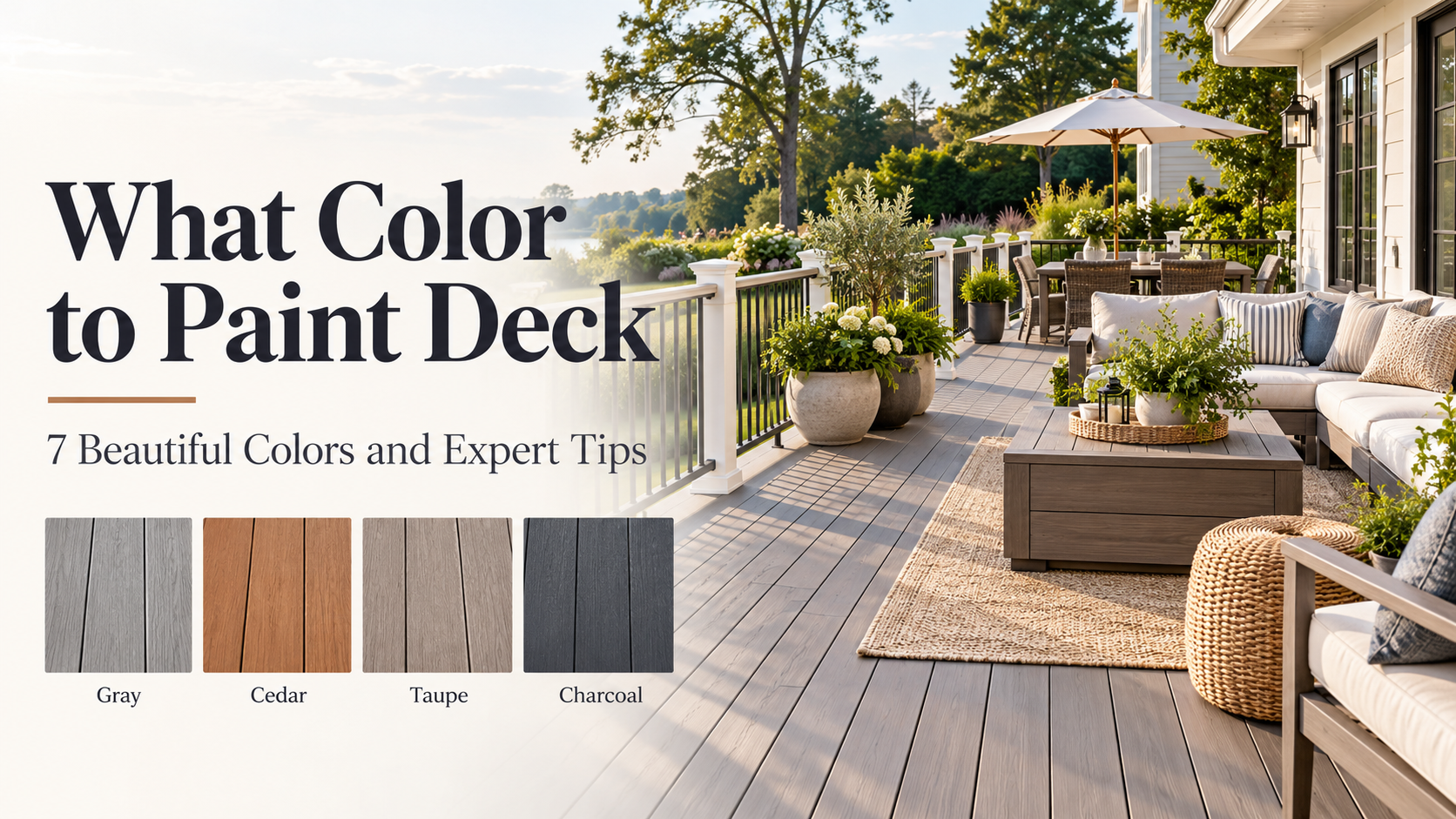
Your deck is more than an outdoor platform. It’s where you enjoy morning coffee, entertain guests, or relax with family. However, faded boards, peeling paint, and an outdated color can make even a beautiful backyard feel neglected.
If you’re wondering what color to paint deck surfaces, the best choices include weathered gray, natural cedar, warm taupe, charcoal, and earthy green. Each creates a different appearance, and the right one depends on your home’s exterior, sunlight exposure, and deck material.
Before choosing a color, it’s also important to understand whether paint or stain is the better option. Here’s how to make your deck both attractive and practical.
7 Best Deck Paint Colors for a Beautiful Outdoor Space
1. Weathered Gray for Modern Elegance
Weathered gray creates a relaxed, contemporary appearance that complements white, blue, and neutral-colored homes.
Its subtle tones coordinate well with black railings, metal furniture, and natural landscaping.
A medium gray is particularly practical because it may make everyday dust and minor wear less noticeable than very dark or bright finishes.
2. Natural Cedar for Timeless Warmth
Cedar-inspired colors bring warmth to outdoor spaces without appearing overly dramatic.
They work beautifully with cream, beige, and earthy-toned siding.
If your deck has attractive natural wood grain, consider a transparent or semi-transparent deck stain instead of opaque paint. This allows some of the wood’s character to remain visible.
3. Warm Taupe for a Neutral Look
Taupe combines brown and gray undertones, making it suitable for both traditional and modern homes.
It creates a smooth transition between outdoor flooring, stone patios, and garden landscaping.
This is an excellent option for homeowners who want a sophisticated color without choosing something too dark.
4. Charcoal Gray for a Bold Statement
Charcoal adds dramatic contrast, especially against light-colored siding.
It works well with white railings, contemporary furniture, and minimalist landscaping.
However, dark deck surfaces can absorb substantial sunlight and become uncomfortable under bare feet during summer.
Consider charcoal for shaded decks or design accents rather than automatically using it across a large sun-exposed surface.
5. Soft Sage Green for a Natural Appearance
Sage green creates a subtle connection between the deck and surrounding plants.
Its muted appearance makes it appealing for garden decks, cottages, and wooded properties.
Pair it with natural wood furniture and warm white accents for a balanced outdoor design.
6. Deep Walnut for Traditional Homes
Walnut-inspired tones create richness and warmth.
They complement brick exteriors, beige siding, and classic architectural details.
For wooden decks, a suitable brown-toned stain may provide the desired appearance while preserving visible wood texture.
7. Light Sand for a Bright, Open Feel
Sand and light beige are excellent choices for smaller decks or areas that receive strong sunlight.
Their lighter tones reflect more sunlight than darker colors, helping reduce surface heat absorption.
They also create an inviting backdrop for colorful outdoor furniture and plants.
What Color to Paint Deck Based on Your House Color?
Your deck should complement the home rather than compete with its exterior.
Use this simple pairing guide:
| House exterior | Recommended deck colors |
|---|---|
| White siding | Charcoal, cedar, weathered gray |
| Beige or cream | Walnut, taupe, natural brown |
| Gray siding | Warm cedar, sand, medium gray |
| Blue siding | Driftwood gray, light taupe |
| Red brick | Walnut, greige, muted brown |
| Yellow siding | Warm gray, cedar, deep brown |
Should Your Deck Match the House Exactly?
Not necessarily.
A deck usually looks more defined when its color provides gentle contrast with the siding.
For example, a white house with a medium-gray deck creates visual separation while maintaining a coordinated appearance.
You can also connect the design by matching railing accents to your window trim or exterior doors.
Light vs. Dark Deck Colors: Which Performs Better?
Choosing a deck color involves more than appearance.
Light Deck Colors
Light gray, sand, and natural beige generally reflect more sunlight.
Their advantages include:
- Reduced heat absorption compared with darker alternatives
- A brighter appearance for smaller outdoor spaces
- Easy coordination with many exterior colors
However, light surfaces may make muddy footprints, leaf stains, and certain spills more noticeable.
Dark Deck Colors
Charcoal, espresso, and deep walnut create a richer appearance.
They can provide striking contrast against light-colored houses and create an elegant outdoor setting.
However, dark surfaces tend to absorb more heat and may reveal pollen, scratches, or fading.
For Charlotte-area homes exposed to strong summer sunlight, medium and lighter shades often offer a practical balance.
Deck Paint vs. Deck Stain: Which Should You Choose?
Before deciding what color to paint deck boards, consider whether you actually need paint.
When Deck Paint Makes Sense
An exterior porch or deck paint specifically rated for horizontal walking surfaces can provide an opaque, uniform finish.
It may be suitable when you want a completely new color or need to cover inconsistent wood tones.
However, film-forming paint can peel when moisture enters the wood or surface preparation is inadequate.
When Deck Stain Is Better
Deck stains are formulated for outdoor wood surfaces and come in different opacity levels.
- Transparent stain: Highlights the natural wood grain.
- Semi-transparent stain: Adds color while keeping some grain visible.
- Solid-color stain: Produces an opaque appearance that hides most grain detail while retaining some wood texture.
Solid-color deck stain is often worth considering when homeowners want a painted appearance with a product specifically engineered for deck boards.
Never use ordinary exterior wall paint on deck flooring. Choose a coating approved for horizontal foot-traffic surfaces.
How Charlotte’s Climate Affects Deck Color and Durability
Outdoor decks around Charlotte face warm summers, humidity, rainfall, and changing temperatures.
These conditions influence how coatings perform over time.
Sun-exposed decks may benefit from lighter shades that absorb less heat. Shaded decks need particular attention to cleaning and moisture management because damp surfaces can encourage mildew growth.
Regardless of color, drainage and wood condition are essential.
Avoid applying coatings to damp wood or painting immediately before expected rainfall.
Always follow the manufacturer’s recommendations for temperature, moisture levels, application, and curing.
How to Prepare a Deck Before Painting or Staining
Proper preparation makes a significant difference in both appearance and durability.
Follow these essential steps:
- Inspect the boards: Replace rotted wood and secure loose fasteners.
- Remove debris: Sweep away leaves, dirt, and loose material.
- Clean thoroughly: Remove contaminants and mildew using appropriate deck-cleaning products.
- Remove failing coatings: Scrape or strip peeling paint and incompatible finishes.
- Allow sufficient drying: Confirm the wood meets the coating manufacturer’s moisture requirements.
- Test the color: Apply a sample in an inconspicuous area and inspect it after drying.
- Apply the finish: Follow the recommended application method, coverage rate, and recoat interval.
New pressure-treated wood may require additional drying before finishing. Follow the wood supplier’s and coating manufacturer’s instructions rather than relying on a fixed waiting period.
Frequently Asked Questions
What Is the Most Popular Deck Paint Color?
Gray, brown, and natural wood-inspired tones remain versatile choices because they complement many architectural styles and outdoor furnishings.
What Deck Color Hides Dirt Best?
Medium-tone gray, taupe, and weathered brown can help disguise some everyday dust and minor scuff marks. No color eliminates the need for cleaning.
Is It Better to Paint a Deck Light or Dark?
Light colors are generally preferable for heavily sun-exposed decks, while darker shades create stronger contrast and may work well in shaded outdoor spaces.
Can You Paint Over an Existing Deck Stain?
Sometimes, but compatibility depends on the existing stain and new coating. Cleaning, sanding, stripping, or priming may be required.
Create an Outdoor Space That Looks Beautiful for Years
Determining what color to paint deck surfaces becomes easier when you consider your home’s exterior, sunlight exposure, wood condition, and maintenance expectations. Whether you prefer weathered gray, natural cedar, or sophisticated charcoal, selecting the correct deck coating and preparing the surface properly are essential. Century Painting helps homeowners maintain attractive residential and commercial properties through professional painting and exterior care, including specialized graffiti removal service charlotte nc solutions for unwanted markings on exterior surfaces.