
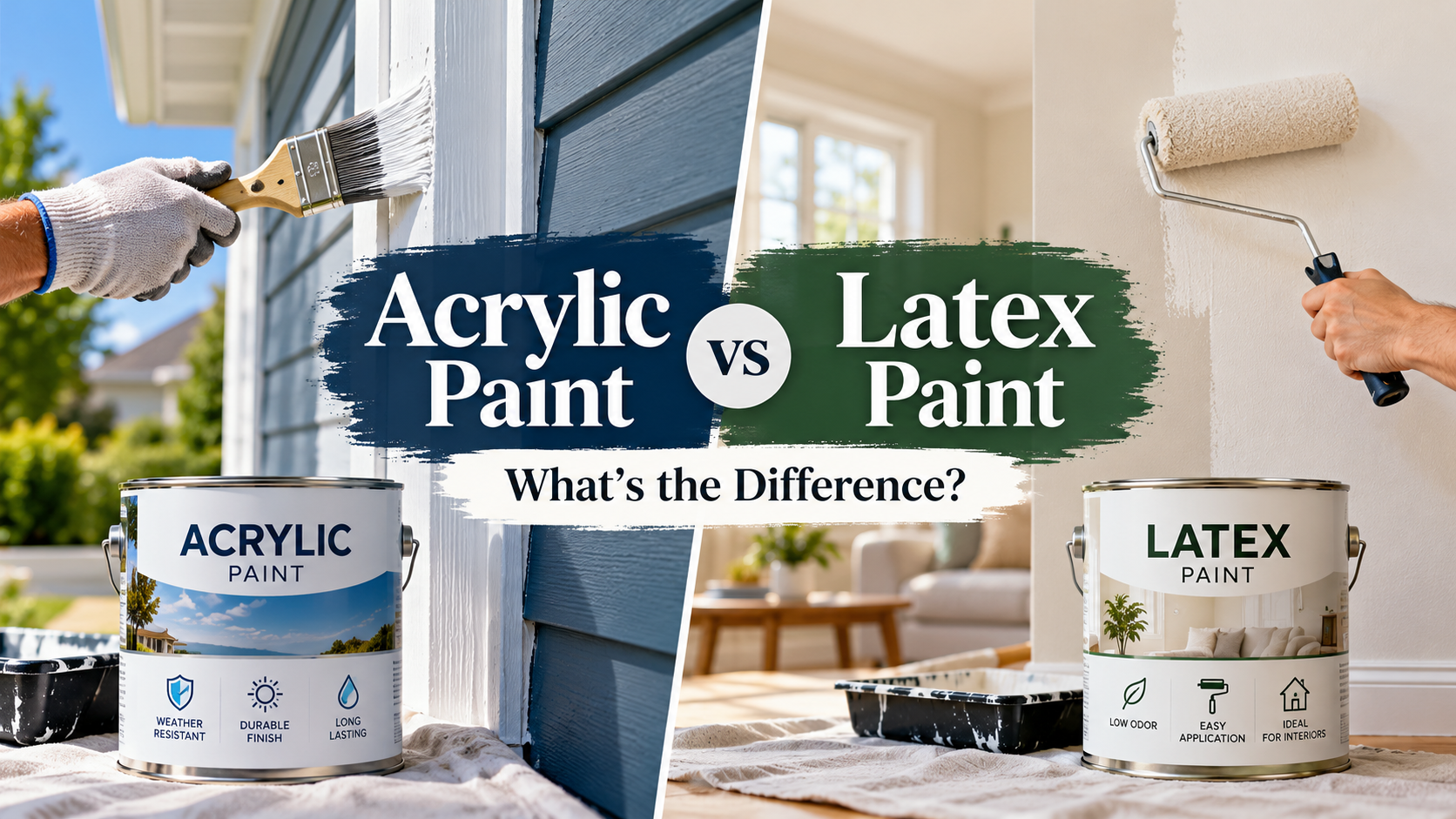
You’re standing in the paint aisle, comparing two cans. One says “100% Acrylic,” while the other says “Latex.” Both promise excellent coverage and long-lasting results. So, which one should you take home?
Understanding what is the difference between acrylic paint and latex paint can help you avoid choosing the wrong coating for your walls, siding, or trim.
The most important fact is that acrylic and latex are not necessarily two separate types of paint. Many modern latex paints actually contain acrylic resins. The real differences involve their binders, performance characteristics, and intended applications.
Here’s what homeowners should understand before starting their next painting project.
Understanding Acrylic and Latex Paint
What Is Acrylic Paint?
Acrylic paint uses acrylic polymer binders to form a protective coating when it dries. In residential painting, 100% acrylic formulas are widely used for interior and exterior applications.
Quality acrylic coatings can offer excellent adhesion, color retention, and flexibility. These characteristics are particularly useful for exterior siding exposed to sunlight, rain, and temperature fluctuations.
However, not every acrylic product is suitable for every surface. Always check its recommended applications.
What Is Latex Paint?
Latex paint is the common name for water-based architectural paint. Despite its name, modern latex house paint generally does not contain natural rubber latex.
Instead, it uses synthetic binders such as:
- 100% acrylic polymers
- Vinyl-acrylic blends
- Styrene-acrylic polymers
This means a can labeled “100% acrylic latex” belongs to both categories.
Latex paints are popular because they are relatively easy to apply, dry quickly, and typically allow soap-and-water cleanup while wet.
What Is the Difference Between Acrylic Paint and Latex Paint in Performance?
The clearest comparison is between 100% acrylic latex and conventional vinyl-acrylic latex formulations.
| Feature | 100% Acrylic Latex | Vinyl-Acrylic Latex |
|---|---|---|
| Binder | Acrylic polymers | Vinyl-acrylic blend |
| Flexibility | Generally excellent | Varies by formulation |
| Exterior durability | Commonly preferred | Often more suited to interiors |
| Cleanup | Usually soap and water | Usually soap and water |
| Color retention | Often stronger outdoors | Depends on product quality |
| Cost | Typically higher | Often more affordable |
The binder is important because it holds pigment together and helps paint adhere to surfaces. However, overall durability also depends on paint quality, additives, preparation, and environmental exposure.
Which Paint Works Better for Different Surfaces?
Rather than choosing by name alone, match the paint to the conditions it will face.
Interior Walls and Ceilings
For bedrooms, living rooms, and ceilings, a quality interior latex paint is generally a practical solution.
Vinyl-acrylic and 100% acrylic interior products can both perform well. Higher-performance acrylic formulations may offer better washability or scuff resistance, depending on the product.
For busy hallways and children’s rooms, compare washable finishes rather than focusing exclusively on resin terminology.
Exterior Siding and Trim
Exterior surfaces experience temperature changes, ultraviolet radiation, and frequent moisture exposure.
A high-quality 100% acrylic exterior latex coating is often an excellent choice because it can provide flexibility, strong adhesion, and good color retention.
For homes around Fort Mill and the Charlotte area, proper preparation and moisture management are particularly important.
Wood siding, fiber cement, and other exterior materials may require different primers or specialized coatings.
Kitchens, Bathrooms, and Cabinets
Moisture-prone rooms benefit from paints specifically rated for those conditions.
A quality acrylic interior paint may be suitable for bathroom walls, while cabinets often perform better with specialized waterborne enamel products designed for frequent handling.
Neither acrylic nor latex paint can correct an existing moisture problem. Leaks and excessive humidity should be addressed before painting.
Does Acrylic Paint Last Longer Than Latex Paint?
Homeowners researching what is the difference between acrylic paint and latex paint often assume acrylic always lasts longer.
That is not necessarily true.
A premium acrylic formulation may outperform an inexpensive vinyl-acrylic product outdoors. However, a quality interior latex coating can provide years of reliable performance when correctly applied.
Paint lifespan depends on several factors:
- Surface preparation: Removing loose paint and contaminants improves adhesion.
- Moisture exposure: Water intrusion can damage even premium coatings.
- Sun exposure: UV-resistant formulations help retain exterior color.
- Application conditions: Temperature and humidity affect drying and film formation.
- Product quality: Better binders and additives can improve performance.
Paying more for acrylic paint cannot compensate for poor surface preparation.
Are Acrylic and Latex Paint Equally Easy to Apply?
Most residential water-based acrylic and latex paints can be applied using conventional brushes, rollers, or appropriate spray equipment.
Both typically offer convenient cleanup, although application and drying times vary by product.
One common misconception is that acrylic paint always needs chemical solvents for cleanup. Water-based acrylic latex house paint generally cleans up with water while still wet.
Likewise, VOC levels cannot be determined simply by reading “acrylic” or “latex” on the label.
For indoor painting, choose a suitable low-VOC product when possible and maintain adequate ventilation during application and drying.
How to Read Paint Labels Before Buying
Instead of choosing a paint based on its marketing name, check the manufacturer’s technical information.
Look for:
- Binder type: Identify whether the product is 100% acrylic, vinyl-acrylic, or another formulation.
- Recommended surfaces: Confirm compatibility with drywall, wood, masonry, or siding.
- Interior or exterior rating: Never assume one product suits both environments.
- Finish: Select flat, eggshell, satin, or semi-gloss based on appearance and maintenance requirements.
- Primer requirements: Determine whether bare or previously painted surfaces need additional preparation.
These details provide a more reliable indication of performance than the product name alone.
Frequently Asked Questions
Is Acrylic Paint the Same as Latex Paint?
Sometimes. Water-based acrylic house paint can also be called acrylic latex. Latex describes the broader water-based paint category, while acrylic identifies a particular binder chemistry.
Can You Paint Acrylic Over Latex Paint?
Generally, compatible water-based acrylic paint can be applied over sound, properly prepared latex paint. Clean the surface and follow the manufacturer’s preparation instructions.
Is Acrylic Paint Better for Exterior Walls?
High-quality 100% acrylic exterior paint is often preferred for siding and trim because of its flexibility and weather resistance. However, correct product selection and preparation remain essential.
Which Paint Is More Affordable?
Vinyl-acrylic formulations are often less expensive than premium 100% acrylic products. Prices vary according to brand, quality, finish, and intended use.
Choose the Right Paint for Long-Lasting Results
Understanding what is the difference between acrylic paint and latex paint makes choosing a suitable coating much easier. Both can deliver excellent results, but the right formula depends on the surface, exposure, and durability required. Whether you’re refreshing interior walls or protecting exterior siding, experienced painters in fort mill sc at Century Painting can help you select appropriate products and achieve a professional, long-lasting finish.