
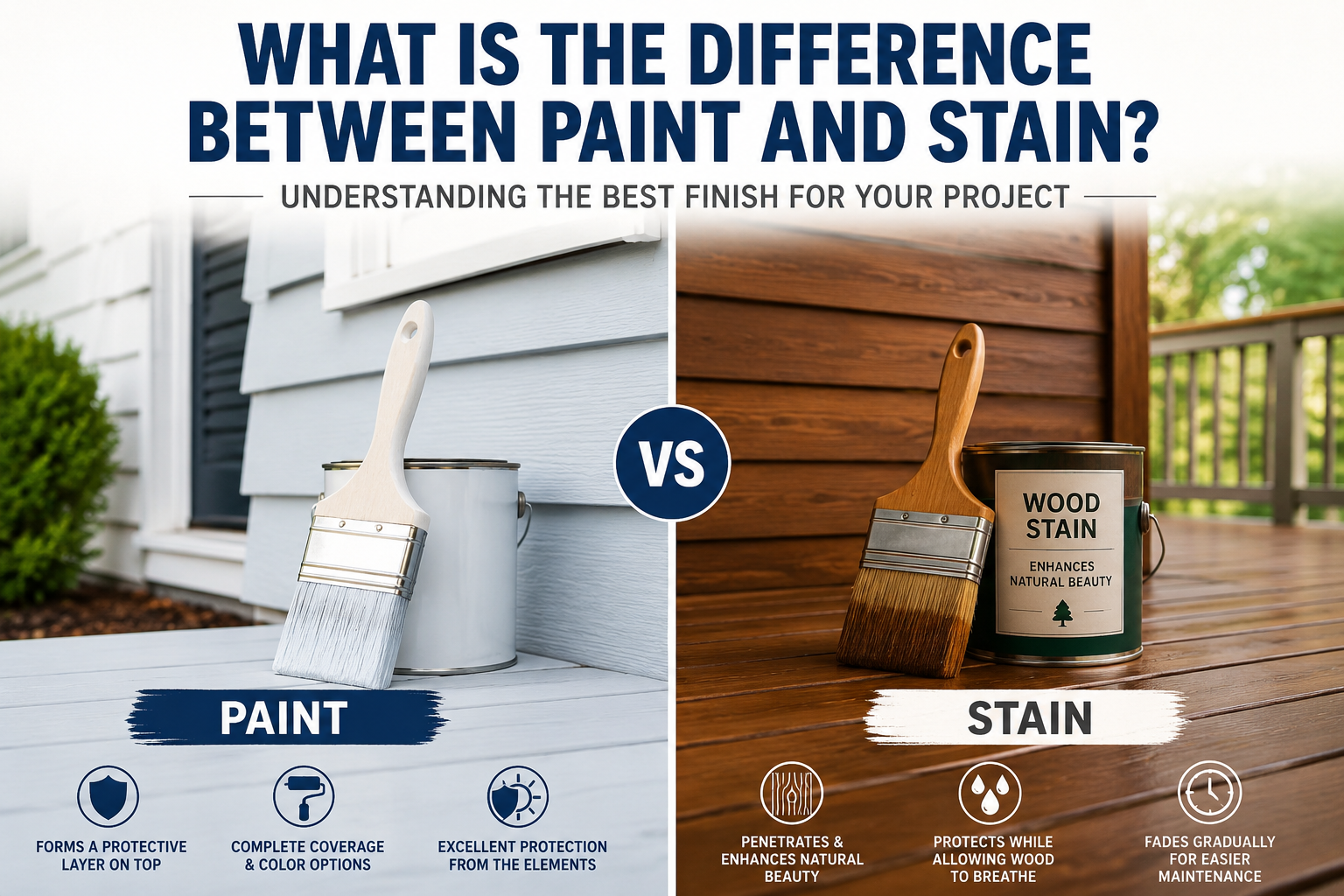
What is the difference between paint and stain? The biggest difference is that paint forms a protective coating on top of a surface, while stain penetrates into the material to enhance its natural texture and color. Paint offers complete coverage and a wider range of colors, whereas stain allows the natural grain of wood to remain visible while providing protection. The best choice depends on the surface, the look you want, and the level of maintenance you’re comfortable with.
Whether you’re updating your home’s exterior, refinishing a deck, restoring a fence, or improving a commercial property, understanding what is the difference between paint and stain will help you choose the right finish for long-lasting beauty and protection.
Understanding Paint
Paint is a pigmented coating that sits on top of the surface after it dries. It creates a solid protective layer that completely covers the material underneath, making it ideal for changing colors, hiding imperfections, and protecting surfaces from weather, moisture, and everyday wear.
Modern paints are available in hundreds of colors and multiple finishes, including:
- Flat
- Matte
- Eggshell
- Satin
- Semi-gloss
- High-gloss
Because paint creates a film over the surface, it offers excellent protection against UV rays and moisture when applied correctly.
Understanding Stain
Unlike paint, stain doesn’t sit on top of the surface.
Instead, it penetrates deep into porous materials—most commonly wood—to enhance the natural grain while providing protection against moisture and sunlight. The wood remains visible, giving it a more natural appearance than painted surfaces.
Stains are commonly available as:
- Transparent
- Semi-transparent
- Semi-solid
- Solid stain
Each provides a different balance between showing the wood grain and adding color.
What Is the Difference Between Paint and Stain?
Although both products protect surfaces, they do so in very different ways.
Appearance
Paint completely hides the underlying material.
This makes it an excellent choice if you want a bold color change or need to cover weathered wood, repairs, or surface imperfections.
Stain enhances the natural beauty of the material instead of hiding it. If you love the look of wood grain, stain is usually the better option.
Protection
Paint forms a thicker protective barrier that shields surfaces from moisture, sunlight, and everyday wear.
Stain also protects wood but allows it to breathe because it penetrates the fibers instead of creating a heavy surface coating.
Both provide valuable protection when properly maintained, but they behave differently over time.
Maintenance
Paint generally lasts longer before needing repainting, but when it eventually fails, it often peels, chips, or cracks.
Stain usually fades gradually instead of peeling.
Many homeowners appreciate this because maintenance often involves cleaning and applying another coat rather than extensive scraping and sanding.
Surface Compatibility
Paint works well on:
- Wood
- Drywall
- Trim
- Siding
- Brick
- Stucco
- Fiber cement
- Metal (with proper preparation)
Stain is primarily intended for:
- Decks
- Fences
- Pergolas
- Outdoor furniture
- Wood siding
- Exposed timber
Because stain penetrates porous materials, it isn’t suitable for every surface.
When Should You Choose Paint?
Paint is often the better choice when:
- You want complete color coverage.
- The existing surface has imperfections.
- You want a modern, uniform appearance.
- Long-term protection is a priority.
- You’re changing the overall style of your property.
Paint is especially popular for siding, trim, doors, cabinets, and interior walls because of its versatility and durability.
When Should You Choose Stain?
Stain is usually the better option when:
- You want to preserve natural wood grain.
- The wood is in good condition.
- You prefer a rustic or natural appearance.
- You’re finishing decks, fences, or pergolas.
- You want easier future maintenance.
Stained wood often develops a timeless look that complements both traditional and modern homes.
Cost Considerations
Many homeowners ask whether paint or stain is more affordable.
The answer depends on the project.
Although paint sometimes costs more per gallon, its longer lifespan may reduce repainting frequency.
Stain often requires more frequent maintenance but usually involves less surface preparation because it fades instead of peeling.
The long-term value depends on the material being coated, the local climate, and how well the surface is maintained.
Preparation Is Essential for Both
Regardless of which finish you choose, proper preparation has a significant impact on the final result.
Professional painters typically:
- Clean the surface thoroughly.
- Remove dirt, mildew, and loose coatings.
- Repair damaged areas.
- Sand rough surfaces.
- Apply primer when required.
- Follow manufacturer recommendations.
Skipping these steps often leads to premature failure, regardless of whether paint or stain is used.
Which Option Is Better for Commercial Properties?
Commercial buildings often require finishes that prioritize durability, appearance, and long-term maintenance.
For many commercial structures, paint is the preferred solution because it provides excellent coverage, professional aesthetics, and long-lasting protection for siding, masonry, trim, and other exterior surfaces.
If you’re planning a commercial painting project, our commercial painting contractors Charlotte NC provide professional painting solutions designed to protect and enhance commercial properties.
Why Professional Application Matters
Choosing between paint and stain is only part of the process.
Professional painters understand how different materials absorb coatings, which products perform best in specific environments, and how proper preparation affects durability.
Correct application helps maximize the lifespan of both paint and stain while producing a cleaner, more attractive finish.
Final Thoughts
Now that you understand what is the difference between paint and stain, choosing the right finish becomes much easier. Paint provides complete coverage, broad color choices, and strong surface protection, while stain enhances the natural beauty of wood and offers a more organic appearance with easier maintenance. The right choice depends on your goals, the condition of the surface, and the level of maintenance you’re willing to perform. Whether you’re refreshing a deck, updating your home’s exterior, or planning a larger commercial project, selecting the proper finish is one of the most important decisions you can make for long-lasting results.