
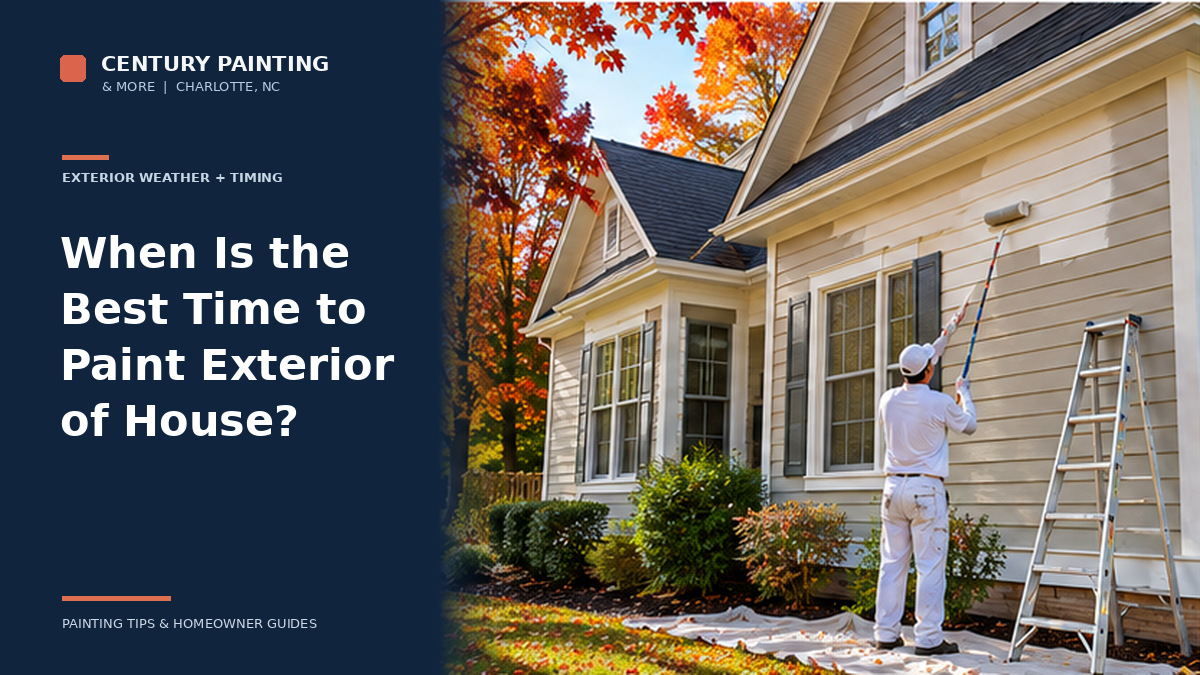
When is the best time to paint exterior of house? For many Charlotte-area homes, spring and early fall offer comfortable opportunities, but the best day is one when the surface is dry, temperatures remain within the coating’s stated range, and rain or heavy dew will not interrupt film formation. A suitable forecast matters more than the name of the month. Summer and even cooler-season work may be possible with the right product and conditions.
The difference between an attractive exterior and an early coating failure can be surprisingly local. Two houses on the same street may have different conditions because one sits in deep shade while the other faces afternoon sun. The practical goal is to schedule around the specific wall, coating, and weather—not a single seasonal rule.
Think in Terms of a Painting Window, Not a Painting Season
A weather window is a span of time in which the surface can be prepared, coated, and allowed to dry or cure as required. It begins before the roller touches the wall and continues after the crew leaves. Temperature, humidity, wind, rainfall, and the moisture inside wood or masonry all influence that window.
Manufacturers define different application limits for different paints. Some modern exterior acrylics are formulated for lower temperatures, while others need substantially warmer conditions. Never assume that a cool-weather claim for one product applies to every latex paint. Read the current technical data sheet for both air and surface temperature requirements.
Surface temperature can disagree with the forecast
Weather apps report air temperature, not the temperature of your siding. Dark paint in direct sunlight may become much hotter than the air. A shaded wall may remain cool after a chilly night. These extremes can influence how quickly the wet film dries and whether it develops properly.
Professionals may use a surface thermometer or moisture meter when conditions are uncertain. A quick temperature reading is more informative than assuming the wall is ready because the afternoon forecast says 72 degrees.
How the Four Seasons Behave Around Charlotte
Spring: Moderate temperatures can be favorable, but showers and pollen may require extra cleaning or schedule adjustments. Painting over pollen or a surface that still holds rainwater reduces the chance of a clean, durable finish.
Summer: Longer days provide working time, yet humidity, fast-moving storms, and hot sun complicate the process. The shaded side may be ready while the sun-baked wall is too hot for the chosen coating. Crews can plan their route around sun exposure rather than painting every side at the same hour.
Fall: Comfortable days can be excellent, but shorter daylight hours and rapidly cooling evenings bring dew into the picture. A wall painted late in the day may become damp before the fresh coating is ready. Start and finish times should account for those conditions.
Winter: Not every winter day is unsuitable, but overnight lows and damp, slow-drying surfaces narrow the options. Only products approved for the actual conditions should be considered, and the required drying period still applies.
The Weather Variables That Matter Most
Dew point and surface moisture
Dew forms when a surface cools sufficiently for moisture in the air to condense on it. The temperature and moisture relationship is important because fresh paint should not be exposed to condensation before it has formed a sound film. A common industry guideline is to keep the surface temperature more than 5 degrees Fahrenheit above the dew point, but the coating’s instructions take precedence.
A wall can appear dry from a distance yet remain damp behind landscaping or near shaded trim. After heavy rain, porous wood and masonry may need more drying time than metal or vinyl. The calendar cannot tell you when those materials have dried enough.
Rain and the hours after application
Rain can wash or mark a coating that has not developed sufficient resistance. Check the forecast for the entire application and early cure period, not only the expected time outdoors. Some products have specific rain-resistance claims, but those depend on correct application and conditions. Do not apply them as a blanket promise across all coatings.
Sun, wind, and humidity
Direct afternoon sun can cause rapid surface drying, making it harder to maintain an even finish. High humidity can slow water evaporation. Strong wind may carry dust and debris onto wet paint and complicate application. The best solution is often to adjust which elevation is painted and when, rather than declaring a whole day good or bad.
People searching when is the best time to paint exterior of house are often looking for a month, but a responsible schedule also asks whether the coating can form a sound film before the next cool, damp night.
A Three-Day Forecast Check for Homeowners
You do not need to become a meteorologist to ask better questions. Before agreeing to an exterior start date, review three periods with your contractor:
- Before painting: Is there enough time for washing, repairs, and surfaces to dry after the last rain?
- During painting: Will air and surface temperatures, dew point, wind, and humidity stay suitable for the product?
- After painting: Will temperatures and moisture conditions remain appropriate while the fresh film develops?
The exact number of dry hours is product-specific. A generic instruction to “wait 24 hours” does not fit every surface or every storm. Ask how the crew will verify readiness and what happens if the weather changes unexpectedly.
What Time of Day Is Best?
On many days, midmorning to early afternoon offers a useful compromise: early dew has evaporated, and there is still time before evening cooling. That is a planning idea, not a fixed start time. Morning shade may persist on one wall; strong midday sun can overheat another.
A contractor might begin on an elevation that has dried from overnight moisture, then move as the shade shifts. The aim is consistent surface conditions and orderly application. Painting the hottest wall just to finish a particular side first can create avoidable problems.
Can You Paint if the Temperature Is Below 50 Degrees?
Possibly, but only if the chosen coating’s label permits it and the surface, dew point, and following weather also meet the requirements. Certain products support lower-temperature application, while traditional formulations may not. The temperature must remain suitable for more than a brief moment after the paint is applied.
Similarly, a day above 85 degrees is not automatically disqualified. It depends on product limits, surface temperature, sun exposure, and humidity. Painting decisions should be based on actual conditions and specifications rather than a single internet temperature chart.
Avoid Two Expensive Scheduling Mistakes
The first is booking by season alone. A pleasant-looking October day can end with wet evening siding, while a dry June morning might provide a workable window. The second is applying paint to surfaces before they are ready because the crew is already booked. Proper cleaning, repairs, dry conditions, and material compatibility are more important than forcing a deadline. To answer when is the best time to paint exterior of house, choose the intersection of sound surface preparation, a verified forecast, and the product’s application instructions. Century Painting & More can help assess weather timing and exterior painting needs throughout the Charlotte area. If your home is near Davidson, talk with our Painters in Davidson nc about an exterior schedule built around your actual siding and conditions.