
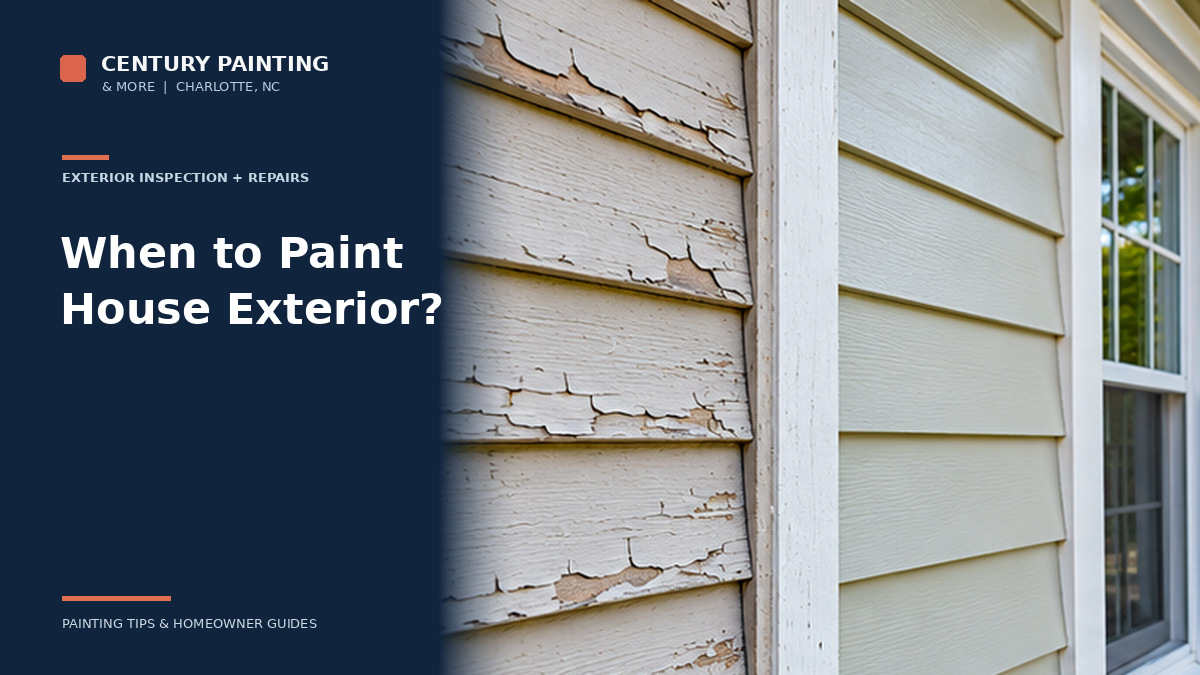
When to paint house exterior? Repaint when the existing coating is no longer protecting sound siding and trim, not simply because a certain number of years has passed. Peeling, exposed wood, persistent chalking, failed joints, and uneven weathering can all signal a need for attention. The first step is identifying whether the problem calls for paint, repair, or further investigation.
A house does not age evenly. The sunny elevation may fade first, while a shaded wall collects moisture and grime. Window trim can deteriorate before siding, and a porch ceiling can remain sound for years after a south-facing door begins to wear. A focused inspection gives you a better answer than a blanket repainting interval.
Read the Exterior Like a Maintenance Report
Walk around the home in daylight and look at each side separately. Stand back to notice large color changes, then move closer to the edges most likely to admit moisture. Focus on window and door trim, siding joints, fascia, corner boards, and places where roof runoff strikes the wall.
Photograph the same locations each year. A picture taken under similar lighting conditions makes it easier to see whether fading or coating failure is spreading. Documenting the location of damage also helps distinguish a localized repair from a whole-house project.
Signs that deserve an early appointment
- Paint that is peeling or flaking: once a coating separates, the exposed substrate is more vulnerable to sun and water. Find out why the film failed before recoating.
- Bare wood or worn edges: raw-looking trim and siding edges may absorb moisture and need prompt protection after proper preparation.
- Open joints and cracked caulk: movement and weather can break seals around trim. Repairing the joint may matter more than adding another layer of paint.
- Soft or swollen wood: this suggests a possible moisture problem. Paint cannot restore deteriorated material or stop a leak that remains active.
- Heavy chalking: a powdery residue may indicate coating breakdown. Some chalk is common with older paint, but a loose surface cannot simply be painted over.
- Persistent stains or bubbling: investigate water entry, heat, or other sources of coating failure rather than covering them.
Not every scuff or faded patch means the full exterior needs repainting. The key is whether the existing finish remains bonded and continues to protect the material underneath.
Separate Three Different Decisions
Homeowners often use the word “repaint” for problems requiring different solutions. Classifying the condition makes the project more accurate and may prevent unnecessary work.
Monitor and maintain: the finish is intact, but there is surface dirt, light fading, or an isolated cosmetic mark. Gentle cleaning and periodic checks may be enough.
Repair, then refinish: a limited area has failing caulk, loose paint, minor substrate defects, or other issues that can be corrected locally. Matching old color and sheen may be difficult, so a larger adjoining section sometimes needs finishing for a consistent appearance.
Plan a broader repaint: deterioration appears across several elevations, multiple coating layers are failing, or the finish is extensively weathered. At this stage, professional evaluation can establish whether spot repairs will still be economical.
This distinction matters for budgeting. Repainting sound siding too early wastes money; delaying necessary repairs can allow small failures to become much larger ones.
Why Paint May Fail on One Side First
Different elevations experience different conditions. Afternoon sun may heat dark siding intensely. A wall under dense trees can stay damp longer after a storm. Splashback near the ground, poorly directed sprinklers, or a clogged gutter may repeatedly wet one strip of trim.
A failure concentrated beneath a window raises a different question from ordinary fading across a sunlit wall. Look for a water source or flashing issue. If blisters follow a newly painted section, check whether the previous coat was dry, stable, and compatible. If damage follows a nail line or a particular board, the material itself may be part of the explanation.
Do a simple observation check, not a destructive test
Homeowners can photograph peeling areas, note which walls stay wet, and look for loose boards. Avoid aggressive scraping or sanding to discover what is underneath, especially in a home built before 1978, where old coatings may contain lead. A qualified contractor can assess the substrate and the appropriate safety practices.
When Does Color Alone Justify Repainting?
If the coating is sound, changing color is usually a preference rather than an emergency. A homeowner might want to modernize a brick-and-trim combination, coordinate a new roof, or make an addition blend with the original structure. Those are valid reasons to paint, but the condition of the existing surface should still determine the preparation and product choice.
Before choosing a fresh color, view samples next to permanent materials such as stone, brick, roofing, and windows. Outdoor light changes throughout the day, and the same sample can look dramatically different in direct sunlight and porch shade. If the exterior contains several materials, not all of them will necessarily need the same coating system.
Weather Still Matters After the Need Is Clear
A deteriorated exterior may need attention soon, but a crew should not apply finish coats to wet siding merely to keep a promised date. Weather windows depend on the product label, air and surface temperatures, humidity, dew, and rainfall. After repairs or washing, wood and masonry must dry adequately before coating.
If the surfaces need protection but the immediate forecast is unfavorable, ask about safely securing or repairing the vulnerable area and scheduling the finish for appropriate conditions. The goal is not the earliest possible application; it is a coating that bonds correctly and performs as intended.
Mistakes to Avoid Before You Approve an Estimate
One common mistake is assuming every dark mark is mildew. Some discoloration is dirt, soot, algae, or material staining, and each has a different response. Another is equating a thicker paint coat with a longer-lasting repair. Too much material, poor preparation, or an unsuitable product can create new problems.
Ask an estimator which surfaces are sound, which repairs are included, what coating system is proposed, and how rain delays will be handled. Find out whether rot, siding replacement, or sealant work requires a separate scope. A useful estimate explains the condition of your house rather than simply quoting a square-foot price.
A Short Exterior Inspection Checklist
Before you decide when to paint house exterior, take a few notes: which wall has the worst wear, whether any bare material is visible, whether caulk has separated, whether stains return after cleaning, and whether water appears where it should not. Those details make professional recommendations easier to verify.
The right answer to when to paint house exterior is ultimately driven by the condition of the protective coating and the substrate beneath it. If several areas are failing, arrange an inspection before another season of weather increases the damage. Century Painting & More can help homeowners evaluate exterior painting needs and repair priorities; our painters in fort mill sc can discuss a site-specific plan for properties across the Fort Mill area.