
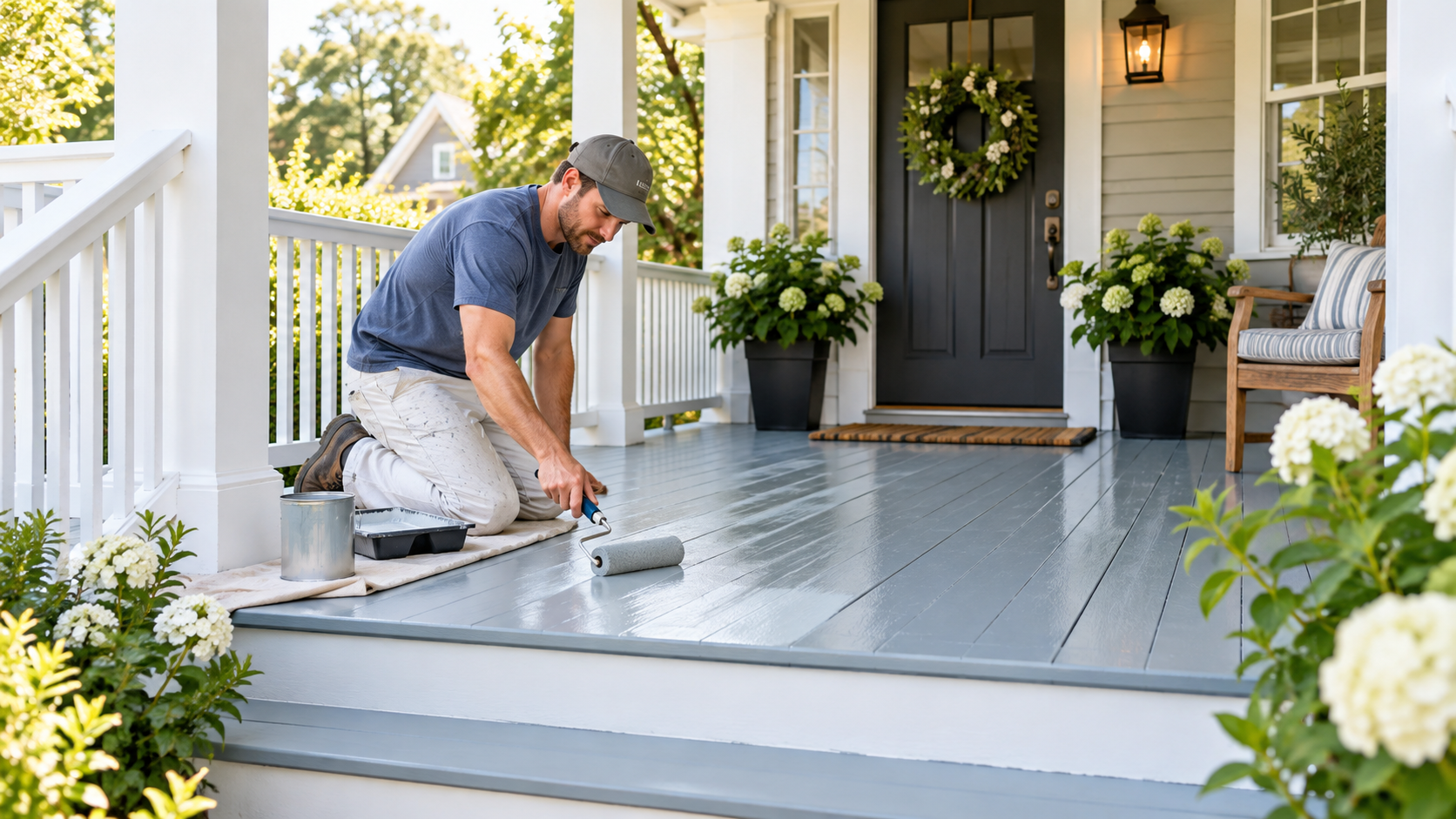
Learning how to paint a porch is easier when you stop thinking of the porch as one surface. A typical porch may include horizontal floorboards, stair treads, railings, posts, trim, siding, and a ceiling. Each area faces a different combination of sunlight, rain, moisture, abrasion, and foot traffic.
That means the coating that works beautifully on a column may not be the best choice for the floor beneath it.
The smartest approach is to divide the porch into zones, prepare each according to its condition, and paint in an order that prevents finished areas from being damaged later.
Zone 1: Start With the Porch Floor
The floor normally experiences the hardest wear.
Furniture moves across it. Shoes bring in dirt and grit. Rain can blow onto the surface, while sunlight heats exposed boards. Wood also expands and contracts as moisture levels change.
For this reason, ordinary exterior wall paint should not automatically be used on a porch floor.
Sherwin-Williams recommends coatings specifically formulated for porch and floor applications because they need to balance durability with the movement of exterior wood. Its Porch & Floor Enamel, for example, is designed for high-traffic wood and concrete surfaces.
Inspect Before Covering Anything
Before coating the floor, look for:
- Loose or popped fasteners
- Rotten boards
- Cracks and splinters
- Peeling previous coatings
- Glossy areas
- Mildew or biological growth
- Soft spots caused by moisture
- Gaps where water remains trapped
Paint cannot repair deteriorated wood. Replace or repair damaged material first.
Zone 2: Treat Steps as a Safety Surface
Porch stairs deserve separate attention because they combine weather exposure with concentrated foot traffic.
The center of each tread usually wears faster than the edges. Painted steps can also become slippery when wet.
BEHR specifically cautions that painted porch and patio surfaces may become slippery in moisture and offers textured or anti-slip systems for horizontal walking surfaces.
When deciding how to paint a porch with stairs, consider whether the coating is approved for exterior walking surfaces and whether slip resistance is needed.
Do not assume the paint used on the railing should automatically continue across the treads.
Zone 3: Railings, Columns and Trim Need a Different Finish
Vertical porch surfaces have an easier life than floors because people are not walking across them.
However, they still face sunlight, moisture, insects, dirty hands, and temperature changes.
This means railings, balusters, columns, and fascia can often use a quality exterior trim or house coating rather than a floor coating.
Preparation Determines How Sharp the Finish Looks
These architectural elements are highly visible, so poor preparation stands out.
Before painting:
- Scrape loose coating.
- Sand rough transitions.
- Repair damaged wood.
- Reset protruding nails or screws where appropriate.
- Remove dust.
- Prime exposed wood as required.
- Caulk suitable trim joints.
- Allow repairs and caulk to dry before finishing.
Sherwin-Williams recommends sanding exposed exterior wood to a fresh surface, repairing imperfections, removing loose coatings, and priming bare areas before the topcoat.
The objective is not merely to cover old paint. It is to create a stable base for the new coating.
Zone 4: Do Not Forget the Porch Ceiling
A porch ceiling is protected from direct foot traffic and usually from most rain, but it still experiences outdoor humidity, airborne dirt, insects, and temperature fluctuations.
Painting it can dramatically brighten a covered porch, particularly when the previous finish has yellowed or become dirty.
Paint From the Top Down
If the ceiling is part of the project, complete it before railings and flooring.
A practical sequence is:
Ceiling → walls or siding → columns → railings → trim → steps → floor
Working from top to bottom prevents ceiling drips and sanding dust from landing on a newly finished floor.
The porch floor should usually be one of the last areas completed because once it is coated, access becomes limited.
Zone 5: Pay Attention to Water Before You Paint
Exterior paint lasts longer when the construction beneath it manages water properly.
If a porch has recurring moisture problems, paint should not be used to hide them.
Check locations such as:
- Column bases
- Stair stringers
- Floorboard ends
- Bottom railings
- Areas beside downspouts
- Porch-to-house connections
- Boards close to landscaping
The USDA Forest Products Laboratory describes decks and porches as particularly demanding environments because horizontal wood collects moisture, receives sunlight, moves as moisture content changes, and experiences abrasive wear.
If wood stays wet because of drainage or construction problems, correct the cause before refinishing.
Paint, Solid Stain or Penetrating Stain?
This is where how to paint a porch becomes a material decision rather than simply a color decision.
A covered porch in relatively good condition may perform well with a dedicated porch-and-floor enamel. Other exterior wood situations may be better suited to a penetrating stain or a deck-rated stain system.
The USDA notes that penetrating stains can be easier to renew because they are less prone to the cracking and peeling associated with film-forming finishes. It also warns that finishes used on horizontal wood should be specifically suitable for that application.
Before purchasing a coating, confirm that its label specifically approves use on:
your material + exterior exposure + horizontal or vertical application
Do not rely on color alone.
Give the Porch Time Before Putting It Back Into Service
One of the easiest ways to damage a freshly finished porch is to use it too soon.
Paint can feel dry while remaining soft underneath.
For example, BEHR advises allowing its porch and patio floor coating about 72 hours before normal use, although actual requirements depend on the product, temperature, humidity, and surface.
Follow the coating manufacturer’s instructions before:
- Walking heavily on the floor
- Moving furniture back
- Placing rugs
- Washing the surface
- Dragging planters across it
Dry-to-touch and fully cured are not the same thing.
The Best Porch Projects Are Planned From the Top Down
The biggest lesson in how to paint a porch is that a porch is a collection of surfaces, not one giant painting project. Floors need abrasion resistance, steps need durability and safe footing, railings need a smooth weather-resistant finish, ceilings need clean coverage, and every wood surface needs to be sound and dry before coating begins.
Plan the project around how each surface is actually used, then choose products designed for those conditions. If deteriorated coatings, wood repairs, multiple porch materials, or extensive preparation make the project more complicated than expected, experienced painters in fort mill sc can handle the repair, preparation, coating selection, and application as one coordinated exterior painting project.