
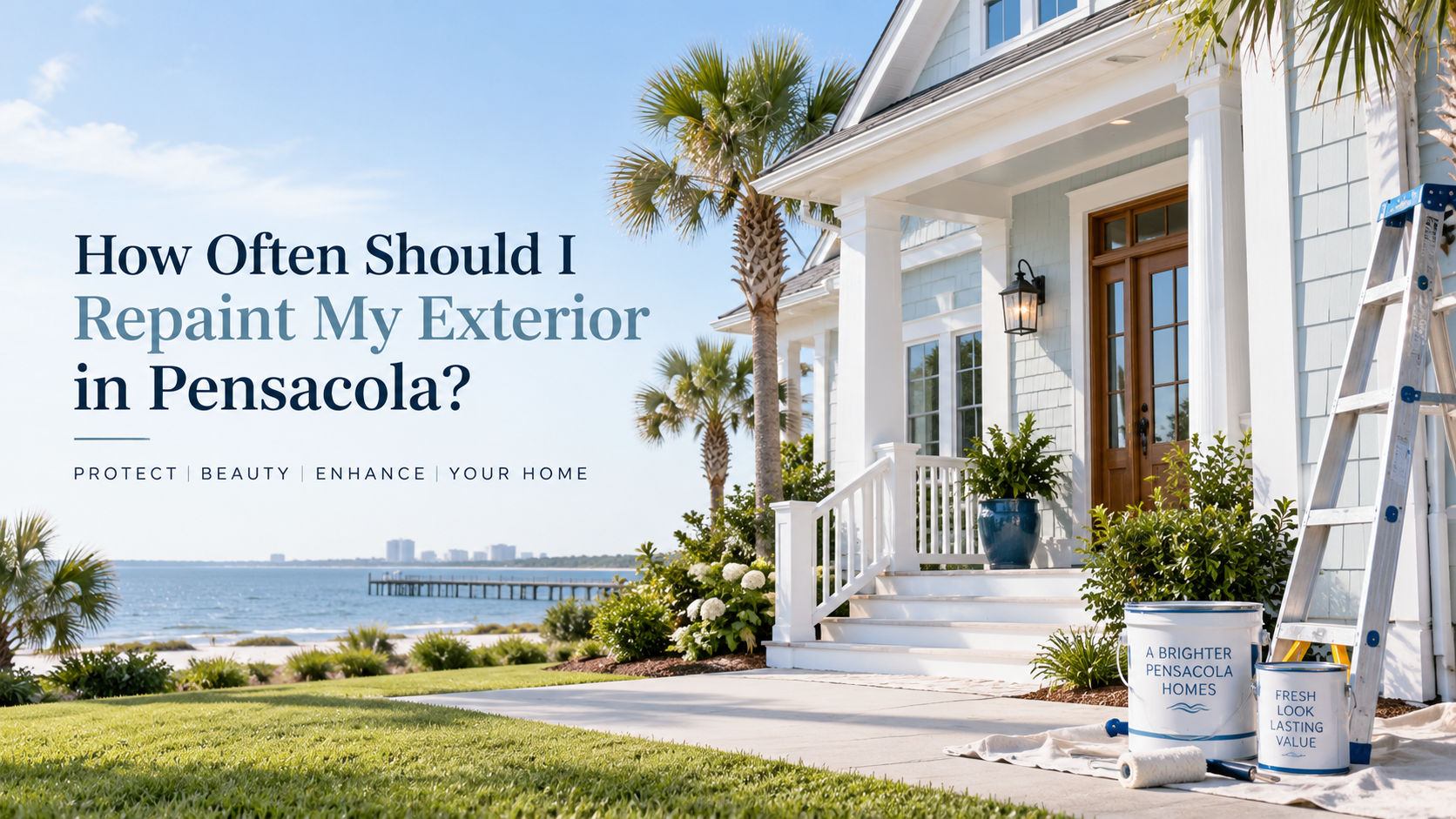
If you are asking how often should I repaint my exterior Pensacola, a realistic starting point is approximately every 4 to 7 years for many homes. However, Pensacola homeowners should not rely on the calendar alone. Gulf Coast humidity, strong UV exposure, heavy rainfall, salt in the air, the type of exterior surface, and the quality of the previous paint job can all shorten or extend the life of exterior paint.
A house several miles inland with fiber cement siding and high-quality acrylic paint may remain in good condition much longer than a wood-sided property near the coast. In other words, the best repainting schedule is based on the actual condition of your home rather than an arbitrary anniversary.
This guide explains how Pensacola’s climate affects exterior paint, how to estimate the repainting cycle for different materials, which warning signs matter most, and how homeowners can help a new paint job last longer.
How Often Should I Repaint My Exterior Pensacola Homes Typically Need?
For most Pensacola properties, an exterior repainting interval of roughly 4 to 7 years is a sensible planning range.
That does not mean every house automatically needs complete repainting in year four or that every home can safely wait until year seven.
Think of the timeframe more like an inspection window.
Once your exterior enters that age range, pay closer attention to:
- Fading on sunny walls
- Chalking paint
- Cracked or missing caulk
- Peeling around trim
- Mildew or algae growth
- Small siding cracks
- Exposed wood
- Bubbling or blistering paint
- Rust stains around fasteners
Homes exposed to particularly harsh coastal conditions may require repainting closer to the lower end of the range, while well-prepared surfaces protected with premium exterior coatings can sometimes last longer.
Why Exterior Paint Can Age Faster in Pensacola
Pensacola is beautiful partly because of its warm Gulf Coast environment, but those same environmental conditions can be challenging for exterior coatings.
Paint is not simply decoration. It forms a protective film over siding, trim, fascia, doors, and other exposed surfaces.
When that protective layer begins deteriorating, moisture and sunlight can begin affecting the building materials underneath.
Strong Florida Sun
Ultraviolet radiation gradually breaks down pigments and binders in exterior paint.
The most noticeable result is usually fading, but UV exposure can also make aging paint more brittle.
South- and west-facing areas commonly receive the most intense sunlight.
You may therefore notice that one side of your house looks noticeably more faded than another even though the entire property was painted at the same time.
High Humidity
Humidity is another major consideration.
Moisture-rich air can keep exterior surfaces damp longer, particularly on shaded walls where sunlight does not quickly dry accumulated moisture.
This creates favorable conditions for:
- Mildew
- Algae
- Mold growth
- Paint softening
- Wood movement
- Adhesion problems
Homes surrounded by mature trees may experience even more moisture retention because shaded siding dries more slowly.
Salt Air
Properties closer to Pensacola Bay, Pensacola Beach, Perdido Key, Gulf Breeze, and other coastal areas can receive additional exposure to airborne salt.
Salt particles may accumulate on painted surfaces and attract moisture.
Over time, the combination of salt, humidity, sun, and wind can accelerate wear.
This is one reason coastal homeowners should inspect painted surfaces regularly instead of assuming the paint will last as long as it would in a milder inland climate.
Heavy Rain and Storms
Pensacola receives significant rainfall, along with periods of severe storms.
Paint in good condition generally handles rain well. Problems begin when cracks, open joints, failing caulk, peeling paint, or exposed materials allow water to get behind the coating.
Once moisture penetrates beneath the paint film, failure can spread faster.
Your Exterior Material Changes the Repainting Schedule
One of the biggest mistakes homeowners make is assuming that every exterior surface follows the same repainting timeline.
Different materials react differently to moisture, heat, movement, and weather.
Wood Siding and Trim
Wood usually requires the closest attention.
A typical painted wood exterior may need significant maintenance or repainting approximately every 3 to 5 years in demanding coastal conditions, although properly prepared and protected wood can sometimes last longer.
Wood expands and contracts as moisture levels change.
That movement puts stress on the paint film.
Inspect wood carefully for:
- Splitting
- Peeling
- Open grain
- Soft areas
- Rot
- Cracked joints
- Exposed edges
Painting deteriorated wood without repairing the underlying problem will usually result in another premature failure.
Stucco
Painted stucco often performs well for approximately 5 to 7 years, depending on coating quality and exposure.
One issue homeowners should watch closely is cracking.
Hairline cracks may appear minor, but repeated moisture intrusion can eventually cause more significant problems.
Before repainting stucco, cracks should be evaluated and repaired appropriately.
Fiber Cement Siding
Fiber cement tends to perform well in humid climates and can often go 7 to 10 years between quality paint applications.
However, this does not mean it should be ignored for a decade.
Caulked joints, trim, penetrations, and highly exposed walls may require attention before the main siding does.
Painted Brick and Masonry
Painted brick can sometimes retain its finish for many years, with well-applied coatings potentially lasting 8 to 12 years or longer.
Masonry requires an appropriate coating system because moisture naturally moves through porous surfaces.
Using the wrong coating or painting over trapped moisture can lead to bubbling, flaking, or peeling.
Painted Vinyl Siding
Vinyl siding is not always painted originally, but homeowners sometimes repaint it to update the color.
When properly prepared and coated using compatible products, painted vinyl may last approximately 5 to 8 years.
Product selection matters because excessively dark colors may absorb additional heat and potentially create problems on certain vinyl products.
Five Questions That Tell You More Than the Age of Your Paint
Instead of simply asking, “When was my house last painted?” consider these five questions.
1. Is the Paint Still Firmly Attached?
Paint that remains tightly bonded to the surface is generally still performing an important protective role.
Peeling, flaking, or bubbling indicates that adhesion has begun failing.
2. Has the Color Changed Dramatically?
Moderate fading is mainly cosmetic.
Severe fading accompanied by chalking can indicate that the coating itself is breaking down.
Run your hand gently across a clean, dry section of siding.
If significant powder transfers to your fingers, the paint may be chalking.
3. Is Caulk Beginning to Fail?
Caulk around:
- Windows
- Door frames
- Trim joints
- Siding transitions
- Utility penetrations
should remain flexible and sealed.
Cracked or separated caulk can create entry points for moisture.
4. Is Bare Material Visible?
Exposed wood or substrate is a stronger warning sign than fading.
Once the protective coating has disappeared, moisture and sunlight can directly affect the material underneath.
5. Are Problems Appearing in Multiple Areas?
A single peeling spot might need localized repair.
Peeling, fading, chalking, and cracked caulk across multiple walls may indicate that the overall coating system is approaching the end of its useful service life.
How to Estimate Your Own Pensacola Repainting Timeline
If you are still wondering how often should I repaint my exterior Pensacola, consider creating a practical repainting score based on your home’s exposure.
Your property may require earlier repainting if several of the following are true:
- The home is close to the Gulf or bay.
- Exterior walls receive strong afternoon sun.
- The house has painted wood siding or extensive wood trim.
- Vegetation keeps parts of the exterior shaded and damp.
- Mildew returns frequently.
- The previous paint job used economy-grade materials.
- Surface preparation was minimal.
- Paint is already chalking or fading.
- Caulk is separating.
- Multiple areas show small cracks or peeling.
Conversely, your paint may remain serviceable longer when the home has durable siding, excellent preparation, premium acrylic paint, regular cleaning, and limited exposure to standing moisture.
Why Surface Preparation Has Such a Large Effect on Paint Lifespan
Homeowners often focus heavily on paint brand and color while underestimating preparation.
Preparation can determine whether a coating performs for years or starts failing prematurely.
A professional exterior painting process may include:
- Washing away dirt, salt, pollen, mildew, and chalk
- Scraping loose paint
- Sanding rough edges
- Repairing damaged wood or siding
- Replacing deteriorated caulk
- Treating mildew where appropriate
- Priming exposed or repaired surfaces
- Allowing adequate drying time
- Applying paint within suitable weather conditions
Premium paint cannot compensate for a weak surface underneath.
Applying new paint directly over loose, chalky, dirty, or damp material may simply create a new coating attached to an unstable layer.
Can Washing Help Your Exterior Paint Last Longer?
Yes.
Regular cleaning can be especially valuable in Pensacola because exterior surfaces collect salt, mildew, pollen, dirt, and organic material.
A gentle annual or semiannual cleaning can help remove contaminants before they become deeply embedded.
Pressure washing should be performed carefully.
Excessive pressure can damage wood, force water behind siding, or create marks on softer materials.
In many situations, controlled soft washing or low-pressure cleaning is more appropriate.
When Should You Repaint Instead of Touching Up?
Touch-ups are useful when deterioration is isolated.
For example, a homeowner may be able to repair and repaint a small area of trim affected by a minor leak.
Full repainting becomes more practical when deterioration is widespread.
Consider repainting the complete exterior when:
- Multiple walls show fading.
- Chalking appears across large areas.
- Paint is cracking in several locations.
- Previous touch-ups are becoming obvious.
- Caulk is failing throughout the exterior.
- Large sections require scraping or repairs.
- You are preparing to sell the home.
- You want to make a major color change.
- The existing coating no longer provides uniform protection.
Painting the full exterior creates a consistent protective layer and more uniform appearance.
What Time of Year Is Best for Exterior Painting in Pensacola?
Exterior paint needs suitable drying and curing conditions.
Pensacola painting projects can be completed during different parts of the year, but weather should always be considered.
The most favorable conditions generally include:
- Dry surfaces
- No immediate rain threat
- Temperatures within the coating manufacturer’s recommended range
- Manageable humidity
- Moderate wind
- Enough drying time between coats
Florida summer painting is possible, but afternoon storms, intense heat, and humidity can complicate scheduling.
Professional painters often plan work around weather windows rather than selecting dates based solely on the season.
Does Paint Quality Really Change How Often You Repaint?
Absolutely.
Modern high-quality exterior acrylic paints are formulated to resist moisture, sunlight, expansion, contraction, fading, and mildew better than many lower-cost products.
Paint selection should still match the substrate.
For example, the best coating system for wood may not be identical to the ideal coating for stucco or masonry.
The number of coats, primer requirements, existing coating, surface preparation, and application thickness also affect longevity.
A premium product applied incorrectly can fail sooner than a properly selected coating applied to a thoroughly prepared surface.
Don’t Wait Until Peeling Becomes Severe
One of the most important lessons in exterior maintenance is that repainting is often less expensive when performed before widespread paint failure develops.
If you repaint while most of the existing coating is still firmly attached, preparation may be relatively straightforward.
Waiting until large areas are peeling can require significantly more:
- Scraping
- Sanding
- Priming
- Wood repair
- Caulk replacement
- Siding repair
- Moisture investigation
Repainting therefore protects more than appearance.
It can help preserve the materials that form your home’s exterior envelope.
A Simple Annual Exterior Paint Inspection
Once each year, walk around your home during daylight and inspect each side separately.
Start with the roofline and work downward.
Look at:
Trim and Fascia
Check for peeling paint, soft wood, separated joints, and water staining.
Windows and Doors
Look for cracking around frames and deteriorating caulk.
Main Siding
Watch for fading, chalking, mildew, blistering, and hairline cracks.
Lower Walls
These areas can receive splashback from rain and landscaping irrigation.
Shaded Areas
Check closely for mildew, algae, and surfaces that remain damp longer.
Sunniest Walls
Look for fading, brittle paint, and premature chalking.
Taking a few photos every year can make gradual changes easier to spot.
Frequently Asked Questions
How often should a Pensacola home exterior be painted?
Many Pensacola homes fall within a repainting range of approximately 4 to 7 years, although wood surfaces or highly exposed coastal properties may need attention sooner.
Can exterior paint last ten years in Pensacola?
It can in some situations. Durable siding, excellent preparation, premium coatings, and less severe exposure may extend the repainting cycle. However, the coating should still be inspected regularly.
Does fading mean the house must be repainted immediately?
Not always. Mild fading can be cosmetic. Severe fading combined with chalking, cracking, peeling, or exposed material is a stronger indication that repainting should be considered.
Does salt air damage exterior paint?
Salt particles can accumulate on exterior surfaces, retain moisture, and contribute to coating deterioration. Homes close to coastal water generally benefit from more frequent cleaning and inspections.
Should mildew be painted over?
No. The surface should be properly cleaned and the cause of recurring moisture or organic growth evaluated before applying new paint.
What causes exterior paint to peel early?
Common causes include poor preparation, moisture intrusion, painting over dirty or chalky surfaces, incompatible coatings, deteriorated substrate, and unfavorable application conditions.
What is the best way to make exterior paint last longer?
Good preparation provides the strongest foundation. Regular washing, prompt repairs, quality caulking, appropriate primer, premium exterior paint, and correct application conditions can all help extend coating life.
Protect the Exterior Before Small Problems Become Expensive
So, how often should I repaint my exterior Pensacola homeowners ask? For many properties, evaluating the exterior around the 4-to-7-year mark is a sensible approach, but condition should always matter more than the date on a calendar. Inspect your siding, trim, caulk, shaded areas, and sun-facing walls regularly, and address peeling, exposed surfaces, moisture problems, or widespread chalking before deterioration progresses. The same principle applies in other humid and weather-exposed markets, where experienced painters in ballantyne nc understand that proper preparation, surface repair, and climate-appropriate coatings are what ultimately determine how long an exterior paint job performs.