
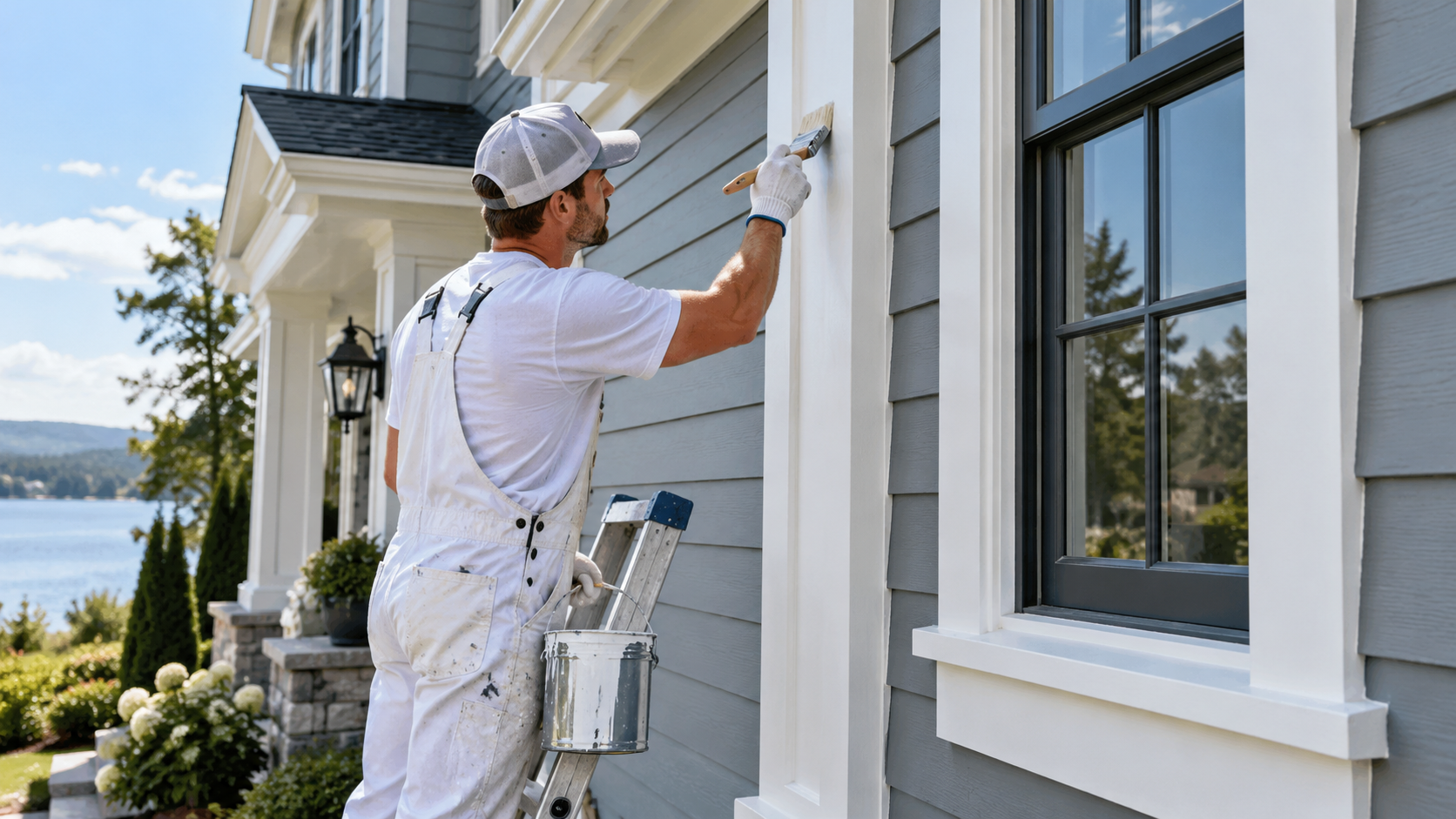
Choosing the right exterior paint is one of the most important decisions when protecting your home’s appearance and structural surfaces. Exterior walls face constant exposure to sunlight, rainfall, moisture, and changing temperatures. The paint you choose must withstand these conditions while maintaining its color and finish.
One question homeowners frequently ask is, is oil based paint better for exterior surfaces than water-based paint?
The short answer is not necessarily. Although traditional oil-based paints offer strong adhesion and a smooth, hard finish, modern acrylic latex paints are generally the better choice for most exterior house painting projects. They provide excellent flexibility, color retention, weather resistance, and easier maintenance.
However, oil-based products still have advantages for certain materials and specialized applications. Understanding the differences helps homeowners choose a coating that delivers reliable protection without unnecessary maintenance.
Understanding Oil-Based and Water-Based Exterior Paint
Before comparing performance, it helps to understand how these coatings work.
What Is Oil-Based Exterior Paint?
Oil-based paint uses drying oils or synthetic alkyd resins as its primary binder. Traditional formulations contain organic solvents that help the paint spread before evaporating during the drying process.
As the coating cures, it develops a relatively hard protective film.
Oil-based paints have historically been valued for several characteristics:
- Smooth application and excellent leveling
- Strong adhesion when used with properly prepared surfaces
- Hard, durable finishes on selected architectural details
- Good coverage with suitable formulations
- Compatibility with certain specialized primers and coating systems
However, traditional oil-based coatings can become brittle as they age, which may affect their performance on exterior surfaces exposed to expansion and contraction.
What Is Water-Based Exterior Paint?
Water-based paints, commonly called latex or acrylic paints, use water as the primary liquid carrier.
Modern exterior acrylic coatings contain advanced resins that help the paint adhere to surfaces while maintaining flexibility.
High-quality acrylic latex paints are suitable for many exterior materials, including wood siding, fiber cement, masonry, and stucco, provided the product is approved for the specific surface.
Benjamin Moore generally recommends acrylic or latex coatings for exterior house painting because of their durability, UV resistance, and ability to accommodate movement in building materials.
Oil-Based vs. Water-Based Exterior Paint: Key Differences
The following comparison highlights important performance characteristics.
| Feature | Oil-Based Paint | Acrylic Latex Paint |
|---|---|---|
| Adhesion | Strong with proper preparation | Excellent on compatible surfaces |
| Flexibility | May become brittle over time | Generally retains flexibility |
| Drying time | Usually longer | Usually faster |
| UV resistance | Can experience greater chalking and fading | Generally better color retention |
| Cleanup | Often requires mineral spirits | Usually soap and water |
| Odor and VOCs | Generally higher | Generally lower |
| Best applications | Selected trim, primers, and specialty coatings | Siding, masonry, and general exterior painting |
These differences explain why modern exterior painting projects commonly use acrylic latex coatings rather than traditional oil-based finishes.
Is Oil Based Paint Better for Exterior Walls in Harsh Weather?
Weather resistance is often the deciding factor when selecting exterior paint.
A durable coating must tolerate seasonal changes without excessive cracking, peeling, fading, or moisture-related damage.
Performance in Hot Sunlight
Exterior walls receive substantial ultraviolet exposure, particularly on south- and west-facing elevations.
Traditional oil-based coatings can gradually lose flexibility and develop chalking as the binder deteriorates.
High-quality acrylic latex paints generally provide better UV resistance and color retention, making them a practical option for sun-exposed siding.
Performance During Rain and Humidity
Moisture is another significant concern.
Both oil-based and water-based paints require suitable surface conditions for proper application. Painting over wet or inadequately prepared surfaces can lead to adhesion problems regardless of the coating type.
Modern exterior acrylic paints form protective films designed to resist wind-driven rain while accommodating limited moisture-vapor movement.
However, no paint system can compensate for unresolved leaks, damaged siding, or persistent water intrusion.
Performance During Temperature Changes
Exterior building materials expand and contract as temperatures change.
Wood, in particular, responds to both temperature and moisture fluctuations.
Because acrylic latex paints generally remain more flexible than traditional oil-based coatings, they can better accommodate this movement.
Sherwin-Williams notes that quality acrylic latex exterior paints can perform as well as or outlast oil-based house paints, partly because they retain flexibility as they age.
When Does Oil-Based Paint Make Sense for Exterior Projects?
Although acrylic latex is usually preferred for broad exterior surfaces, oil-based products remain useful in selected circumstances.
1. Certain Exterior Wood Primers
Some wood species contain natural tannins or extractives that can discolor paint.
An appropriate oil-based or alkyd stain-blocking primer may help control this problem, depending on the wood and product specifications.
The primed surface can then receive a compatible exterior acrylic topcoat.
2. Selected Doors and Architectural Trim
Traditional oil-based enamels are known for their smooth appearance and hard finish.
They may still be considered for certain exterior doors, trim, or decorative components where the coating manufacturer specifically recommends them.
However, modern waterborne enamels and specialty exterior coatings can provide comparable advantages for many applications.
3. Specialized Restoration Projects
Older buildings sometimes contain existing coating systems that require careful evaluation.
An oil-based primer or specialty coating may be appropriate, but the decision should follow inspection, cleaning, adhesion testing, and manufacturer guidance.
Using oil-based paint simply because the previous coating was oil-based is not always necessary.
Choosing Exterior Paint Based on Surface Material
Different building materials have different coating requirements.
Wood Siding
Wood expands and contracts with changes in moisture.
High-quality acrylic latex paint is generally a strong choice because of its flexibility and resistance to weathering.
Any exposed or damaged wood should be repaired and appropriately primed before painting.
Brick and Stucco
Masonry surfaces need coatings compatible with their porosity and moisture conditions.
Breathable exterior acrylic or suitable masonry coatings are often preferable to traditional oil-based finishes.
Any existing efflorescence, water damage, or moisture problems must be addressed first.
Fiber Cement Siding
Fiber cement typically performs well with exterior acrylic latex paint when the surface is prepared and coated according to manufacturer instructions.
Using the correct primer and topcoat helps maintain adhesion and protection.
Metal Railings and Fixtures
Metal surfaces require additional consideration because corrosion resistance is important.
A compatible rust-inhibiting primer and exterior metal coating may be necessary. Depending on the product, the finish can be water-based or solvent-based.
The right coating system matters more than selecting a paint solely because it contains oil.
Why Surface Preparation Matters More Than Paint Type
Even premium exterior paint can fail when applied over damaged, dirty, or unstable surfaces.
Proper preparation creates the foundation for long-lasting performance.
Before painting, homeowners or contractors should:
- Clean the exterior: Remove dirt, mildew, loose debris, and surface contaminants.
- Inspect existing coatings: Identify peeling, cracking, chalking, or failing paint.
- Repair damaged materials: Replace rotten wood and correct moisture-related problems.
- Remove loose paint safely: Use appropriate preparation techniques.
- Apply suitable primer: Match the primer to the surface and finish coating.
- Follow application requirements: Respect temperature, humidity, and drying recommendations.
Homes built before 1978 may contain lead-based paint. The EPA recommends lead-safe work practices and certified contractors when renovation work could disturb these coatings.
What Is the Best Exterior Paint for Homes in North Carolina?
Homeowners in Waxhaw, Charlotte, and surrounding North Carolina communities must consider warm summers, seasonal humidity, thunderstorms, and changing temperatures.
These conditions make coating flexibility, moisture resistance, and UV protection particularly important.
For most residential exterior siding projects in this region, a premium 100% acrylic latex paint is a practical choice.
It offers several benefits:
- Resistance to cracking caused by normal surface movement
- Strong color retention under sunlight
- Reliable protection when applied over properly prepared surfaces
- Easier maintenance and touch-ups
- Broad compatibility with common residential siding materials
However, each property requires individual evaluation.
A home with aging wood siding may need different preparation and primer recommendations than one with newer fiber cement siding.
Likewise, the paint used on shutters or metal railings may differ from the coating selected for exterior walls.
Can You Apply Water-Based Paint Over Existing Oil-Based Paint?
Yes, but proper preparation is essential.
Applying ordinary latex paint directly over a glossy or poorly prepared oil-based surface can cause adhesion problems.
The process generally involves cleaning the surface, removing loose coating, dulling glossy areas, and applying a compatible bonding primer when required.
Before proceeding, verify the existing coating and follow the new paint manufacturer’s recommendations.
A small adhesion test may also help determine whether additional preparation is necessary.
Frequently Asked Questions About Exterior Oil-Based Paint
Is oil based paint better for exterior wood?
Not usually for large siding surfaces. High-quality acrylic latex paint generally offers better flexibility as wood expands and contracts. However, certain oil-based primers remain useful for specific wood conditions.
Does oil-based exterior paint last longer than latex?
Not necessarily. Premium acrylic latex coatings can equal or outperform traditional oil-based exterior paint, especially in terms of flexibility and resistance to UV-related deterioration.
Is oil-based paint more waterproof?
Oil-based paint forms a protective coating, but that does not automatically make it more effective against moisture. Proper surface preparation, correct application, and a suitable coating system are essential.
Can oil-based paint be used on exterior brick?
Traditional oil-based paint is generally not the preferred option for brick. Suitable masonry coatings or exterior acrylic products are usually better choices, depending on the brick’s condition and moisture requirements.
Which exterior paint is easier to maintain?
Acrylic latex paint is generally easier to clean up, touch up, and maintain. It also tends to retain color and flexibility better than traditional oil-based coatings.
Make the Right Exterior Paint Choice for Long-Lasting Protection
So, is oil based paint better for exterior painting? For most residential projects, the answer is no. Modern acrylic latex paints generally deliver better overall performance on exterior siding through improved flexibility, UV resistance, and color retention. Oil-based products still have a place in specialized priming, trim work, and restoration projects, but they are not automatically the most durable solution.
For homeowners in Waxhaw and nearby Charlotte communities, choosing the correct paint system is just as important as professional application. Century Painting & More provides residential painting services focused on careful preparation, suitable materials, and durable finishes. If you’re looking for experienced Painters in Waxhaw NC, explore their services to find professional assistance for your next exterior painting project.