
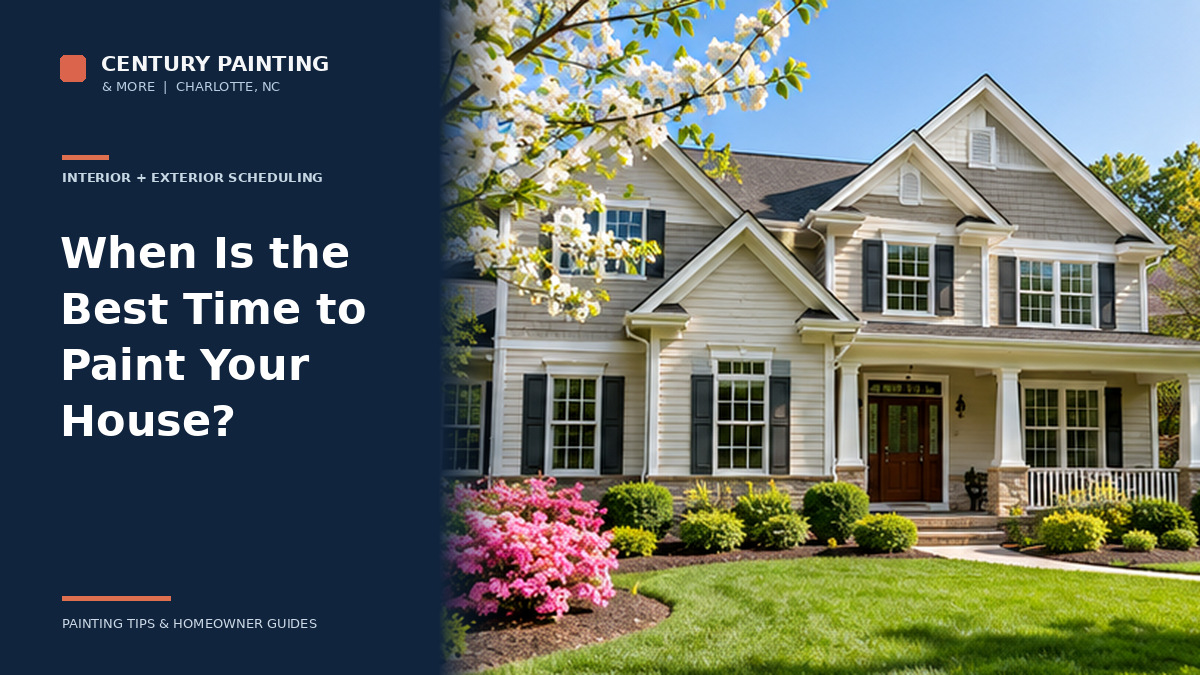
When is the best time to paint your house? Interior rooms can be painted in almost any season when temperature, ventilation, and drying conditions are controlled; exterior work is best scheduled for a reliably dry period with temperatures suitable for the chosen coating. For homeowners around Charlotte, that often makes spring and fall attractive for exterior painting, while indoor projects can fit around work, school, and family routines throughout the year.
There is another part of the answer that a calendar cannot provide: the condition of the surfaces. If paint is lifting from wood or moisture is entering through damaged joints, waiting for a favorite month may create more repair work. A room with sound paint, on the other hand, can usually wait until moving furniture and managing daily life become easier.
Start With the Type of Painting You Actually Need
A whole-house project can include several jobs that obey different rules. An exterior depends on the weather and substrate moisture. Interior walls depend more on access, ventilation, and the household’s schedule. Cabinets, trim, and doors may need additional curing time before they return to heavy use.
Interior painting: the most flexible calendar
Indoor conditions can be controlled more easily. In winter, heating may keep a room within the coating’s required temperature range, although windows cannot always stay open for long. In summer, air conditioning helps with comfort, but a damp or poorly ventilated space can still slow drying. Follow the paint label for temperature, airflow, recoat time, and full cure.
Consider scheduling bedrooms when children are away for a few days, a home office before new equipment arrives, or a dining room before a stretch without gatherings. The best interior painting date is one that provides enough uninterrupted time for preparation, application, drying, and putting the room back together.
Exterior painting: let the forecast lead
Outdoor work needs more than a sunny afternoon. Paint requires a clean, sufficiently dry surface and acceptable conditions while the film forms. Overnight lows, dew, direct sun, wind, and the chance of rain matter alongside the daytime temperature. Product instructions should determine the working range; one coating may tolerate cooler conditions than another.
In the Charlotte region, spring and autumn frequently offer useful painting windows, but neither season guarantees ideal weather. A muggy spring week or a cool, dew-heavy fall morning may be worse than a dry summer day. Choose a dependable weather window, not simply a date printed on the calendar.
For households balancing several projects, asking when is the best time to paint your house is really asking which tasks are weather-sensitive, which are urgent, and which can be chosen for convenience.
Use Surface Condition to Set the Deadline
Ask what happens if the work is postponed for three months. That question separates urgent maintenance from optional design changes.
- Plan promptly: peeling paint exposes wood, caulk is opening around joints, or water is reaching vulnerable exterior materials.
- Schedule soon: noticeable fading, persistent chalking, or widespread wear indicates the protective finish is declining, even if the surface underneath remains sound.
- Choose for convenience: a bedroom color feels outdated, walls have ordinary scuffs, or an intact finish no longer suits the furniture.
Fresh paint improves appearance, but it is not a repair for rot, active leaks, or failing siding. Those problems need diagnosis and correction before a finish coat goes on. In homes built before 1978, disturbing old coatings may require lead-safe practices; ask about the age of the home before sanding or scraping.
Work Backward From the Date You Want the House Ready
Homeowners often allow time for the actual painting but forget the steps before and after. If you want a refreshed home before holiday guests arrive or before listing it for sale, start with the finish date and count backward.
A practical planning sequence looks like this:
- Inspect: identify damaged areas, previous coatings, access issues, and the surfaces to be included.
- Decide: select colors, sheen, scope, and whether repairs are required before painting.
- Prepare: clear furniture, protect belongings, complete surface repairs, and allow cleaned areas to dry.
- Paint: apply products according to the manufacturer’s coverage and recoat directions.
- Return to use: allow enough drying and curing time before washing walls, replacing hardware, or pressing furniture against fresh paint.
A one-room color change and a multi-elevation exterior repaint will not share the same timeline. Your contractor should explain the sequence rather than promise a fixed number of days without inspecting the property.
Choose Priorities Instead of Painting Everything at Once
There is no rule that the living room, trim, garage, and siding must be completed in one project. If budget or access is limited, rank each area by vulnerability and everyday use.
First priority: surfaces that protect the house, especially exposed exterior wood and deteriorated joints after repairs are made. Second priority: high-use interiors where damage and marks affect daily comfort. Third priority: decorative updates where the existing finish is still performing properly.
Phasing work can also make color decisions easier. You might establish a consistent neutral in shared living spaces, then choose more personal colors for bedrooms. Outdoors, planning related trim and siding work together helps avoid treating recently painted sections as isolated patches.
What the Charlotte Area Changes About the Decision
Local homeowners should look beyond average seasonal temperatures. Tree pollen can accumulate on outdoor surfaces in spring. Summer sun can make dark siding much hotter than the surrounding air. Humidity may delay drying, and autumn evenings can bring dew sooner than expected. Shaded elevations sometimes stay damp long after a sunny front wall looks ready.
These issues are manageable with appropriate cleaning, measuring, product selection, and scheduling. They are reasons to remain flexible, not reasons to declare an entire season off-limits. An experienced team should be willing to adjust the workday or postpone a coat when conditions are unsuitable.
Questions That Make Scheduling Easier
Should I paint before moving in or after?
If the home is empty and the surfaces are sound, painting before the furniture arrives usually makes access and protection simpler. If there are leaks, electrical repairs, or extensive drywall work ahead, finish those tasks first so newly painted walls are not damaged again.
Does interior paint dry faster in hot weather?
Not automatically. Heat may speed surface drying, but excessive humidity, poor ventilation, and paint chemistry can change the result. A finish may feel dry to the touch long before it is fully cured. The product’s technical directions matter more than a general rule about summer.
Is a discounted off-season appointment always better?
Only if the job can be performed within the coating’s specified conditions and the home is ready. A lower price is not a bargain if the timing creates moisture problems or forces rushed preparation. Ask what weather-related rescheduling is included in the plan. Ultimately, when is the best time to paint your house? It is when the surfaces are ready, the forecast supports any outdoor work, and the household can accommodate proper preparation and drying. If you are planning a Ballantyne-area refresh, Century Painting & More can help assess the exterior scope and appropriate timing. Speak with our painters in ballantyne nc to discuss a project that fits your home rather than a generic seasonal schedule.