
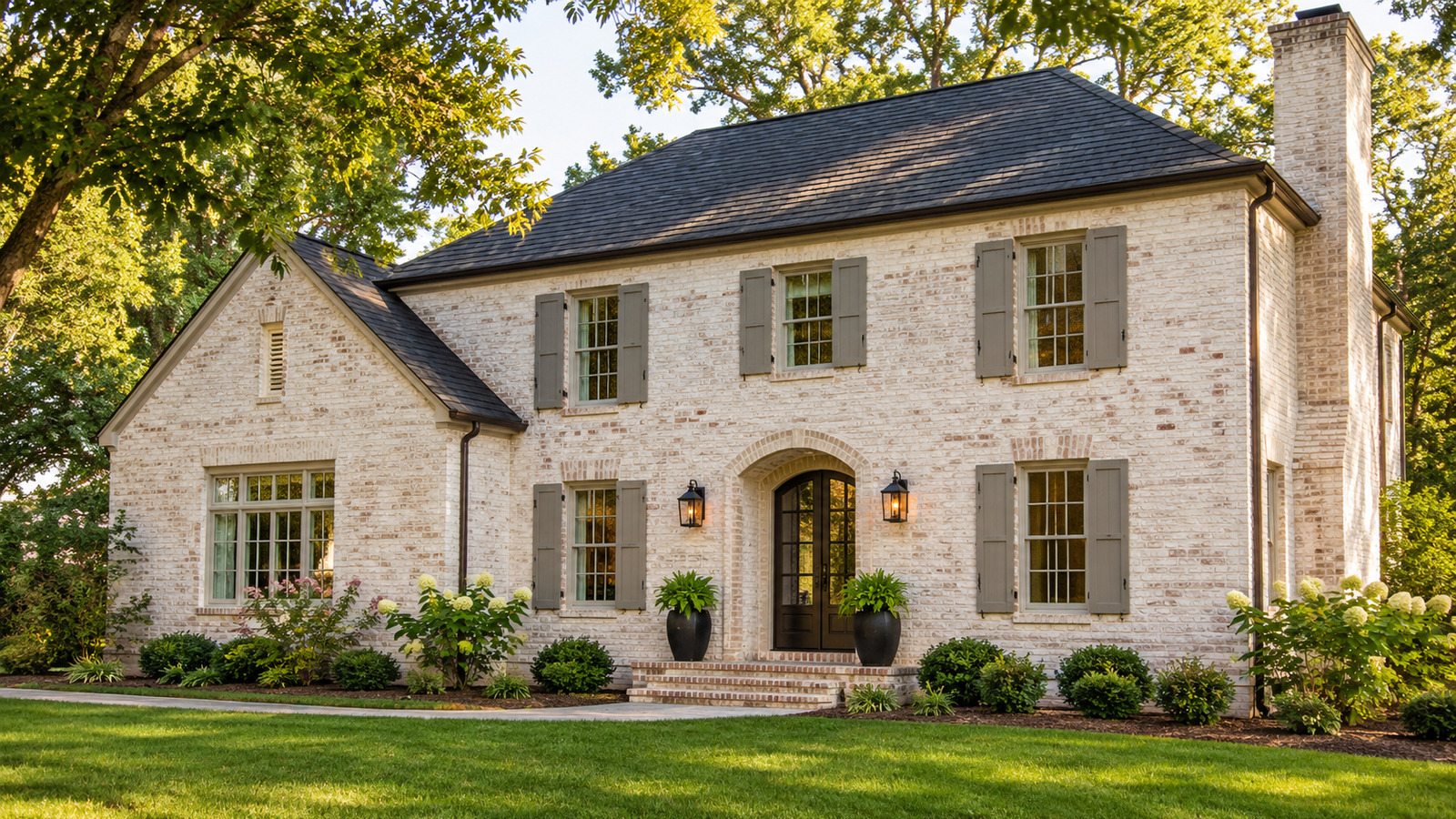
Limewash paint is a mineral-based finish that creates a soft, chalky appearance on suitable brick and masonry. Unlike conventional exterior paint, authentic limewash is designed to bond with absorbent mineral surfaces rather than simply form a film over them. The result can look beautifully aged instead of uniformly coated. That distinction matters when deciding whether to refresh a red-brick home in Charlotte: the right product depends on the brick, its moisture conditions, and the look you want to live with.
What makes limewash different?
Traditional limewash starts with slaked lime and water, sometimes with mineral pigments. Applied to compatible masonry, it develops an extremely matte surface with subtle variations. Depending on the product and technique, a painter can leave full coverage or selectively distress the finish so sections of original brick remain visible.
Regular masonry paint is usually formulated to deliver a more consistent, opaque color. Depending on the coating, it creates a continuous protective film with different moisture-management and maintenance characteristics. Neither finish is automatically better. The important question is whether the existing brick, its previous coatings, and the building’s exposure support the system being considered.
Limewash paint and masonry paint at a glance
| Feature | Limewash paint | Conventional masonry paint |
| Visual effect | Soft, mineral, often mottled | More even and opaque |
| Best starting surface | Generally clean, absorbent, unpainted masonry | Depends on coating and primer system |
| Aging | Can develop a natural-looking patina | May fade, chalk, or peel as the system ages |
| Color choices | Often curated mineral colors | Usually a broader color range |
| Preparation | Absorption and moisture checks are essential | Cleaning, repairs, and product-specific priming |
The table is a starting point, not a substitute for a product data sheet. Some specialty masonry paints are also breathable, and some limewash products require primers on less absorbent surfaces. A contractor should confirm the exact manufacturer instructions before recommending either option.
Start with the brick, not the color swatch
Imagine two neighboring homes with nearly identical red brick. One has never been painted, and water readily absorbs into its surface. The other was coated years ago with a glossy film. They may look equally ready for a pale finish in a photo, but they are not the same project. Many traditional limewash products are intended for absorbent, unsealed masonry; a previously painted wall may need a different preparation system or another coating entirely.
Check mortar joints, cracks, white powdery deposits, loose material, and dark areas that stay damp after rain. These issues deserve attention before cosmetic work. A new finish cannot repair a leaking gutter or correct moisture entering through damaged masonry. Chimneys, exposed parapets, and walls close to wet soil may also face different conditions from sheltered façades.
A small sample area tells you more than a social-media photo. Observe it in direct sun, shade, and evening light. Notice whether the brick texture shows through enough and whether the planned degree of distressing feels natural from the sidewalk, not just up close.
What a thoughtful application plan involves
A suitable project begins with surface cleaning that does not damage the brick or mortar, followed by repair and the manufacturer’s recommended moisture and absorption checks. Some limewash systems call for dampening the masonry before application. Crews then work in manageable sections, keeping edges consistent so the finish does not develop unintended stripes or abrupt transitions.
The attractive variation people associate with limewash usually comes from controlled application and, when appropriate, a carefully timed distressing method. Randomly scrubbing off product can create an uneven, patchy look rather than authentic character. Window trim, lights, roofing, walkways, and landscaping should be protected before the first brush touches the wall.
Charlotte’s humid summers and changing weather introduce scheduling questions. Temperature, rain forecasts, surface drying, and exposure all affect when exterior finishing should begin. Follow the selected coating’s published temperature and recoat requirements instead of assuming a warm afternoon is suitable for every masonry product.
Which finish fits the home you actually own?
Limewash paint can be appealing when the goal is an understated European-inspired look that celebrates the brick’s texture. It works particularly well with wood doors, dark window frames, natural landscaping, and muted trim. Homeowners seeking a crisp, fully uniform white, a dramatic saturated color, or coverage over an existing paint film may prefer a compatible masonry-paint system.
Think about future maintenance, too. A weathered mineral finish will not necessarily remain identical on every elevation. For some homeowners, that gentle variation is the point. For others, especially those who want matching touch-ups years from now, a predictable solid-color finish is more comfortable. Ask how the surface should be cleaned and what maintenance may look like before choosing. The smartest exterior refresh is the one that respects the building first and follows the design second. For a professional assessment of brick condition, coating compatibility, and a finish that suits your home, homeowners comparing best exterior painters charlotte nc can contact Century Painting & More for a free estimate. An informed choice now is far easier than correcting the wrong finish after it has been applied.