
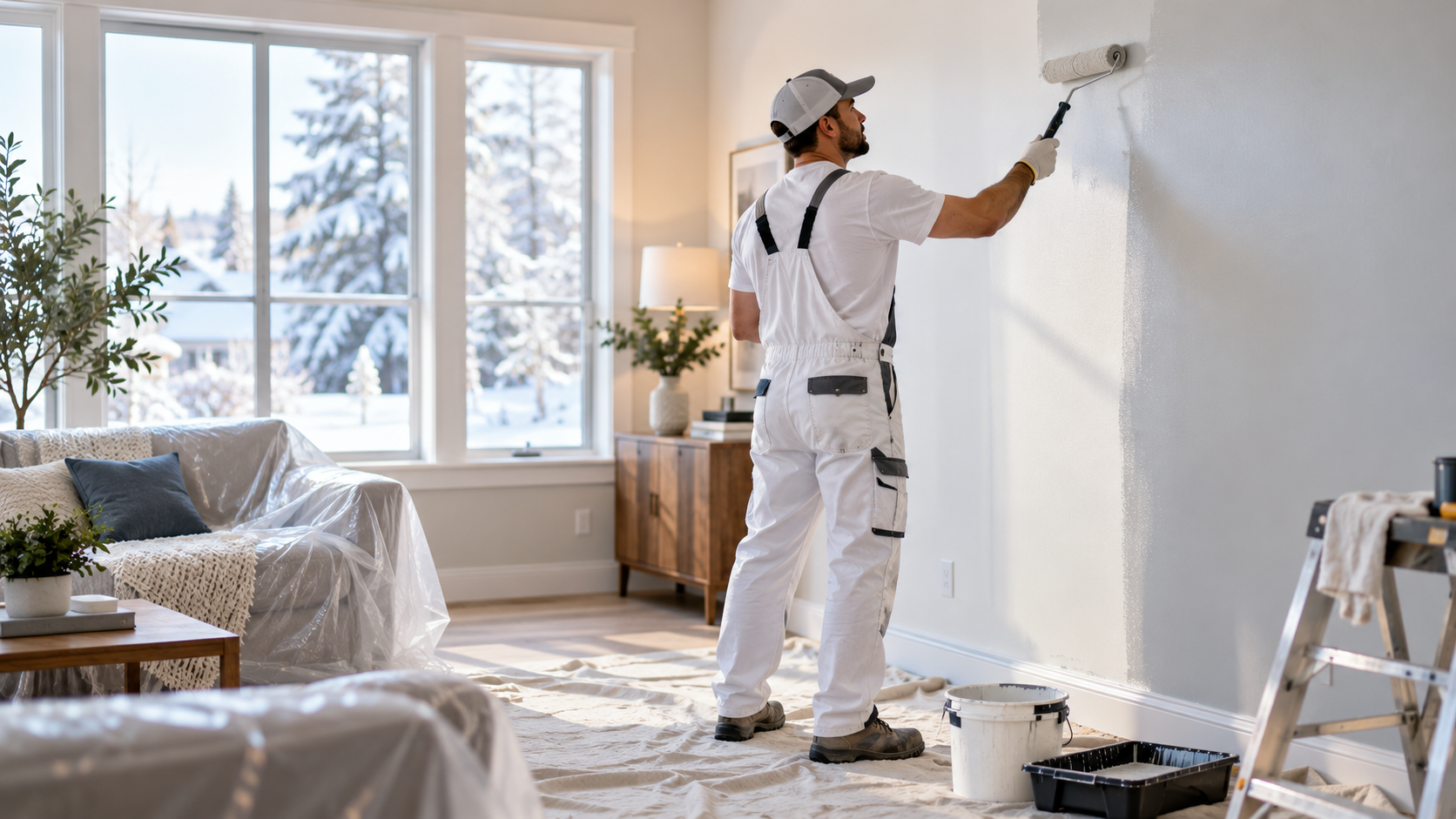
Winter often feels like an inconvenient time for home improvement projects. Cold temperatures, closed windows, and shorter days can make homeowners hesitant to pick up a paintbrush. However, a fresh coat of paint can brighten your living space without waiting for spring.
Is it safe to paint indoors in winter? Yes, interior painting is generally safe during colder months when you use suitable paint, maintain comfortable room temperatures, and provide adequate ventilation. The biggest concerns are not necessarily the outdoor temperatures but indoor air quality, moisture levels, and how well the paint dries.
Understanding these factors can help you achieve a beautiful finish while keeping your household comfortable and minimizing unnecessary exposure to paint fumes.
Why Winter Can Actually Be a Good Time for Interior Painting
Many homeowners schedule painting projects during spring or summer, assuming warmer weather guarantees better results. However, winter offers several practical advantages, particularly in homes with reliable heating.
Indoor temperatures are easier to control when a central heating system maintains consistent conditions. In some homes, lower winter humidity can also help prevent excessive moisture from interfering with the painting process.
Other potential advantages include:
- Flexible scheduling: Painting contractors may have greater availability during slower seasonal periods.
- Consistent indoor conditions: Heated rooms can provide a stable environment for paint application.
- Convenient home improvements: Refreshing walls during winter means fewer painting projects when warmer weather arrives.
- Improved appearance: Fresh colors can make rooms feel brighter during shorter winter days.
Still, winter painting requires careful planning. Heating a room without providing fresh air can create problems that affect both comfort and indoor air quality.
What Temperature Is Best for Painting Interior Walls in Winter?
Temperature affects how paint spreads, bonds with surfaces, and forms a durable coating.
For many conventional water-based interior paints, maintaining an indoor temperature around 60°F to 75°F creates favorable working conditions. However, acceptable application temperatures vary by product, so always follow the manufacturer’s instructions.
Cold Walls Can Cause Problems Even in Warm Rooms
One overlooked issue involves the temperature of the actual wall surface.
An exterior-facing wall may remain colder than the air inside a heated room, especially near poorly insulated windows or corners.
Applying paint to an excessively cold surface can result in:
- Uneven paint coverage
- Longer drying periods
- Visible roller or brush marks
- Poor film formation and adhesion
- Increased risk of peeling or other finish defects
A room thermometer helps monitor air temperature, while an infrared thermometer can provide a useful estimate of wall temperature.
Avoid painting when the wall surface falls below the paint manufacturer’s permitted application temperature.
Is It Safe to Paint Indoors in Winter With the Windows Closed?
This is one of the most important concerns for households planning a winter renovation.
Although keeping windows closed helps preserve warmth, painting in a tightly sealed room can allow chemical vapors and odors to accumulate.
Many paints release volatile organic compounds, commonly called VOCs, during application and drying. Depending on the product and exposure level, these substances may cause irritation, headaches, or other health effects.
How to Ventilate a Room Without Losing Too Much Heat
The goal is to balance warmth with fresh-air circulation.
- Open windows where weather conditions permit to allow outdoor air to enter.
- Position a securely installed window fan to exhaust air outdoors.
- Keep interior doors closed when appropriate to limit fumes spreading into occupied rooms.
- Use safe, properly maintained heating equipment to maintain suitable temperatures.
- Continue ventilating after painting according to product directions.
The U.S. Environmental Protection Agency recommends substantial ventilation during painting and, where practical, for two to three days afterward.
Central heating alone should not be treated as a substitute for outdoor ventilation because many residential systems mainly recirculate indoor air.
Choosing the Right Interior Paint for Cold Weather
Not all paints behave the same way in winter. Choosing an appropriate product can make the project safer and easier to complete.
Water-Based Paint vs. Oil-Based Paint
Water-based acrylic or latex paints are often suitable for interior walls because they generally release fewer solvent vapors than traditional oil-based products.
Oil-based coatings may still be useful for certain surfaces, but they typically require additional precautions regarding fumes, ventilation, and cleanup.
For occupied homes, consider:
- Interior paints labeled low-VOC or zero-VOC
- Products specifically approved for the intended surface
- Paints with clearly stated application and recoat temperatures
- Durable finishes appropriate for bedrooms, kitchens, or high-traffic areas
Remember that low-VOC does not mean completely emission-free. All paint products should be used with appropriate ventilation and according to their safety instructions.
How Long Does Interior Paint Take to Dry in Winter?
Winter conditions can extend drying and curing times, particularly when rooms are cold or humid.
It is important to understand the difference between three stages.
| Stage | What happens |
|---|---|
| Touch dry | The surface no longer feels wet under light contact. |
| Ready to recoat | Another layer can be applied according to the product instructions. |
| Fully cured | The coating has developed its intended durability and resistance. |
Some interior latex paints become dry to the touch within a few hours under suitable conditions. However, recoat times vary, and full curing may take several days or weeks depending on the formulation and environment.
Applying another coat too soon can create uneven texture, poor adhesion, or a soft finish.
Always follow the drying and recoat instructions on the specific paint label rather than relying on a fixed timetable.
A Practical Winter Painting Plan for Homeowners
Successful winter painting requires more than choosing an attractive color. Preparing the space correctly helps prevent common problems while making the process easier.
Before Painting
Start by identifying rooms that can remain unoccupied while work takes place.
Clean the walls thoroughly and allow them to dry. Remove loose paint, repair small holes, and fill cracks using appropriate materials.
Check for condensation near windows or cold exterior walls. Moisture problems should be corrected before painting rather than covered with another coat.
If the home was built before 1978, take precautions against possible lead-based paint. Avoid disturbing old coatings without following lead-safe work practices.
During Painting
Maintain a consistent room temperature within the paint’s recommended range.
Use quality brushes and rollers, apply even coats, and avoid overloading the surface with paint.
Provide fresh-air ventilation and take breaks away from the work area. Keep children, pets, and sensitive occupants out of freshly painted rooms.
After Painting
Continue ventilating the painted space, keep temperatures stable, and avoid moving furniture directly against newly coated walls.
Do not rush to wash the finished surface or hang decorations before the coating has developed sufficient durability.
When Should You Postpone an Indoor Painting Project?
Despite the benefits, some winter conditions make painting impractical.
Consider delaying the project when:
- Your heating system cannot maintain the manufacturer’s recommended temperature.
- Outdoor conditions prevent adequate ventilation.
- Walls show condensation, persistent dampness, or active water damage.
- The room must remain occupied by someone sensitive to paint emissions.
- Previous paint is peeling because of an unresolved moisture problem.
Painting over damp surfaces or working in poorly ventilated rooms may create more problems than waiting for improved conditions.
Frequently Asked Questions About Painting Indoors During Winter
Can you sleep in a freshly painted room during winter?
It is better to avoid sleeping in a freshly painted room until adequate ventilation has occurred and the manufacturer’s reoccupancy guidance has been met. The EPA recommends avoiding freshly painted rooms for two to three days when possible, especially for children and people with breathing difficulties.
Does indoor heating help paint dry faster?
Yes, maintaining an appropriate indoor temperature can support drying. However, excessive heat or directing hot air onto freshly painted surfaces can lead to uneven results. Consistent temperatures and ventilation are preferable.
Is winter humidity bad for interior painting?
High indoor humidity can slow paint drying, while excessively dry conditions may affect how certain products apply. Follow the paint manufacturer’s humidity recommendations and address condensation before starting.
Is it safe to paint indoors in winter while the family is home?
Painting can be managed while household members remain elsewhere in the home, provided the work area is isolated and ventilated. However, scheduling the project during periods of low occupancy reduces exposure. Anyone who is particularly sensitive to fumes should avoid freshly painted areas.
Make Your Winter Interior Painting Project a Success
Winter does not have to delay your home improvement plans. With suitable paint, stable indoor temperatures, proper surface preparation, and effective ventilation, homeowners can achieve attractive, long-lasting results throughout the colder months.
For homeowners in Charlotte and surrounding communities, professional guidance can help identify the right materials and painting schedule for seasonal conditions. Century Painting & More serves homeowners seeking dependable painting solutions, including those researching painters in ballantyne nc. Whether you are refreshing interior walls now or planning an exterior project when conditions improve, careful preparation and skilled application make all the difference.